

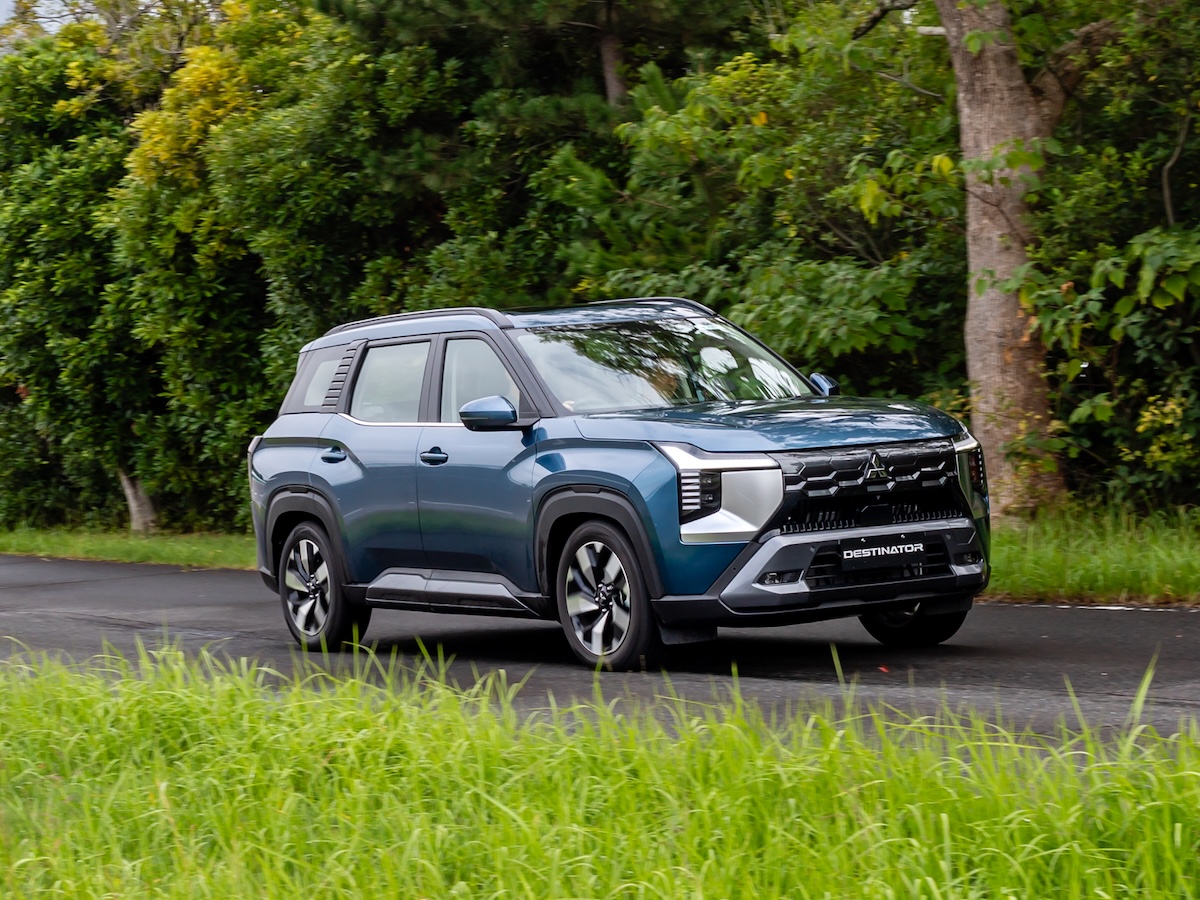
The Mitsubishi Destinator is finally here, headed straight at the heart of the 7-seat SUV segment with a price that starts at under P1.3 million (for now). The design is fresh, the size fits market expectations, and the price is positioned for families ready to move up from compact crossovers. On the surface, it looks like another entry in a very crowded category. But after spending a full day with the Destinator inside Mitsubishi’s Okazaki R&D Center in Japan last month – right before the Japan Mobility Show – it became clear that this SUV carries more depth than expected.
It’s not something that jumps out during a walkaround or a short test drive. And Mitsubishi doesn’t openly advertise certain aspects of the Destinator either. But the more we drove it, the more we realized that it might be one of the most over-engineered vehicles Mitsubishi has released in recent years. It’s meant to be a mass-market SUV, yet the company applied real science to the smallest details – something only a brand with decades of motorsports and rallying could do. These aren’t things you see on spec sheets, but they’re worth knowing if you’re considering one.
Active Yaw Control actually makes a difference
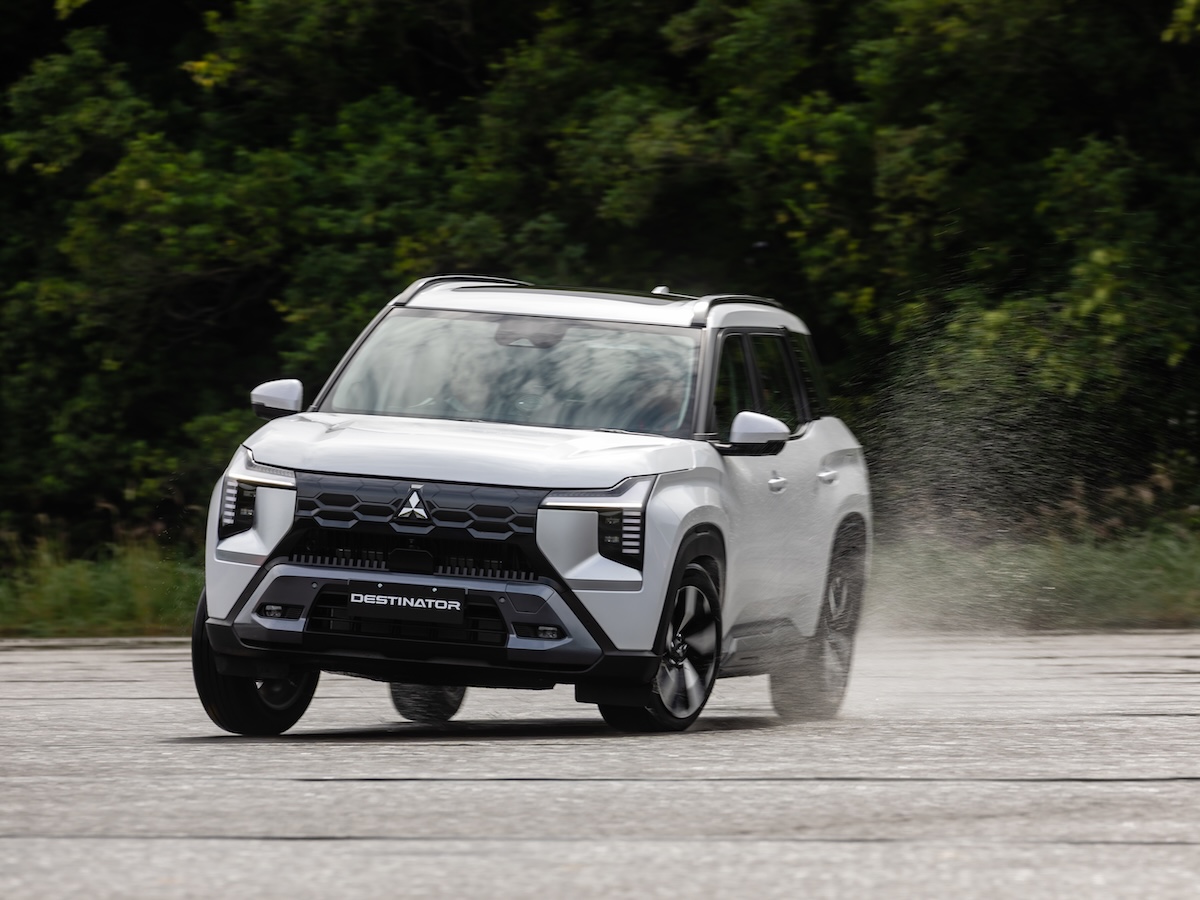
Mitsubishi has been using Active Yaw Control (AYC) for ages, but it tends to get tossed around as another acronym in a long list of tech features. In the Destinator, though, AYC puts in real work. It’s designed to keep the vehicle stable during conditions where the average driver might misjudge traction – like mountain passes, wet surfaces, and uneven terrain.
During our tests, AYC stepped in subtly but consistently. It kept the vehicle planted when we pushed through low-grip corners, shaving off the dangers of oversteer without killing momentum. The useful part here is that you don’t have to be a seasoned driver to reap the benefits; AYC is a built-in safety net for moments when instincts fall short. You don’t notice it working, which is exactly the point.
It has more ground clearance than the Montero Sport (unofficially)
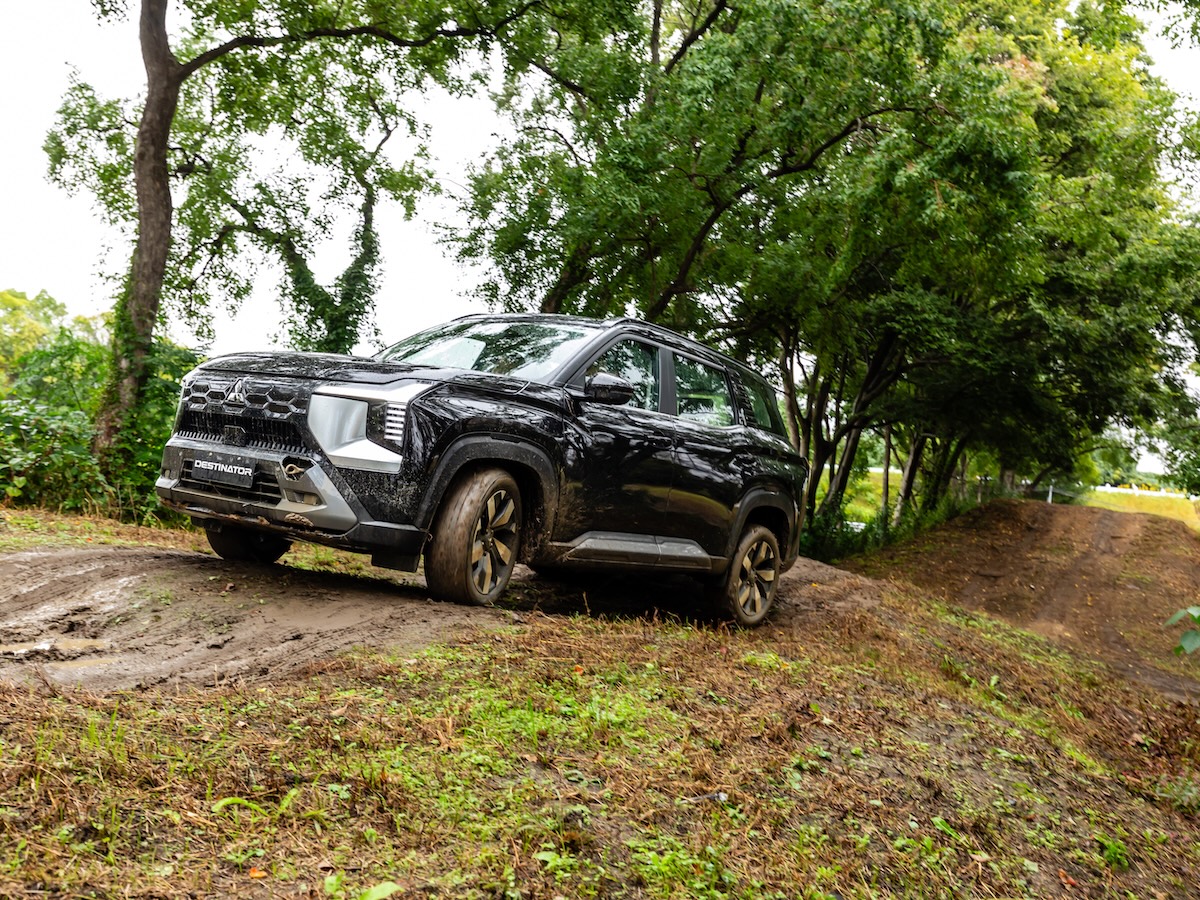
On paper, the Destinator sits 214 mm off the ground – slightly lower than the Montero Sport’s 218 mm. But that’s only half the story. What we learned in Okazaki is that the Mitsubishi Destinator actually has 244 mm of potential clearance. Why is it listed lower then? That’s because Mitsubishi fitted an engine shield underneath to improve aerodynamic efficiency.
This is where things get interesting. Mitsubishi has its own wind tunnel on the Okazaki grounds (yes, we witnessed it at work), and seeing how much effort they put into airflow optimization sheds light on why they made that decision. The aero plate helps fuel economy, but knowing the true clearance gives future owners more confidence. The SUV is physically capable of taking rougher, less predictable roads than the brochure suggests.
And yes, based on the tests we did, it can.
It’s a FWD unibody SUV that off-roads well
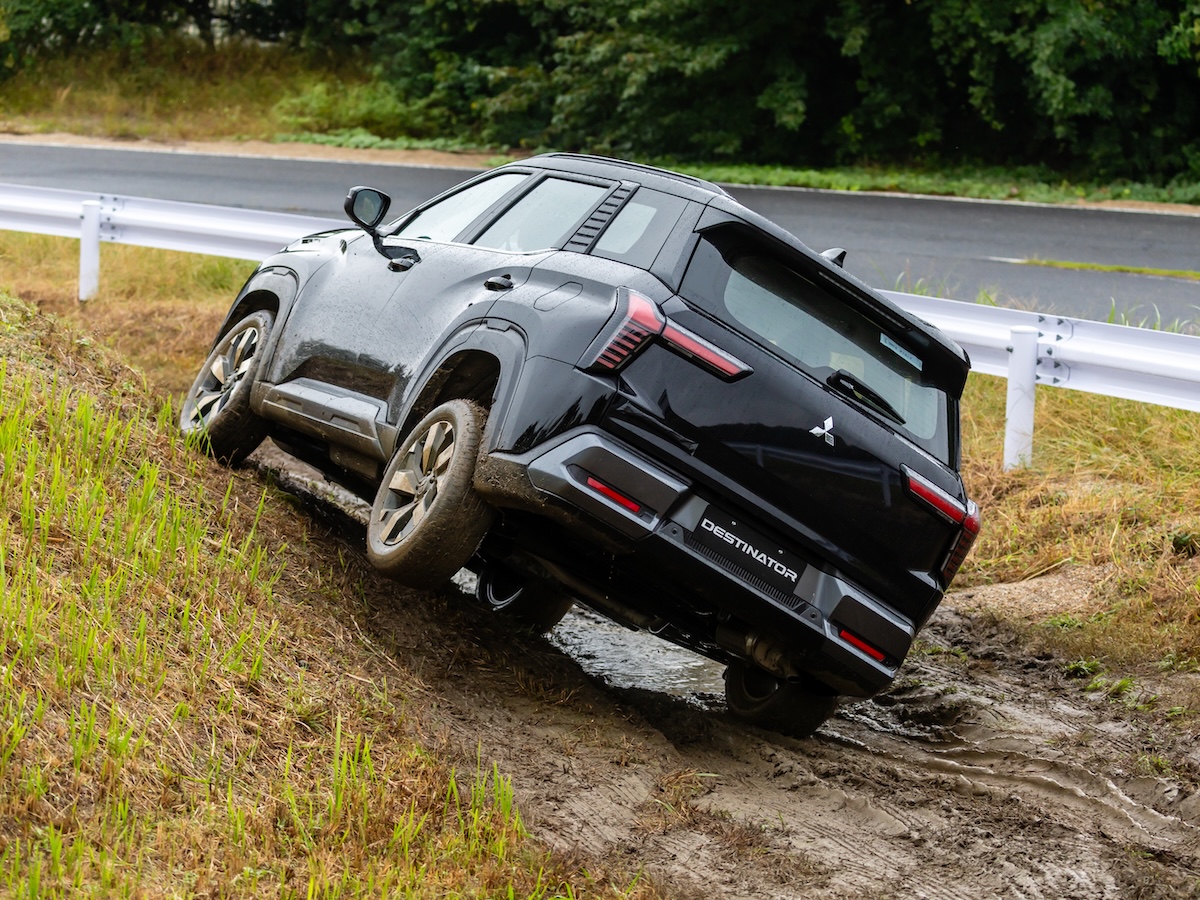
A front-drive, unibody SUV doesn’t usually scream “off-road capable,” and purists will probably have a lot to say about that combination. We can already practically hear the collective scoffs. But the Destinator doesn’t behave like similar FWD crossovers. The secret lies in its drive modes – specifically Mud mode.
We took it through mud tracks most grocery-run SUVs would avoid. On the first attempt, modulating the throttle like you would in slippery terrain didn’t work; the SUV simply bogged down. On the second try, we trusted the system and floored it. The Mitsubishi Destinator then managed the throttle itself, reducing wheel slip while pulling us up through a steep, muddy curve without drama.
There was also a side-incline test. Instructors showed us a 37-degree traverse. When it was our turn, we unintentionally pushed it to 45 degrees – confirmed by the onboard clinometer – and the vehicle still cleared it cleanly. No scraping, no stumbling, just one high-pitched scream from a male passenger.
It’s still a FWD platform, but one that can get you out of tricky situations without overthinking how to drive out of them.
Minimal turbo lag, courtesy of a new intercooler design

Under the hood sits the familiar 1.5-liter turbo engine from the Eclipse Cross, now updated for the Mitsubishi Destinator. Output is 163 hp and 250 Nm, sent through a CVT. On paper, this doesn’t sound like anything special. But Mitsubishi revised the 4B40 for better response, using an air-water intercooler designed deliberately to be short. That layout reduces lag by cutting down the distance the intake air needs to travel.
Real-world results matched the theory. Acceleration felt more immediate than expected, and switching to Tarmac mode sharpened the power delivery further. If you’ve driven Lancer Evos in their time, the name “Tarmac” should sound familiar. It transforms the personality of the SUV enough that you forget you’re working with a CVT.
Rallying roots play a major role

Mitsubishi’s history in rallying isn’t just a nostalgic footnote; it actively influences vehicles like the Destinator. Mitsubishi Ralliart’s recent success in Asia Rally Cross is part of a long lineage of motorsports experience, and some of that tuning knowledge trickled into this SUV.
We did spirited, rally-style gravel runs within the Okazaki test facility, side by side with rival models. The difference was noticeable. The Mitsubishi Destinator remained composed on slippery gravel where competitors (yes, we did benchmark testing, but we won’t mention their names) felt unsettled. There was no fighting the wheel, no fear of a sudden slide – just predictable behavior even when pushed.
It didn’t require special driving techniques either. Select Gravel mode, and the SUV simply behaved like a vehicle with deeper roots in motorsports.
Bonus: It doesn’t splash water onto the windshield during flood tests

This one caught us off guard. During water-wading tests, we expected water to splash up the hood and across the windshield. But Mitsubishi shaped the lower front bumper to divert the water outward instead. So even when entering standing water at speed, visibility stayed clear. It’s a small detail, but one that shows how far the engineers went.
Our Take
After the full day of tests, the takeaway was simple: Mitsubishi over-engineered the Destinator, but in ways that benefit future owners. It’s not about flash or headline-grabbing numbers. Instead, the engineering is tucked into how the SUV behaves in situations buyers may eventually encounter – slippery roads, muddy trails, uneven terrain, or sudden conditions where instincts don’t match what the vehicle needs.
The Mitsubishi Destinator may look like a typical family SUV, but there’s more going on underneath, and the real surprise is how much capability Mitsubishi quietly built into it. If you have the chance, make sure to test drive a Destinator to experience everything we’ve talked about here.


