
The Toyota Hiace has always been defined by function first. From subtle fleets to logistics duty, the van has built its reputation on durability and simplicity. But recent reports in Japan suggest Toyota may be preparing to rethink what a working van in the future could become, and that a new generation of the Hiace could come out at the tail end of this year or by early 2027.
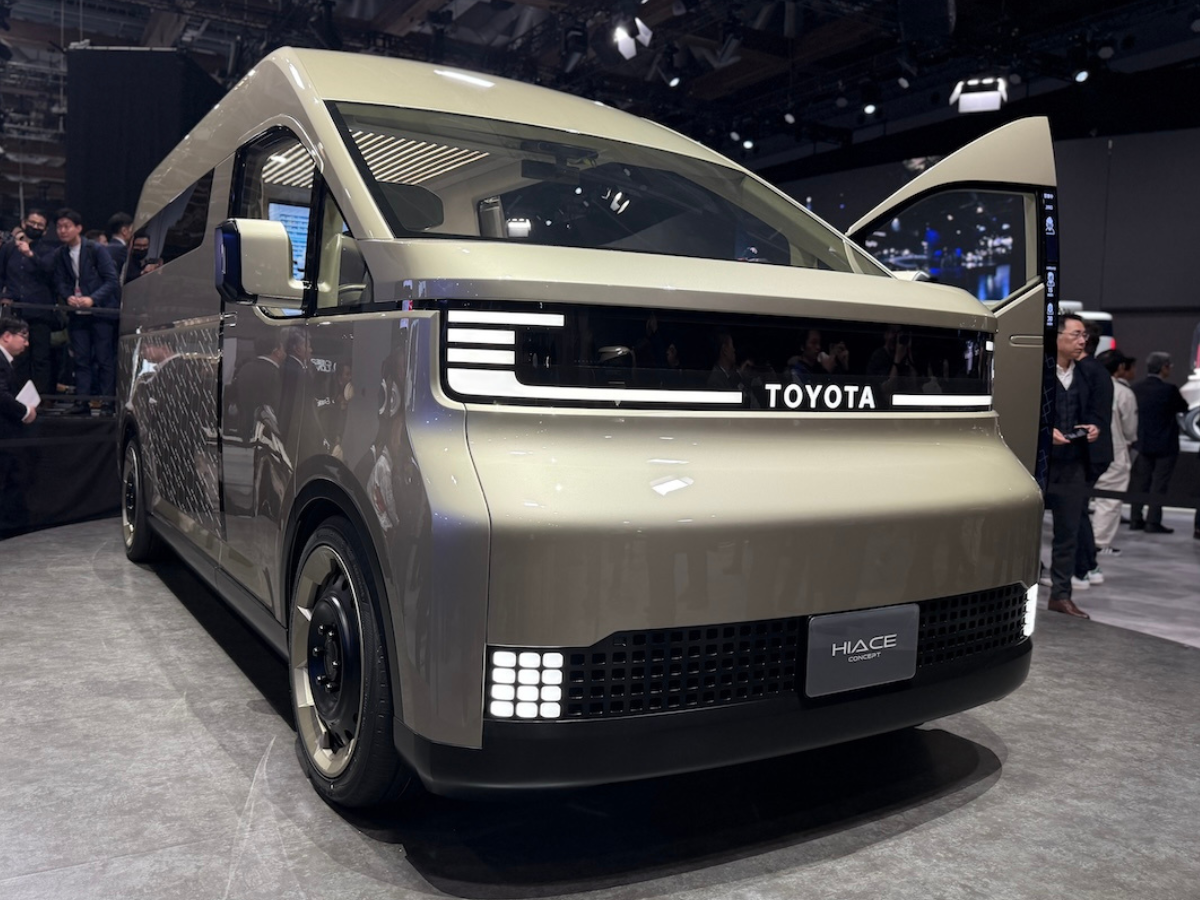
Dialing back to last year’s Japan Mobility Show, Toyota unveiled a Hiace concept that hints at a more refined, almost lifestyle-oriented direction. The design alone signals a shift. The familiar boxy silhouette remains, but it’s now wrapped in smoother surfaces, larger glass areas, and futuristic lighting elements—giving it a more premium, almost passenger-focused presence.
Step inside, and the change in philosophy becomes clearer. The concert emphasizes flexibility, with rotating front seats and a more open cabin layout that removes the traditional separation between driver and passengers. It is a subtle but important move, one that points the next Hiace as not just a people mover, but a space that adapts to different roles — from business transport to mobile workspace. This adaptability could define the next-generation model.

Industry observers also pointed out a likely direction for how the next-gen Hiace is powered – electrification, or at the very least, hybridization. While Toyota has yet to confirm any official details, the industry trend today is sending a clear message; commercial vehicles are being pushed toward cleaner, more efficient solutions. A hybrid Hiace would make sense, especially in markets like Southeast Asia where fuel efficiency directly affects operating costs.
Platform evolution is another thing that can be considered by Toyota. The current H300 model of the Hiace, the one with a more pronounced hood, already introduced improvements in safety and comfort. A future iteration could refine this further, blending better ride quality with improved cabin insulation, two areas that matter more today, as vans now double as premium transport options.
Still, it is worth remembering that the next-generation Hiace is still a concept at this point in time. As such, Toyota has not confirmed timelines, specifications, or even whether all these features will make it into production. What concept vehicles do offer is direction. And in this case, the direction is clear — the Hiace is evolving from a purely utilitarian machine into something more versatile, more comfortable, and potentially more efficient.
Of course, it may still carry goods and people. But the way it does so could feel very different in the years ahead.
Autocar’s Take
The Hiace has long been one of the most dependable backbones of mobility across Asia, and that’s precisely why this shift matters. Toyota appears to be acknowledging that even workhorses need to evolve. The concept doesn’t just modernize the look, it previews a new way space is used and how people interact inside the vehicle, and that’s a meaningful step forward.
For the Philippine market, the balance will be crucial. Operators will still choose durability and cost above all else. But introduce better comfort, ammeter layouts, and improved efficiency, and the next Hiace could appeal to an even bigger audience than ever before, without losing its core purpose and long-established identity.