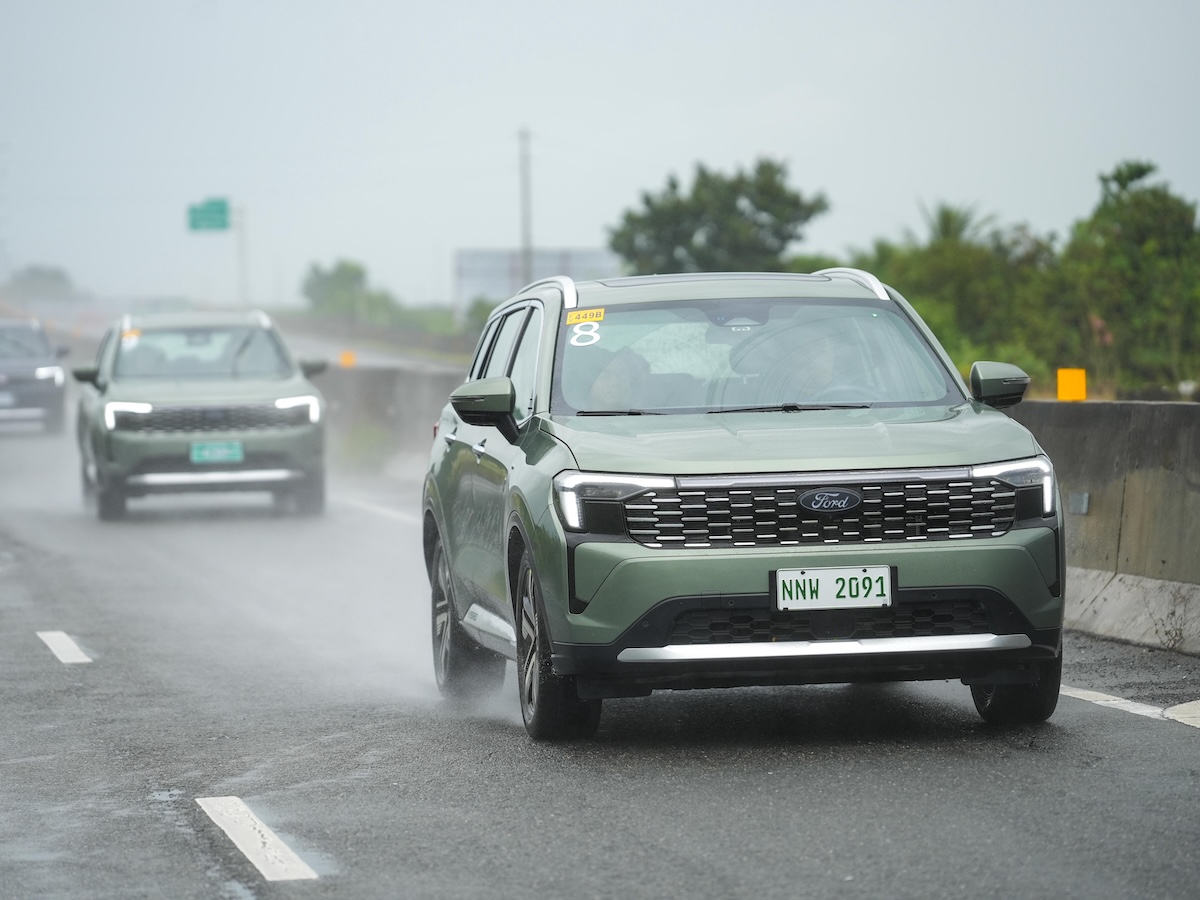
Ford is now seeking a partnership to strengthen its foothold in the electrified mobility segment. In particular, the American brand is now in talks with Chinese carmaker BYD over a partnership that could streamline battery supply for the former’s hybrid vehicles. This points to a deeper shift in how global automakers are recalibrating their electrification strategies.
Ford has acknowledged that it routinely engages in discussions with multiple suppliers while stopping short of confirming any agreement. The talks primarily involve topics about battery packs for next-generation hybrid electric vehicles (HEVs), not full battery-electric models.
Now, this is good news as it shows that the global automotive industry is looking beyond geopolitical matters, all for the goal of positive industry progression towards better means of mobility. However, as of this writing, no deal has been announced, and timelines, production locations, and volumes have not been confirmed. In short, Ford is still testing the waters to see and evaluate the feasibility of its collaborative initiatives with some of the world’s biggest names in the electrified vehicle (EV) industry. Even with these caveats, the relevance of its business engagements is clear.

First, the focus on hybrids is telling. After years of aggressive EV expansion, Ford, like several legacy automakers, is placing renewed emphasis on HEVs and plug-in hybrid electric vehicles (PHEVs). Hybrids offer measurable emissions reductions without the high costs, infrastructure dependency, and market resistance that continue to challenge mass-market full-EV production in many regions.
Second, BYD’s involvement is significant because of its dominance in battery manufacturing, particularly lithium-iron-phosphate (LFP) batteries. LFP batteries are generally cheaper, more durable, and less dependent on costly raw materials than nickel-rich alternatives. While LFP batteries are less energy dense, the trade-off matters far less in hybrids, where battery size is modest, and longevity is of high importance. For an automaker looking to scale hybrids globally, the LFP battery is a practical fit, and Ford sees BYD as the one at the forefront of building better LFP batteries today.
Third, the discussions underline how electrification has become a supply-chain competition, not just a product race. BYD is not merely just another EV brand; it’s one of the most integrated battery manufacturers these days. Partnering or sourcing from such a supplier can help legacy car brands control costs and stabilize production at a time when battery pricing and geopolitical risks remain volatile.

There’s also a broader strategic implication to this. If Ford ultimately sources batteries from BYD for vehicles built outside the United States, it reflects how automakers are adapting to trade policies, tariffs, and regional manufacturing rules. Going by how things are shaping up these days, the next phase of electrification appears to be driven not by ambition alone, but by cost, scalability, and what can realistically work in today’s market.