

President Ferdinand “Bongbong” Marcos Jr. has recently signed the Philippines’ P6.793-trillion 2026 national budget. However, in a significant move affecting the automotive sector, he vetoed funding for major industry support programs included under unprogrammed appropriations (UA).
Among the items removed were P4.32 billion set aside for the Comprehensive Automotive Resurgence Strategy (CARS) program and P250 million for the Revitalizing the Automotive Industry for Competitiveness Enhancement (RACE) program. Both budgets were proposed to provide fiscal incentives to car manufacturers investing in local production.
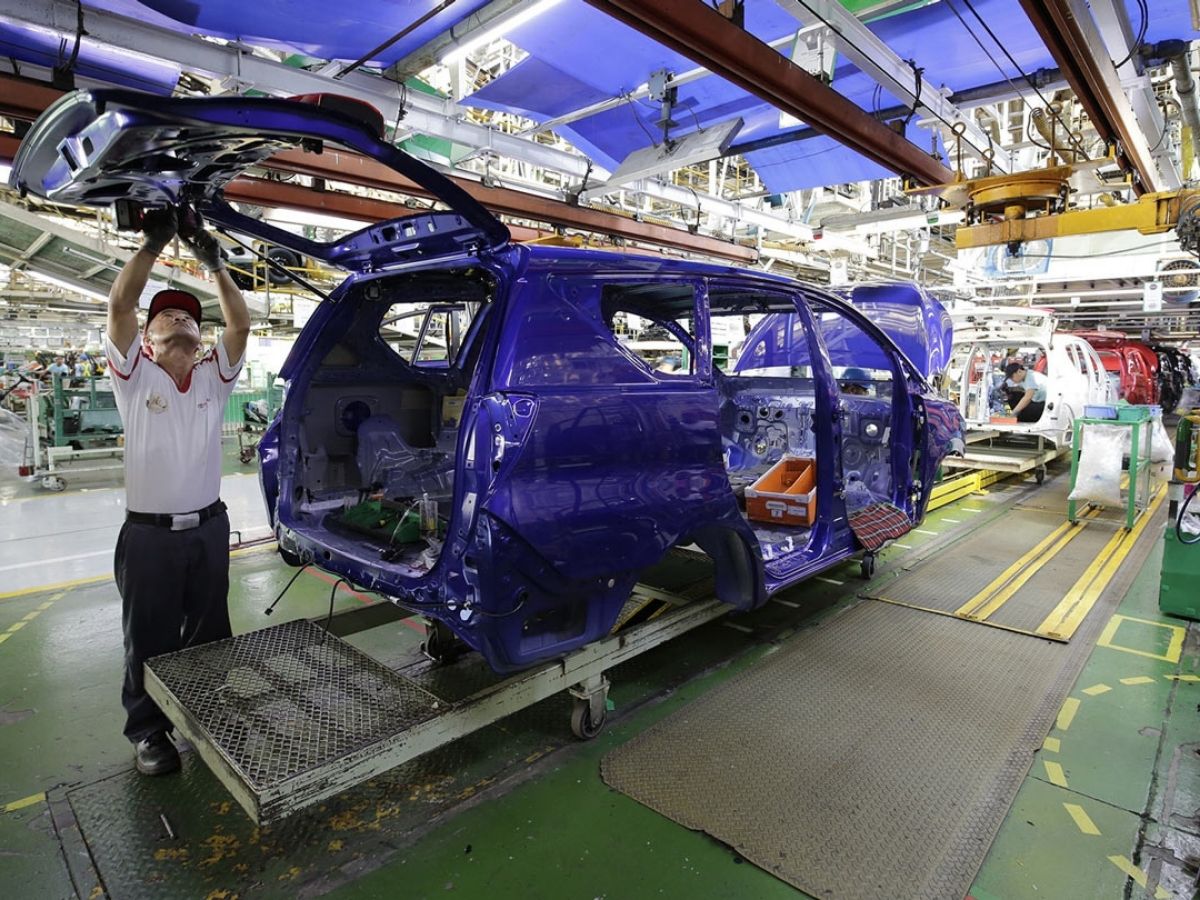
The CARS program, launched in 2015, promised performance-based fiscal support to vehicle manufacturers that met minimum production targets. These include Toyota Motor Philippines (TMP) and Mitsubishi Motors Philippines Corporation (MMPC) with their respective manufacturing plants located in Santa Rosa, Laguna. Industry experts say the 2026 national budget allocation that was vetoed was meant to cover remaining government commitments under the CARS program.
On the other hand, the Department of Trade and Industry (DTI) designed the RACE initiative as a successor to the CARS program to sustain competitiveness in the local automotive sector. However, this program is now also facing uncertainty due to a lack of funding. To address the issue, DTI Undersecretary Ceferino Rodolfo assured that despite the 2026 budget veto, the government is exploring alternative measures to ensure investors still receive their earned incentives.
The Board of Investments (BOI) expressed respect to the President’s decision and indicated that it will coordinate with the Department of Budget and Management (DBM) and other agencies to seek alternative ways to honor existing commitments to automakers.
Critics warn that removing these budget allocations could affect investor confidence and the Philippines’ ability to attract long-term automotive manufacturing investments, as fiscal investments serve as key factors in strategic investor decisions.
The Philippine Parts Makers Association (PPMA) also warned that the defunding of the CARS and RACE programs could further weaken what remains of the country’s vehicle manufacturing base, stating that sustained production volumes are essential for the survival of auto parts makers. PPMA president Ferdi Raquelsantos said the loss of policy support threatens the broader automotive ecosystem, noting that without local assembly, industries such as tooling, testing, engineering, and thousands of skill-based manufacturing jobs will be at risk.
PPMA pointed out that while neighboring Southeast Asian countries continue to attract automotive investments and maintain strong supplier networks, the Philippines has increasingly shifted towards importing fully built vehicles, forcing many local parts manufacturers to scale down or move away from automotive production. The association said that the CARS program was meant to rebuild production scale, while the RACE was designed to expand support to new vehicle technologies.

Following the President’s move, industry experts, critics, and organizations such as PPMA urged lawmakers to engage in dialogue to better understand the economic impact of these programs, warning that without renewed commitment, the Philippines risks becoming a purely import-based car market. Supporters of the veto, however, say it reflects a broader push for fiscal discipline and transparency, following public scrutiny of discretionary spending in recent years.