 Let’s clear this up first. Nissan calls this an all-new Kicks e-Power, but if you’ve been following the model locally, you’ll know this is more of a major update than a ground-up redesign.
The Philippines got the first-generation Kicks e-Power in 2022, and that’s still the foundation here. Meanwhile, markets like the US and Japan have already moved on to second-generation Kicks that’s larger and positioned a bit higher – and, more importantly, doesn’t officially have e-Power just yet.
We’re not getting that – at least not in the near future, and the reason for that is value, according to Nissan. If we’re getting the second-generation Kicks, that would be priced higher – something that will not resonate with Filipino buyers.
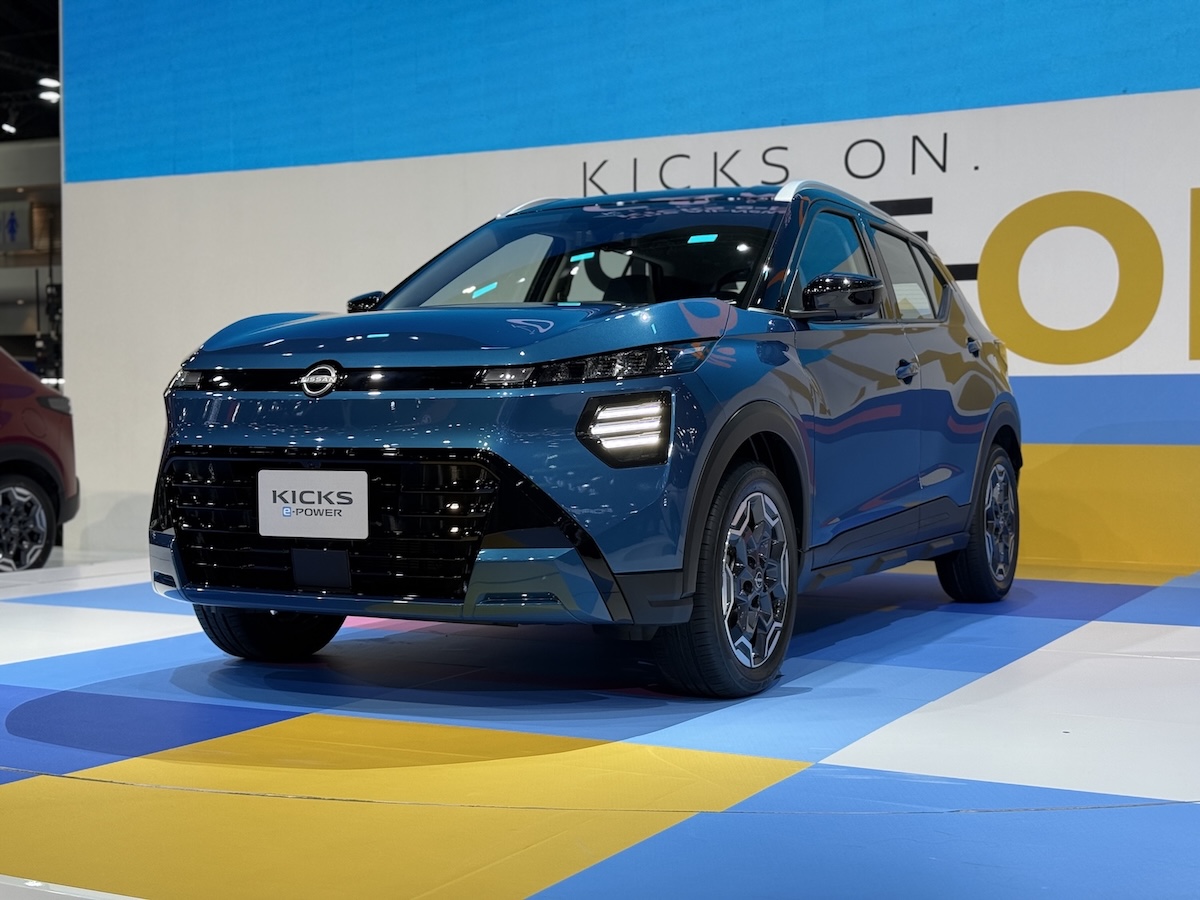
Instead, what we’re getting is a heavily updated version of the same car. The platform, proportions, and overall footprint remain familiar, but Nissan has gone all-in on redesigning everything you actually see and interact with.
And to Nissan Philippines’ credit, it works. The exterior is sharper, the interior feels more modern, and the tech has taken a noticeable step forward. It doesn’t try to hide its roots, but it does a good job of making the car feel newer than it actually is.
Mechanically, the formula remains the same, and that’s not a bad thing. The Kicks e-Power that will reach the Philippines still uses Nissan’s unique series hybrid setup, where the gasoline engine never drives the wheels. Instead, a 1.2-liter three-cylinder engine serves solely as a generator, powering an electric motor that handles all propulsion.
That electric motor produces around 134 horsepower and 206 lb-ft of torque, which is what gives the Kicks its distinct driving character. The gas engine, meanwhile, produces roughly 81 horsepower but serves only to keep the battery charged rather than directly powering movement. Everything is managed through a single-speed reduction gear, so there’s no traditional transmission feel here.
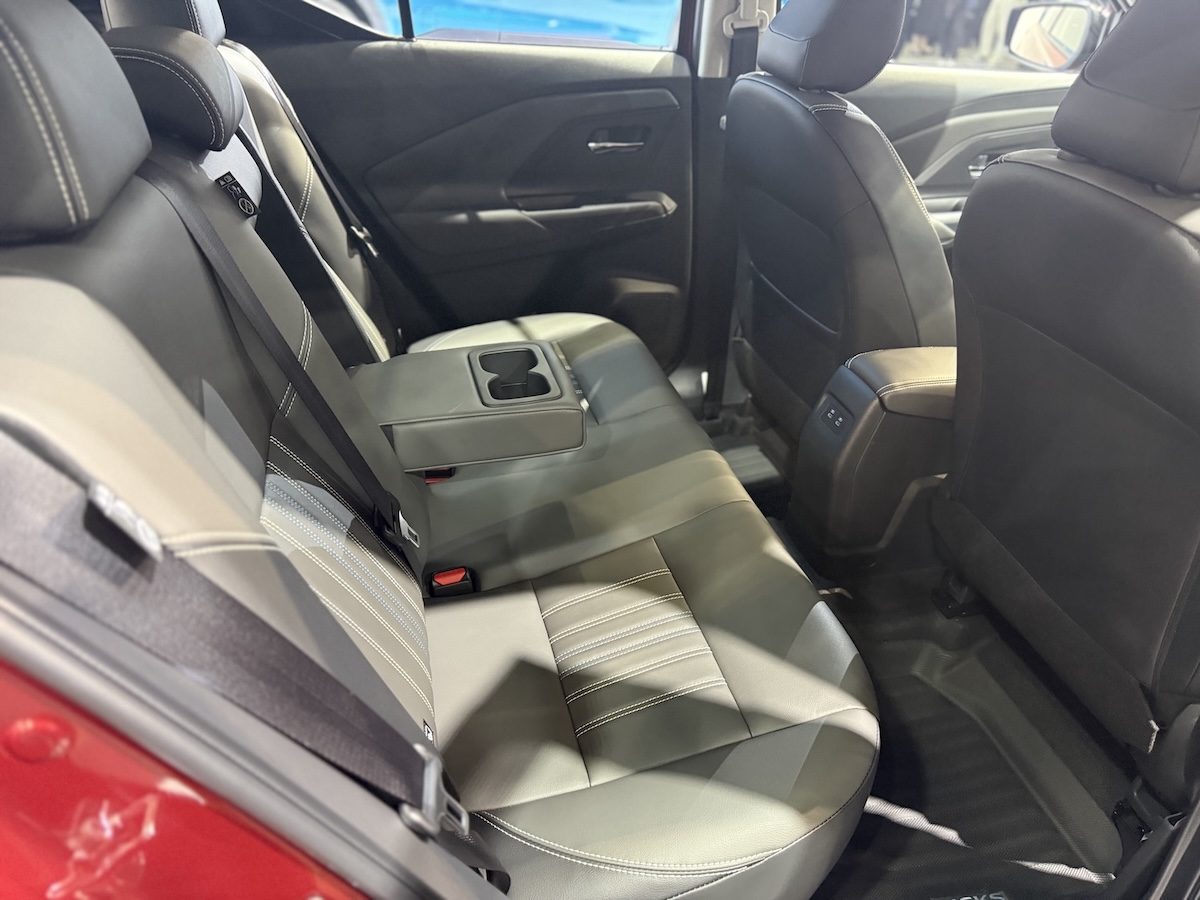
Size-wise, nothing really changes. It’s still a subcompact crossover that fits neatly into tight city environments, with dimensions largely identical to those of the 2022 model. That means familiar cabin space and road presence, which is important given how well the original Kicks packaged itself for urban use.
Efficiency remains one of its strongest selling points. Nissan quotes figures close to 25 km/L, which has always been one of the Kicks’ biggest advantages locally. In real-world Metro Manila traffic, that kind of efficiency – paired with an electrified driving feel – will remain a strong draw.
What’s It Like?
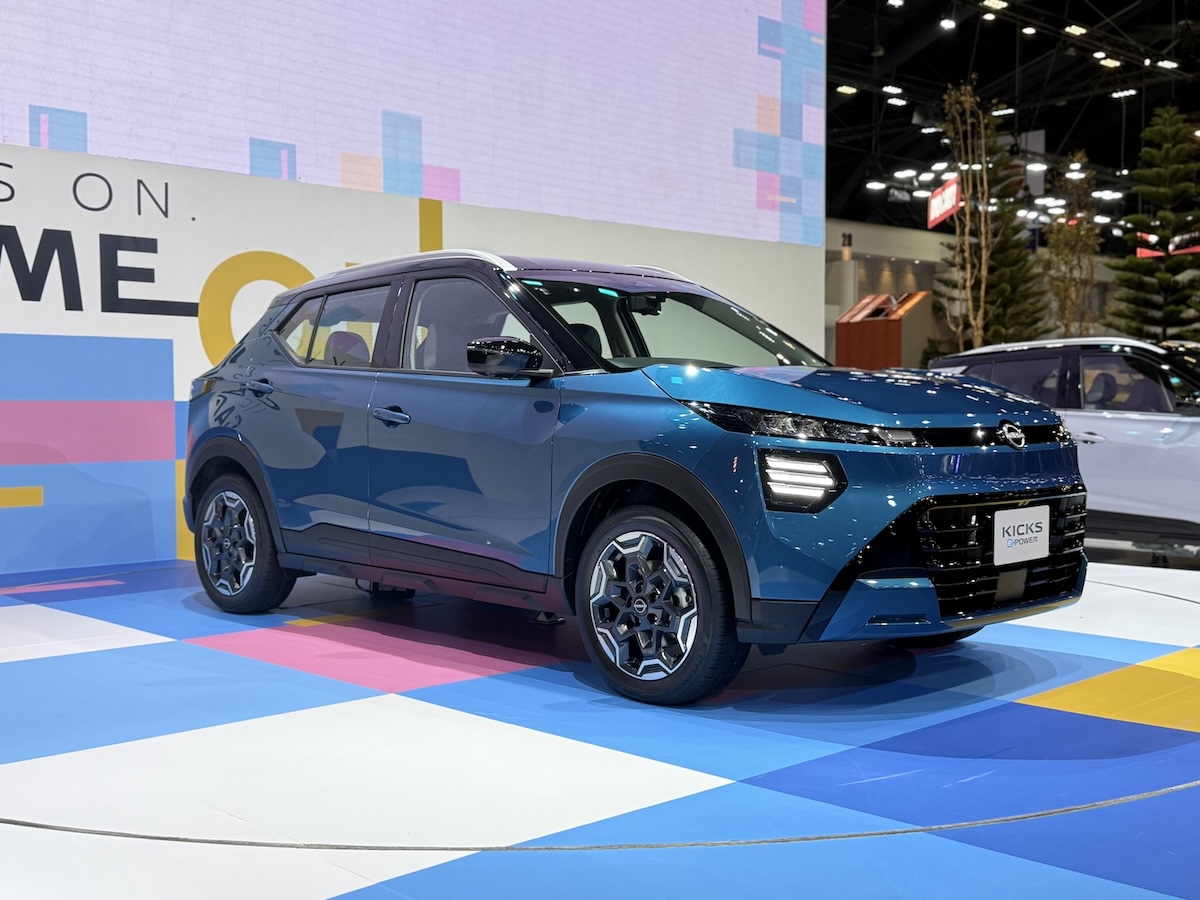
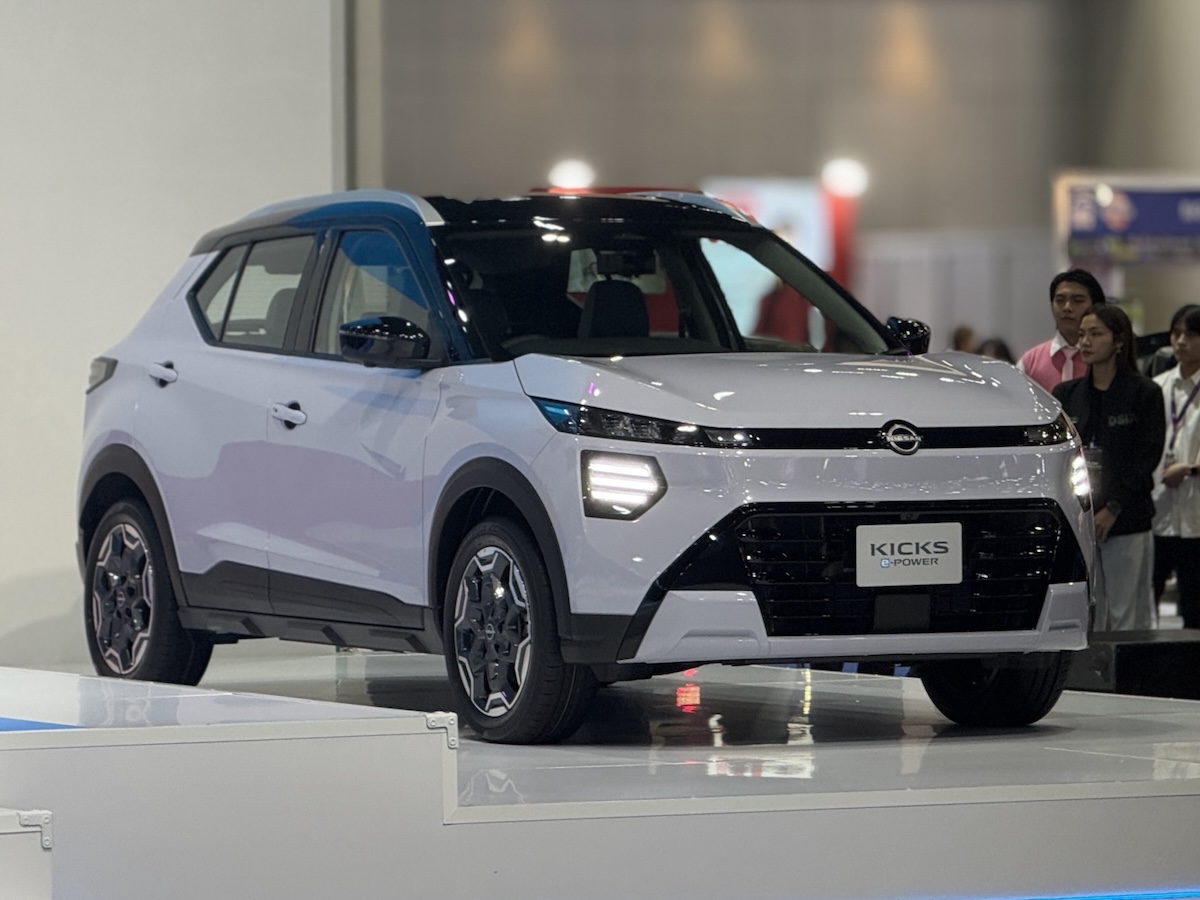
So, we got the chance to drive one after its launch in Bangkok. In person, the updates are more noticeable than expected. The new front end, with its revised V-Motion grille and slimmer lighting elements, brings it closer in line with Nissan’s newer design language. It looks cleaner and a bit more mature, without losing the youthful edge that made the original appealing.
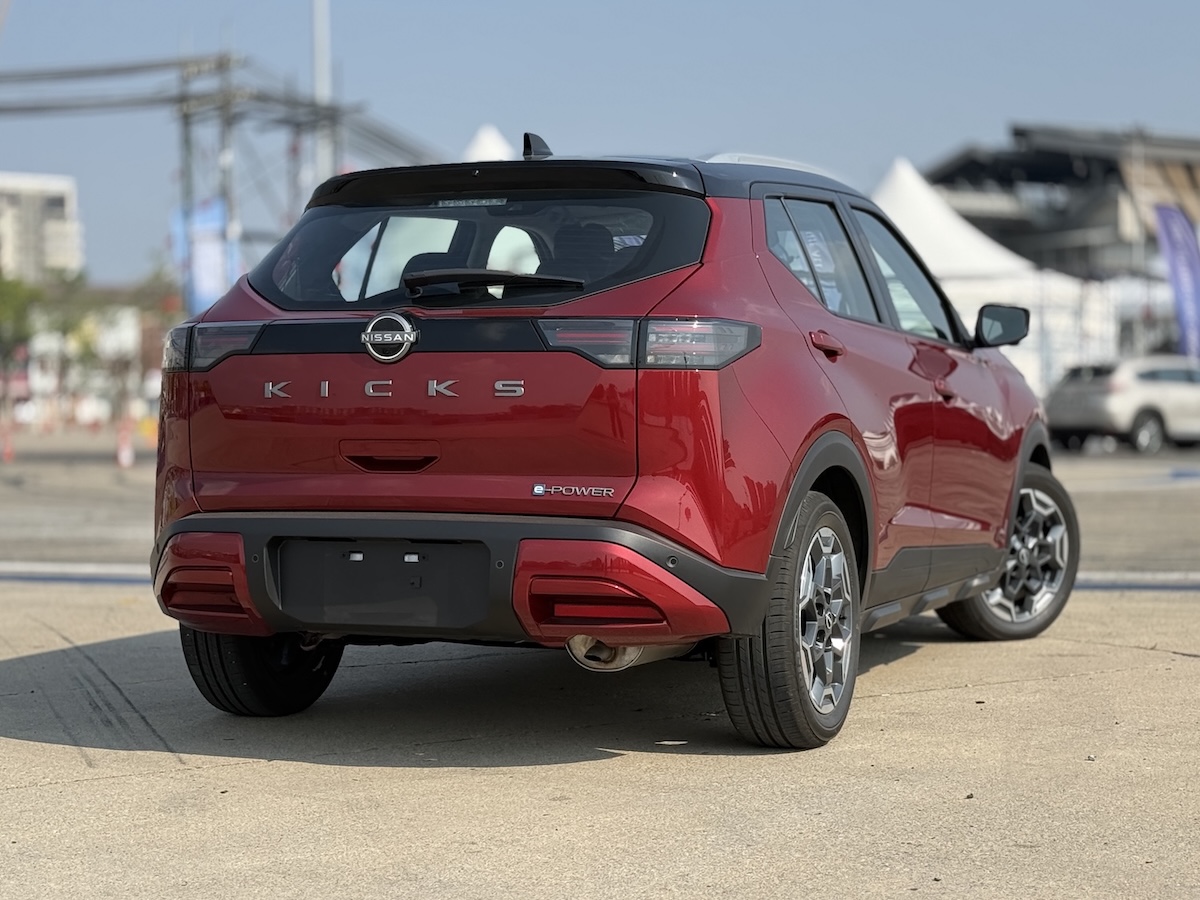
From certain angles, you could almost mistake it for a full redesign. Then you spot details like the C-pillar and realize the structure hasn’t changed. Still, touches like the hidden rear door handles keep things visually interesting.
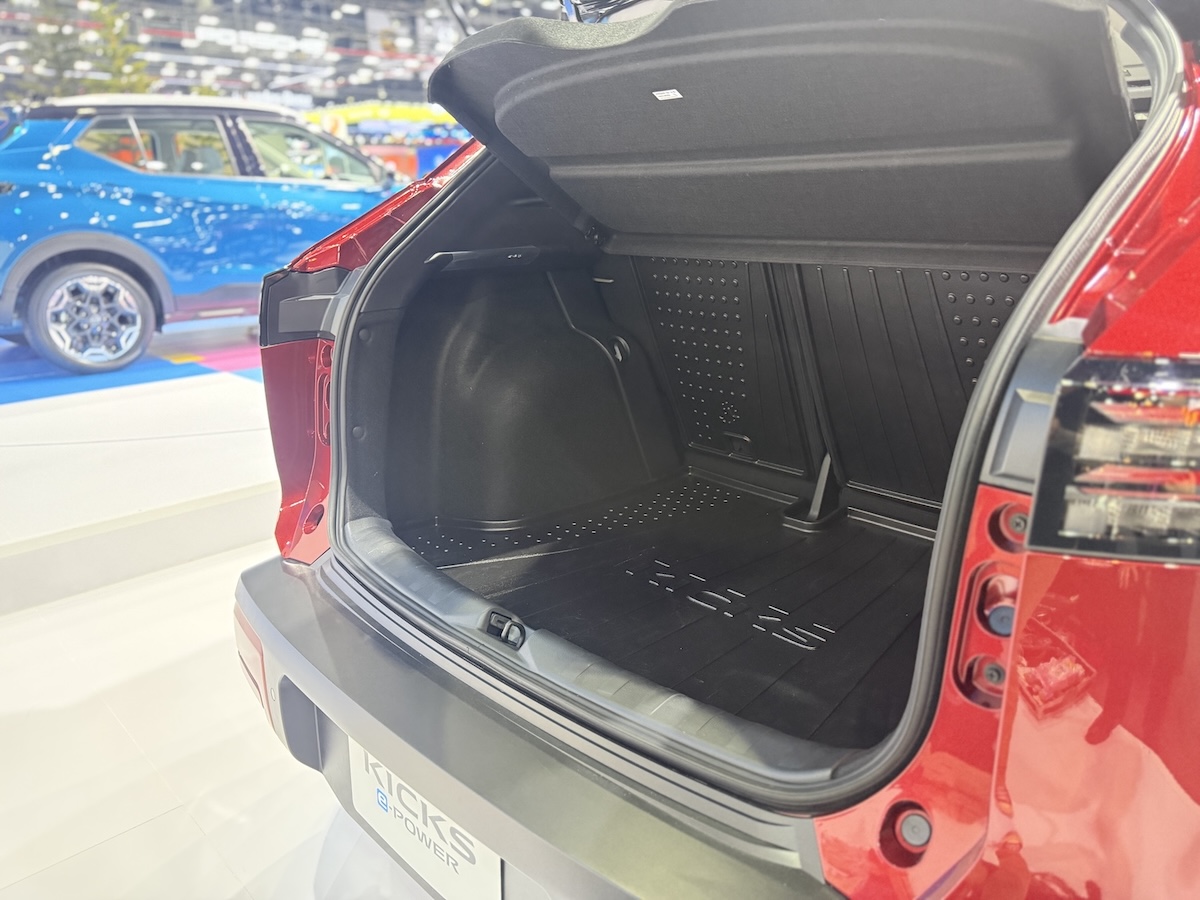
There’s also a small but oddly distracting detail at the back – the “KICKS” badge isn’t perfectly centered. It’s a spacing quirk rather than a mistake, but it’s something you’ll probably notice once and never unsee.
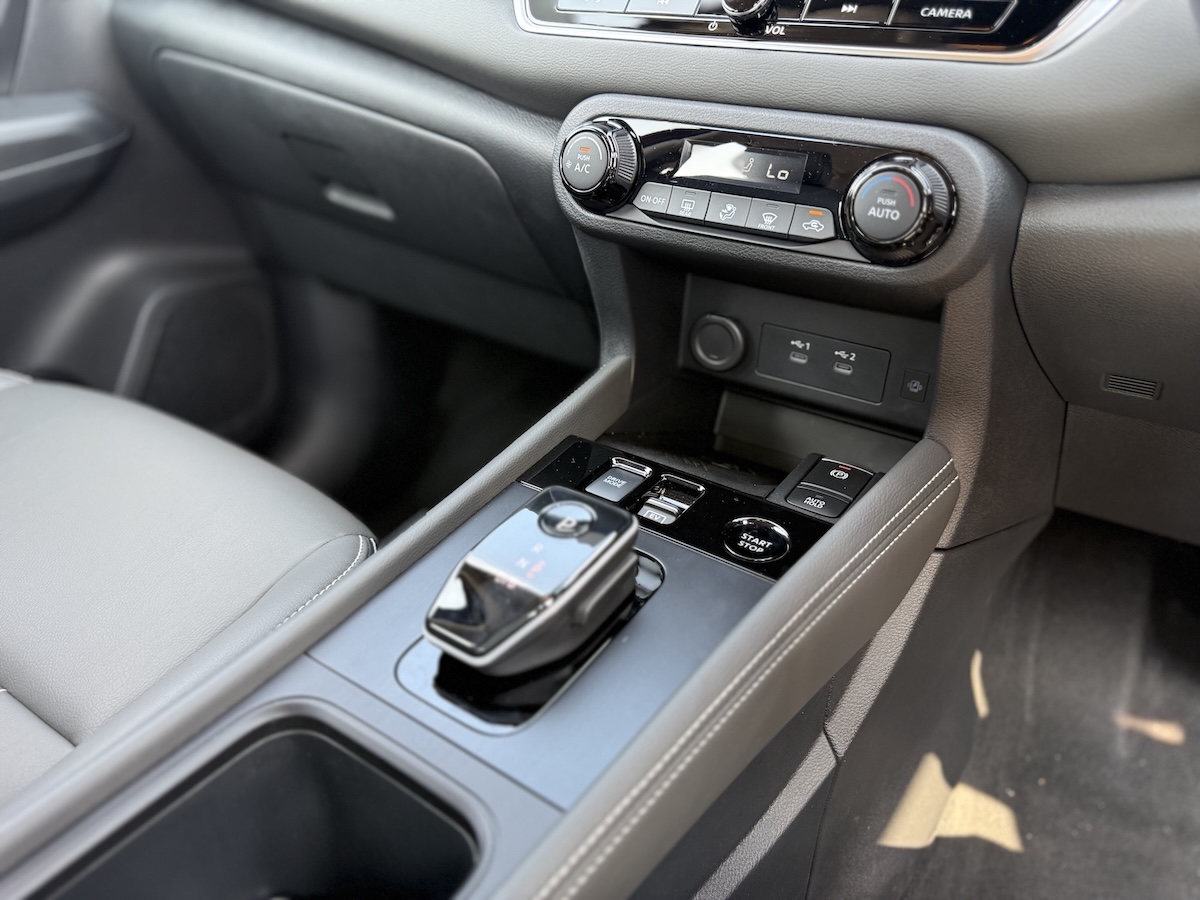
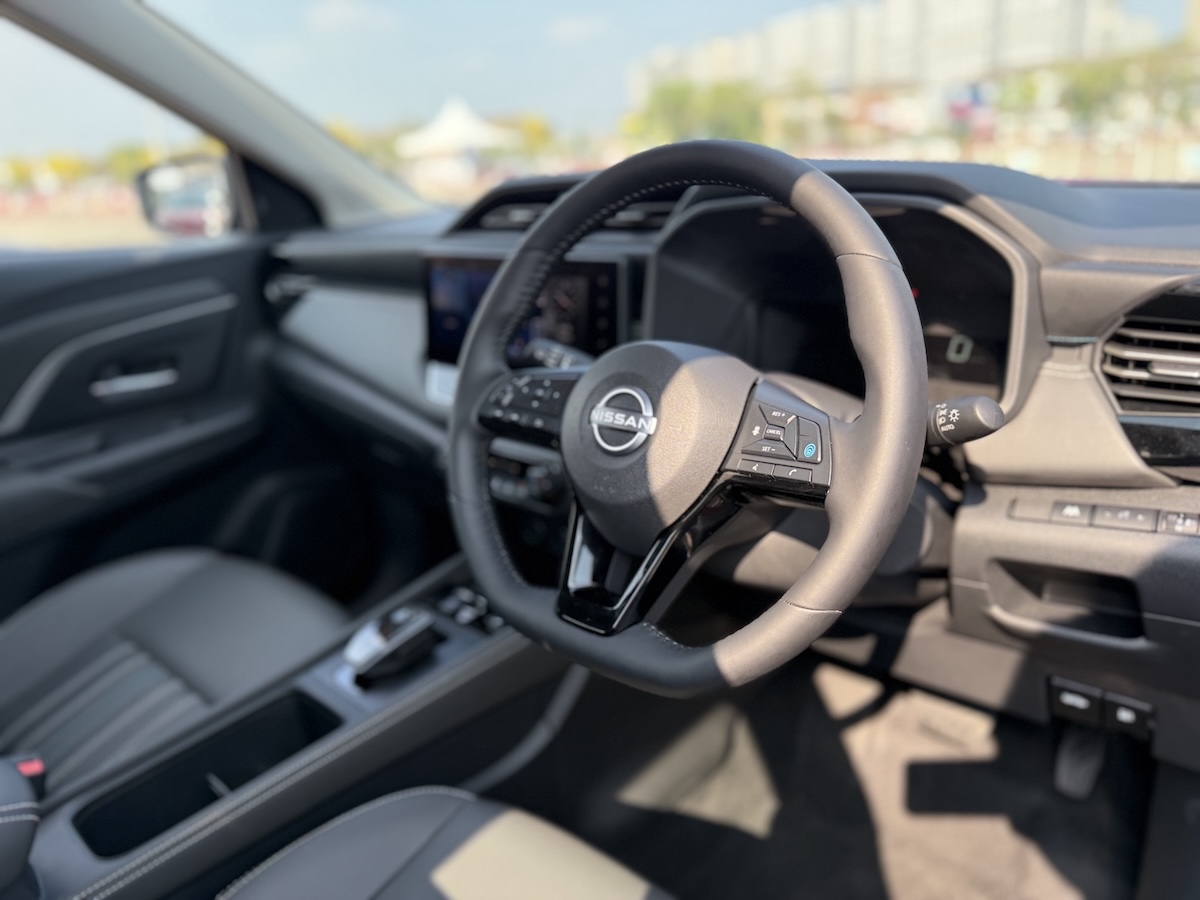
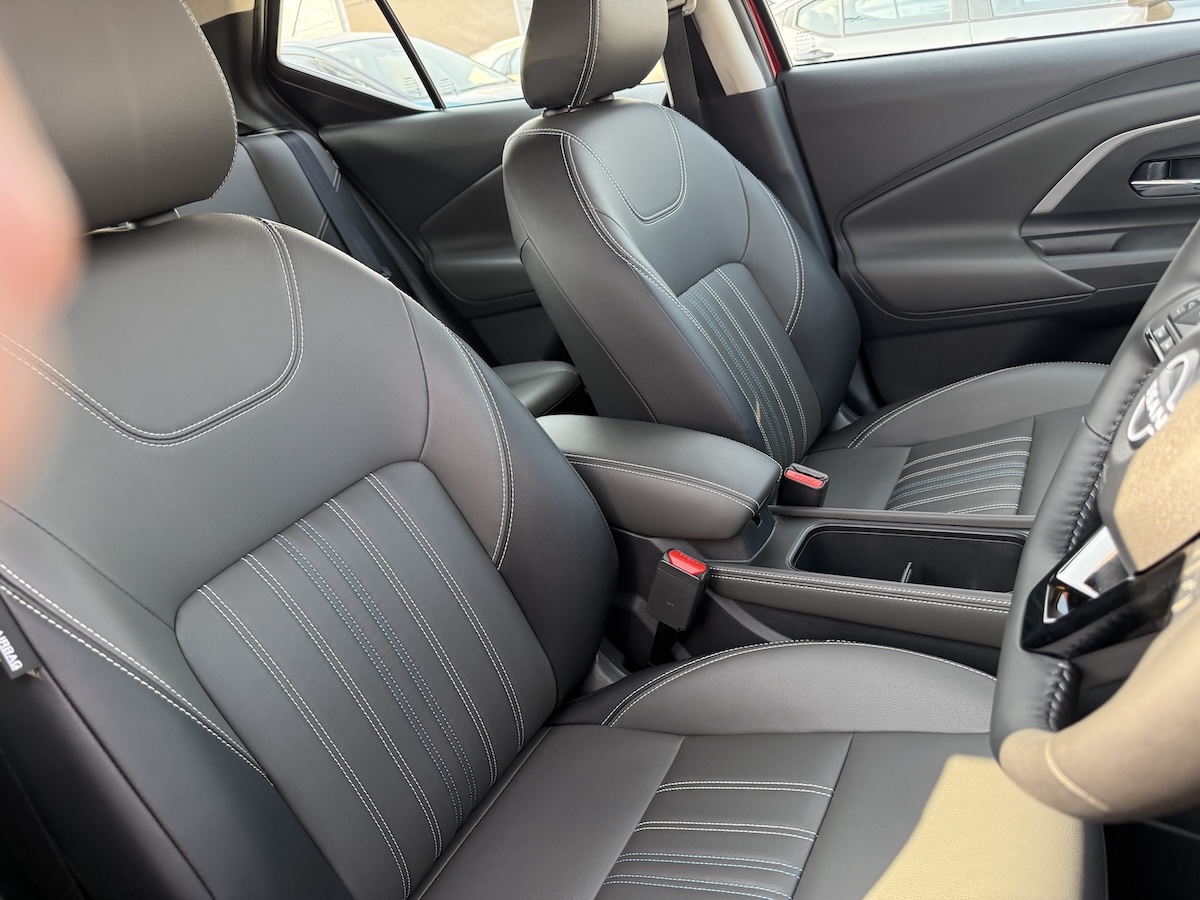
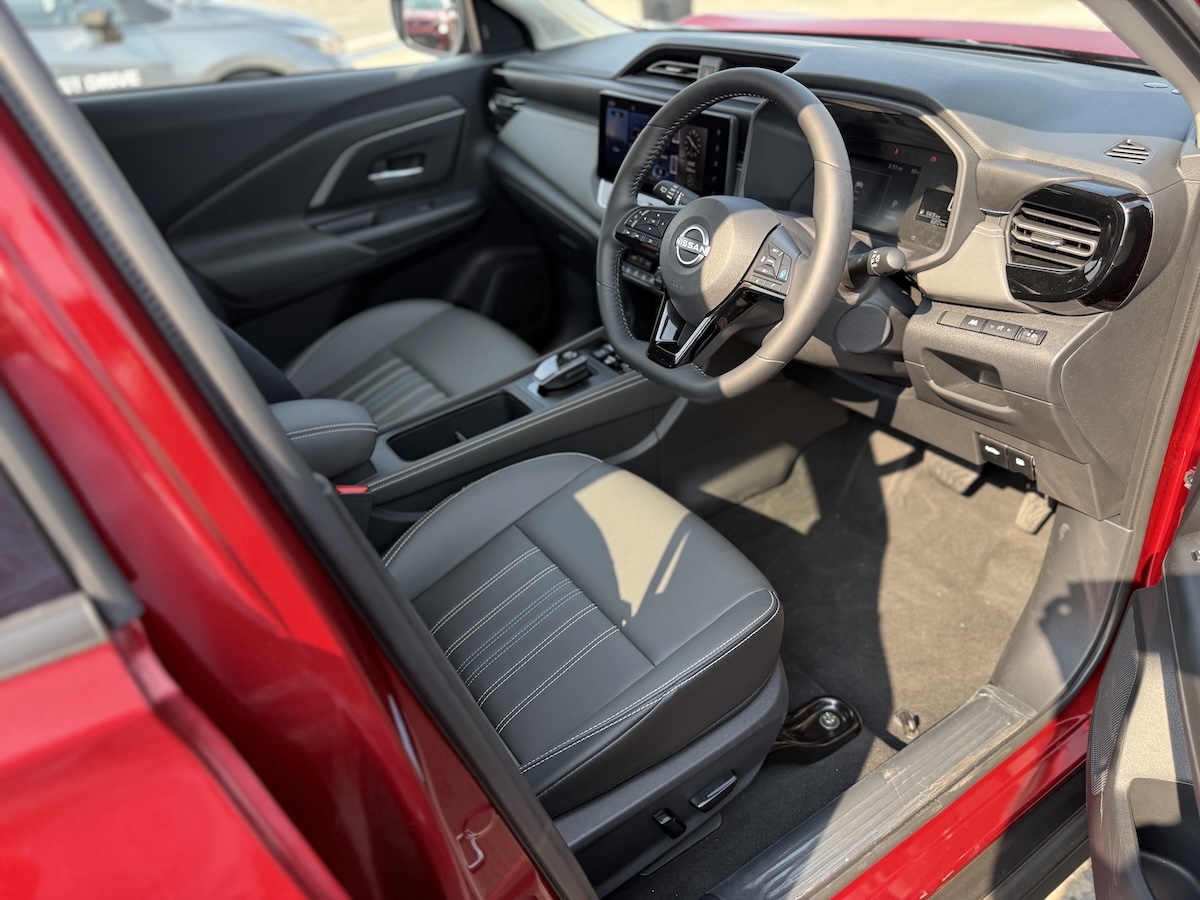
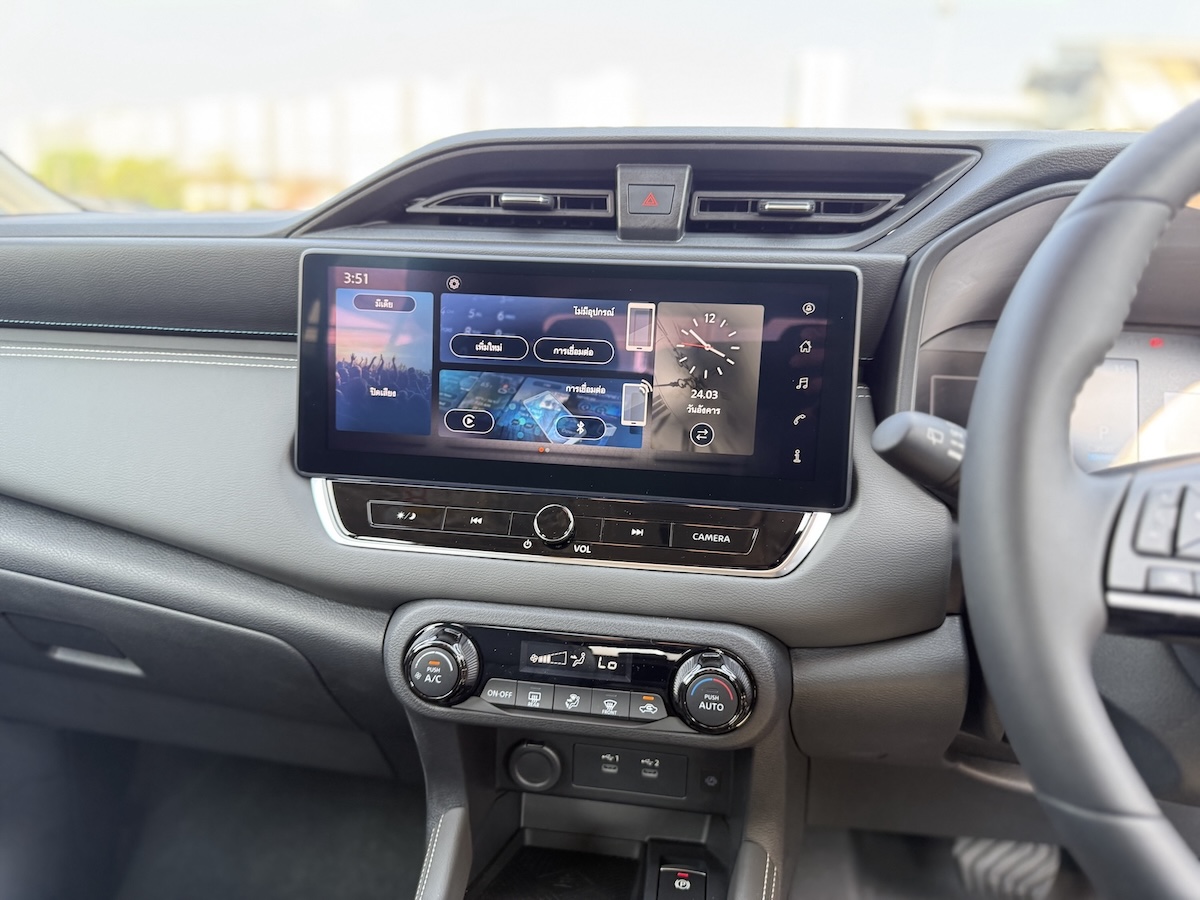
Inside is where the update really lands. The cabin feels more contemporary, with a cleaner layout and improved materials. The new Moonstone interior theme adds brightness, while the larger screens – now at 12.3 inches for both infotainment and the instrument cluster – bring it up to speed with newer rivals.
That said, some elements remain familiar. The steering wheel is still shared with other Nissan models, and overall space hasn’t grown. If you own or have driven the current PH-spec Kicks, the size and packaging will feel unchanged.
On the road, the e-Power system still defines the experience. Because the wheels are driven solely by the electric motor, you get immediate acceleration from a standstill. It feels responsive in city driving, which is exactly where most Kicks owners will spend their time.
The surge of power is strongest at lower speeds, and while it doesn’t feel particularly fast at the top-end, it remains composed – even with abrupt emergency braking. The added weight of the battery, mounted low, helps with stability, and the suspension tuning leans slightly toward a firmer, more controlled feel compared to the older model – without becoming uncomfortable.
Regenerative braking is quite pronounced, which works in its favor in stop-and-go traffic. It helps recover energy efficiently and reduces the frequency of the gasoline engine’s operation, especially in urban conditions.
Initial Verdict
Let me dare say, for the Philippines, this update makes a lot of sense. The Kicks e-Power was already a strong contender when it launched in 2022, largely because it offered something different: electrified driving without charging. This refreshed version builds on that formula with better design, improved tech, and a more up-to-date cabin.
Yes, it’s still based on the same platform, and yes, other markets have already moved on to a newer-generation model. But Nissan has done enough here to make it feel relevant again.
If anything, this update reinforces what the Kicks does best. It’s not trying to be the biggest or the most powerful crossover in its class. Instead, it leans into efficiency, ease of use, and that distinct EV-like drive. And in the context of Philippine roads and traffic – and our current fuel price woes – that still feels like the right call.
Of note, the all-new Nissan Kicks e-Power will be showcased by the NPI at the Philippine International Motor Show in June 2026. Like you, we’re hoping we get the same pricing as before.