

There’s fast growth… and then there’s BYD fast.
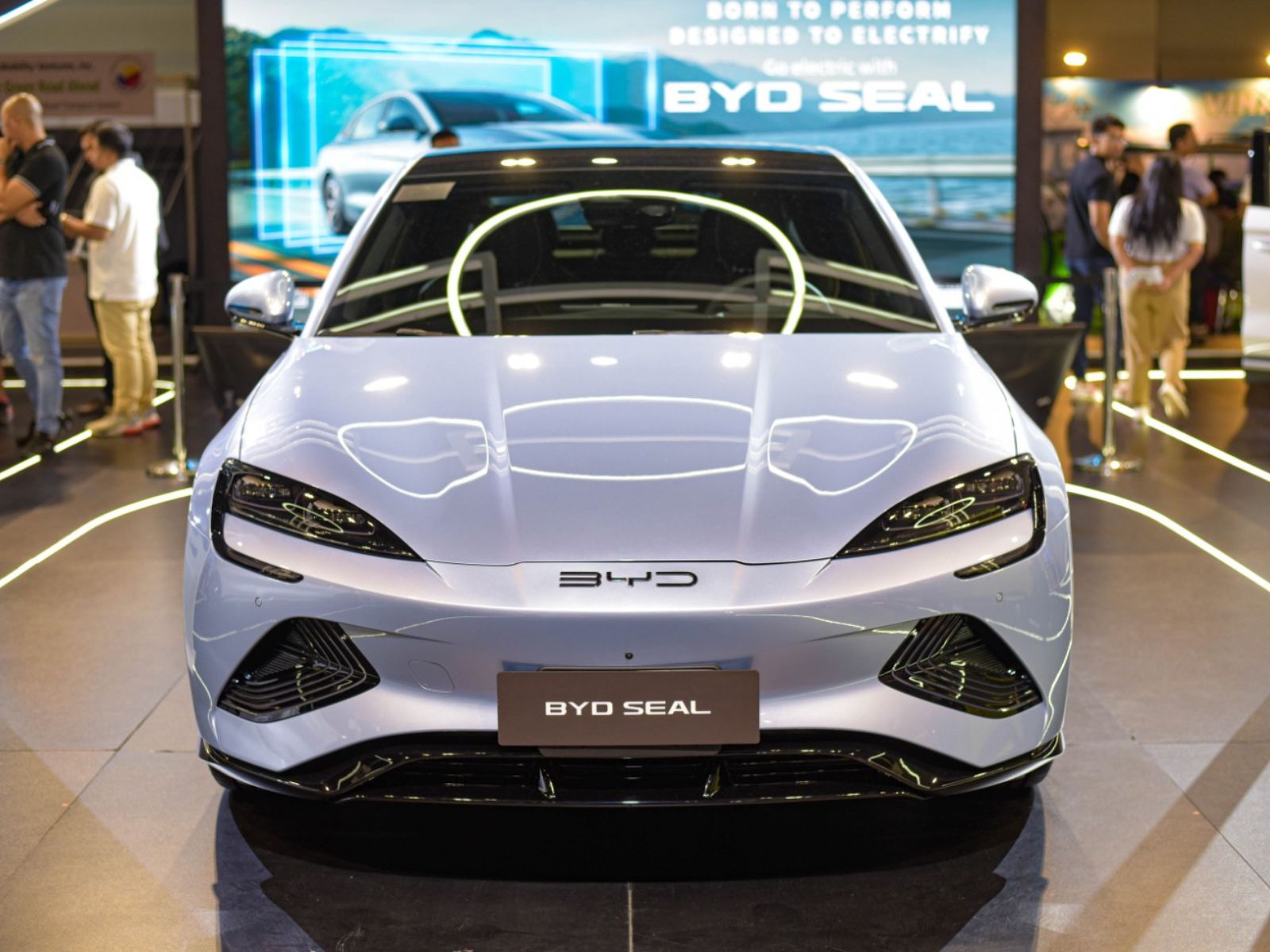
In just two years, BYD Cars Philippines went from “Oh, they sell EVs?” to “Wait, they’re everywhere.” From a modest retail footprint in 2024, the brand ballooned to around 77–79 dealerships nationwide by end-2025. Sales hit 26,122 units, up a wild 446 percent year-on-year. If you plug that into the industry leaderboard, BYD would already sit comfortably in third place.
That’s not just momentum—that’s an overnight rise.
But here’s where it gets interesting. Industry sources say BYD’s internal target isn’t just growth—it’s scale. The brand is aiming to capture at least 50 percent of Toyota Motor Philippines’ 2025 sales volume. Toyota moved 229,447 units last year, so the goal is to eventually reach roughly half of that.
Ambitious? Yes. Impossible? Not exactly. But also, not as simple as opening more showrooms.
The size of the hill to climb
The Philippine auto market closed 2025 with 491,395 units sold. Toyota alone accounted for nearly half of CAMPI-TMA volume. Mitsubishi, firmly in second, delivered 86,808 units—still far from the Toyota scale.
BYD’s 26,122 units are impressive for an EV brand. But to reach even half of Toyota’s volume, it would need to multiply sales several times over while operating in a market that still leans heavily toward combustion vehicles and hybrids.
Dealer expansion builds presence. But scale at that level needs deeper foundations.
The dealership gold rush era
One reason BYD scaled so fast is who they partnered with. Instead of waiting for legacy dealer groups, they recruited first-time automotive investors. The pitch was attractive: higher margins per car, strong early demand, and a chance to ride the EV wave early.
For newcomers, it felt like getting in on a fast-rising startup. For BYD, it meant rapid retail rollout without negotiating with entrenched dealer networks. But this also revealed a gap in long-term business thinking.

Why legacy dealers stayed cautious
Established dealer groups didn’t hesitate because they doubted EVs. They hesitated because they knew where dealership money really comes from. Selling brand-new cars has never been the main profit engine. Margins are thin and often just cover operating costs.
The real earnings start after the sale. Periodic maintenance service, repair work, replacement parts, accessories, and insurance commissions make up the bulk of dealership income. After-sales is the subscription model of the car business.
Take that away, and the business model shifts.
EVs change the revenue equation
Battery electric vehicles require far less maintenance. There’s no oil to change, no traditional transmission servicing, fewer wear components, and lighter brake usage thanks to regenerative braking.
In simple terms, fewer workshop visits mean less recurring income.
Legacy dealers saw this early. That’s why many leaned toward hybrids first. Hybrids electrify the lineup while keeping service revenue alive.
The reliability clock hasn’t fully ticked yet
There’s another layer to this conversation that doesn’t get talked about enough—time. Most EVs on Philippine roads today are still relatively young. Many are within their first ownership cycle. That means large-scale reliability data simply hasn’t matured yet.
With combustion vehicles, we’ve had decades to understand failure patterns—engine wear, transmission issues, cooling systems, fuel delivery, and more.
With EVs, especially newer platforms, it often takes a few years before real-world durability stories begin to surface. Battery degradation, software glitches, thermal management concerns, charging hardware wear, and electronic component failures don’t always appear early.
Right now, ownership is still in the honeymoon phase. When vehicles start reaching five- to seven-year marks, that’s when the true reliability conversation begins. That’s also when resale values, battery replacement costs, and long-term service economics become clearer.
Dealerships are watching this closely because reliability affects warranty exposure, workshop activity, and customer retention.
The investment recovery question
For first-time BYD dealers, the business case today is driven by sales volume. As long as EV demand is rising, selling units generates returns.
But dealerships are heavy investments. A single facility can exceed P100 million (conservative) once land, construction, tools, and inventory are factored in. Without strong aftersales income, recovery timelines stretch. Service bays may not generate enough work. Technician staffing becomes harder to sustain. Insurance and parts revenue remain limited compared to ICE dealerships.
So the conversation shifts from sales momentum to lifetime customer value.
Hybrids still anchor the transition
Market numbers reinforce this reality. Of the 32,489 electrified vehicles sold in 2025, the majority were hybrids. Full EVs accounted for a smaller share, with plug-in hybrids even smaller.
Hybrids still require oil changes, fluid service, and mechanical upkeep. They keep dealership service ecosystems alive while easing buyers into electrification. That’s why many legacy brands continue to push hybrids hard. It’s electrification with economic continuity.
BYD does offer plug-in hybrids, but much of its brand energy still revolves around full EVs.
Can BYD dent Toyota’s armor?
Short answer: yes.
Long answer: not overnight.
BYD’s pricing, tech appeal, and aggressive dealer rollout will chip into the market. But reaching even half of Toyota’s 2025 volume requires deeper structural shifts—charging infrastructure, fleet adoption, resale value stability, and a dealership model that stays profitable long after the initial sale.
Toyota’s dominance isn’t just about the product. It’s financing reach, service footprint, parts logistics, and decades of customer trust. That ecosystem takes time to disrupt.
The real sustainability test
BYD’s rise is real. It has accelerated EV awareness faster than any brand locally. It has proven that electrified vehicles can move volume, not just headlines.
But the next phase is where the real test begins. Early adopters will level off. Dealers will start measuring service income. Investors will track return timelines. Customers will begin asking long-term ownership questions.
And as EVs age, reliability data will start telling its own story. Rapid expansion can light the fire.
Sustaining it depends on whether the business behind each showroom stays profitable—and credible—years after the first wave of buyers has moved in.

Toyota isn’t watching from the sidelines
It’s also worth pointing out that Toyota Motor Philippines isn’t taking any of this sitting down. If anything, BYD’s overnight rise has pushed Toyota to move faster on its own electrification push. The company has been expanding its hybrid lineup, rolling out more HEV variants across key nameplates, and positioning electrified models at price points closer to mainstream buyers.
Toyota understands the challenge. It knows electrification is no longer niche, and it’s responding with products designed to protect its core market while easing customers into the transition—without disrupting its service ecosystem.
In short, the market leader is treating the threat seriously. And that makes the coming years even more interesting.
Bottom line
BYD will keep growing. It will keep taking slices of market share.
But reaching even half of Toyota’s 2025 sales volume isn’t just about selling more EVs. It’s about proving that an EV-heavy dealership network can stay profitable, that long-term reliability holds up, and that the ownership ecosystem can mature in a market where servicing—not selling—has always paid the bills.
And it’s about doing all that while the industry’s biggest player is actively defending its ground.