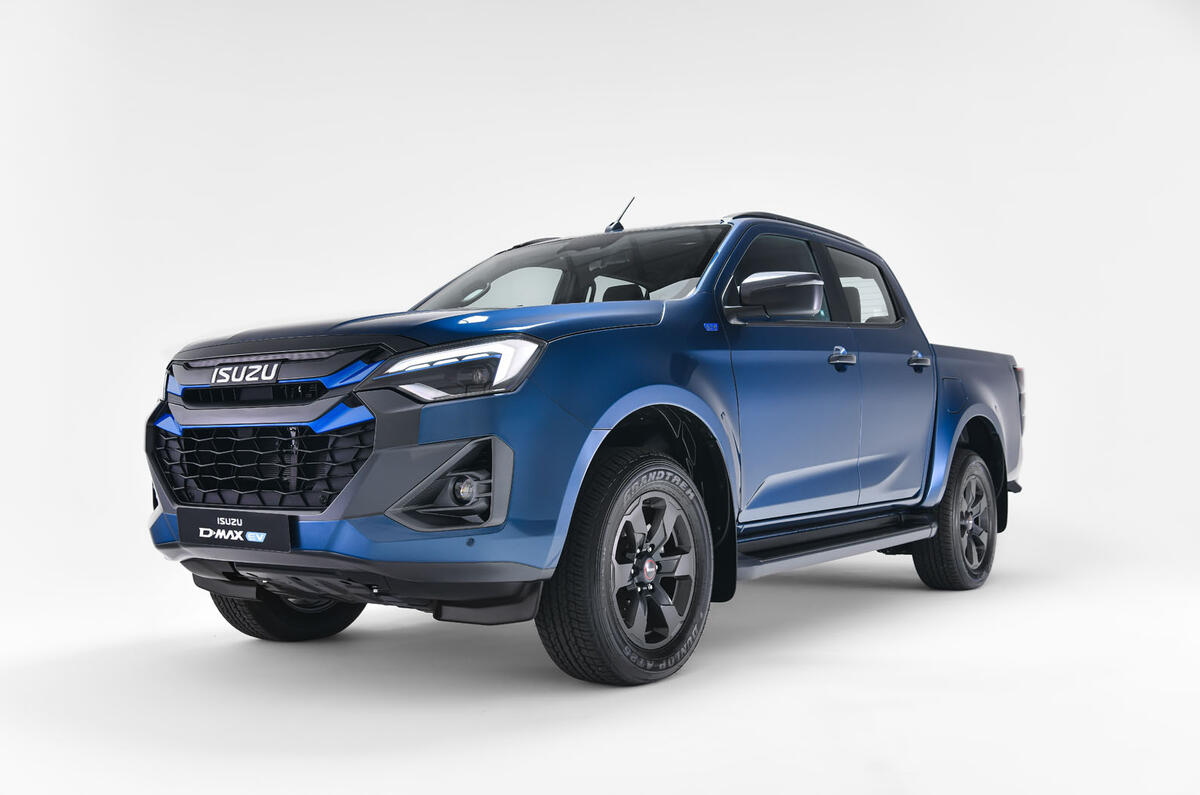
Isuzu has launched the electrified version of the D-Max pickup in the UK. It coexists with the diesel D-Max, but there’s a significant difference aside from the powertrain, the former is priced much higher – almost double the price of its oil-burning counterpart.
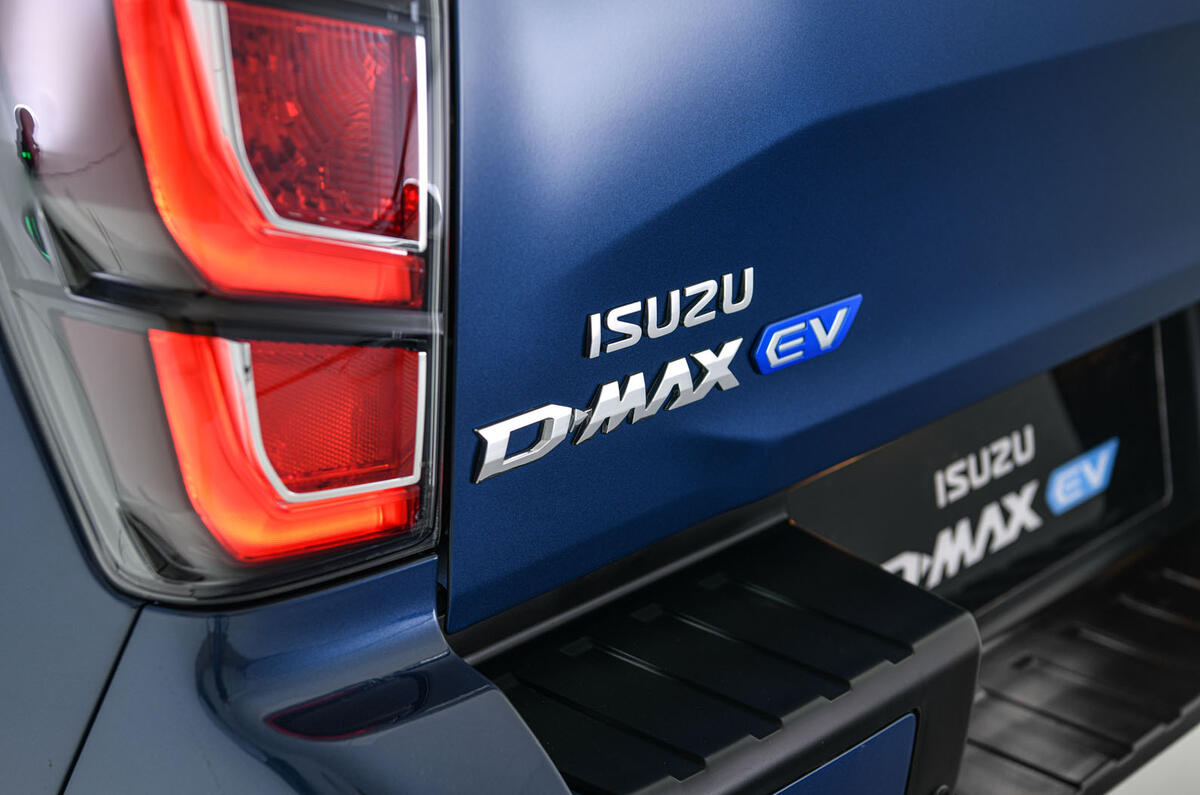
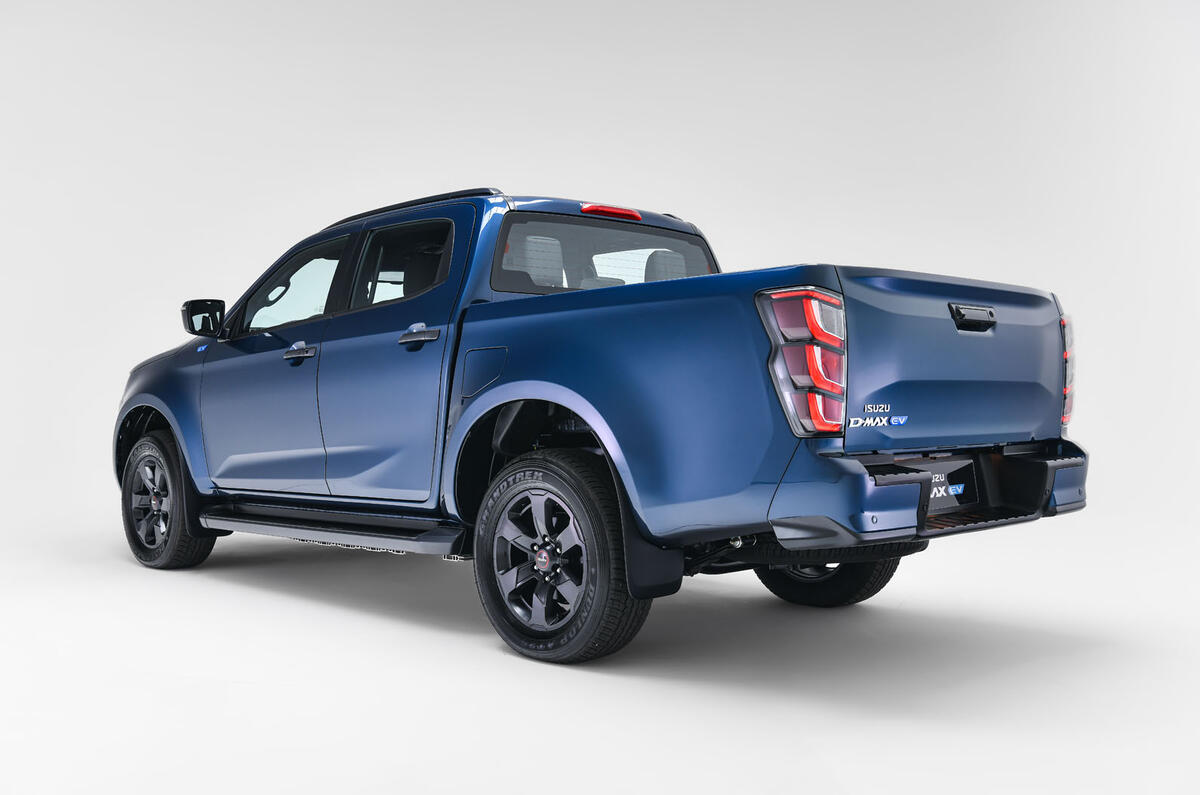
Visually, it closely resembles its diesel counterpart, with subtleties like blue exterior accents and a charging port replacing the fuel filler. LED headlights and front/rear parking sensors are standard across the range, while trims vary between chrome and dark gray, depending on the variant.
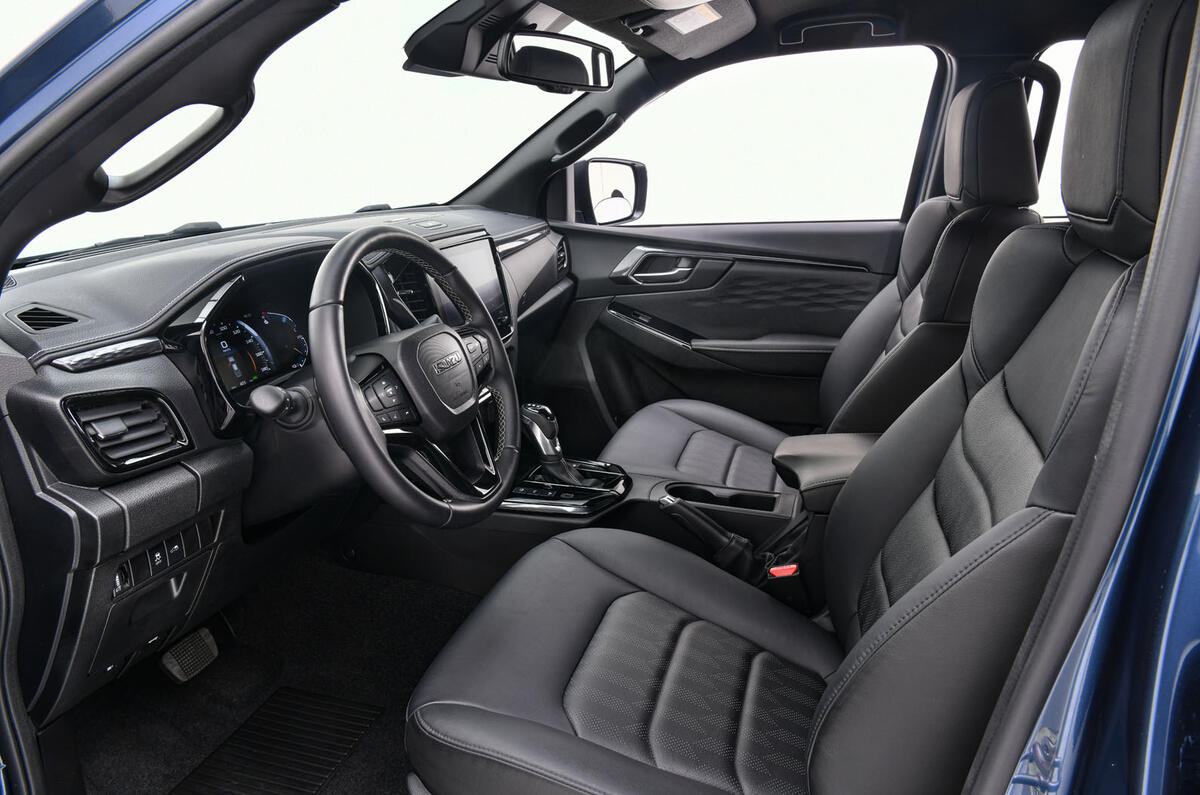
Inside, the D-Max EV has leather upholstery, heated front seats, and a 7-inch driver information display. An 8- or 9-inch infotainment system with either a 6- or 8-speaker audio is also available, depending on the variant. Also variant-specific is the auto-dimming rearview mirror.
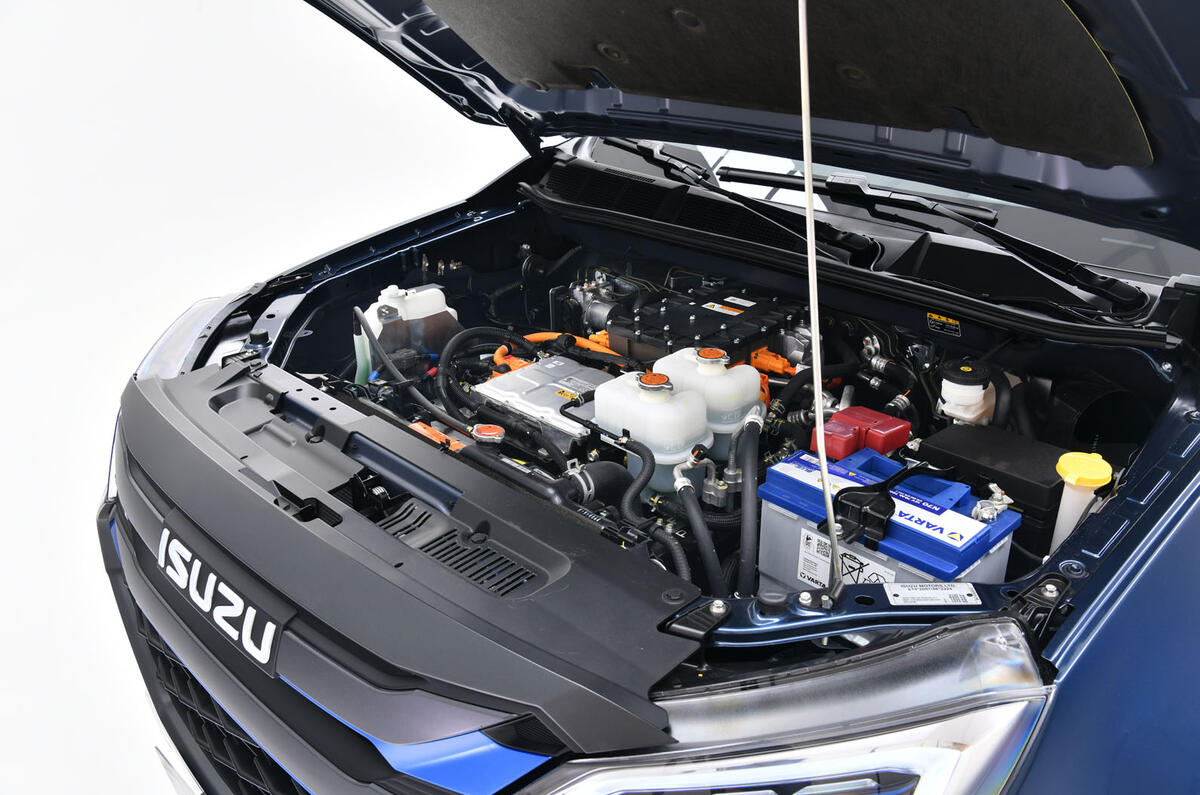
The D-Max EV features a 66.9kWh battery-powered dual-motor system, standard all-wheel-drive, improved suspension, and slightly reduced ride height. Payload capacity is 1 tonne, with a 3.5-tonne towing capability.
In the UK, the D-Max EV is available in three variants: the entry-level Extended Cab at £59,995, the Double Cab at £60,995, and the top-tier eV-Cross at £62,495. These prices exclude the UK’s 20% VAT. At face value, they seem okay for an electric pickup, but they’re considerably higher than their diesel equivalents.
For comparison, the diesel-powered D-Max starts at £31,655 for the Utility Single Cab, £35,600 for the DL20 Double Cab, and around £40,000 for the DL40 Double Cab, excluding VAT.
There are many factors that contribute to the higher pricing. One factor could be the high cost of building the D-Max EV, specifically its battery and electric drivetrain, which are more expensive to produce. Another is that EVs, though seemingly on a speedy route to becoming normalized, are generally still in low demand. If not for region-specific mandates or incentives, many consumers would otherwise choose internal combustion engine (ICE) vehicles for their parts availability, easy maintenance, and lower prices for some models.
However, Isuzu has positioned the D-Max EV differently. According to Neil Scott, Isuzu UK National Sales Manager, the D-Max EV “offers true value and a sustainable solution for fleets and professionals alike.” This indicates that the model is geared toward commercial users, particularly fleet buyers.
Since it’s targeted at such buyers, the D-Max EV comes with added features and is priced with long-term operational savings and environmental compliance in mind.
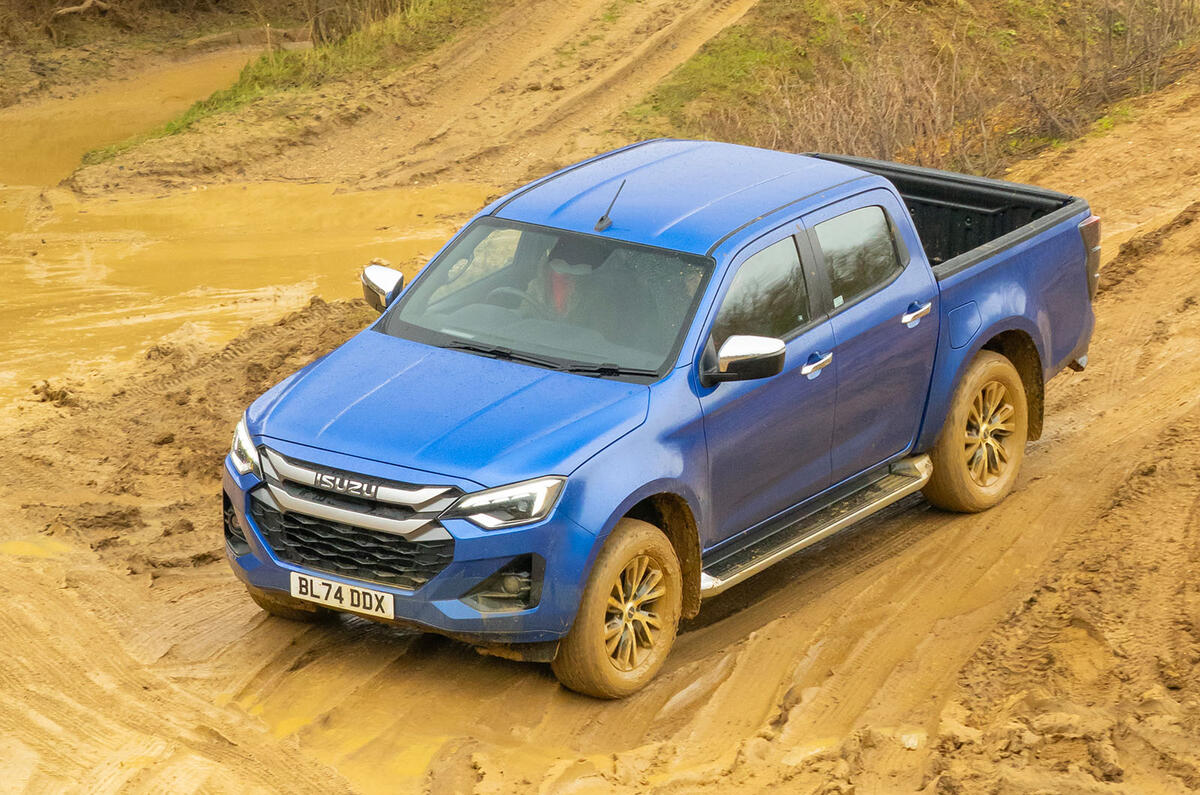
Hopefully, if – and that’s a huge IF – Isuzu Philippines eventually brings in the electric D-Max, it won’t be priced as extravagantly as it is in the UK. The nameplate has already amassed a local fanbase, so introducing a battery-electric variant could – and this might sound like a long shot – entice them to try something different.