
Few vehicles have played as many roles in Filipino motoring history as the Toyota Tamaraw. From a dependable family vehicle to a hardworking commercial workhorse, the Tamaraw became an important part of everyday life, particularly when the Tamaraw FX found its place in public transportation. For thousands of Filipino drivers and operators, it was more than a means of moving passengers. It was a source of livelihood.
Now, Toyota Motor Philippines (TMP) is bringing the Tamaraw back to familiar territory, although the vehicle itself has changed considerably.
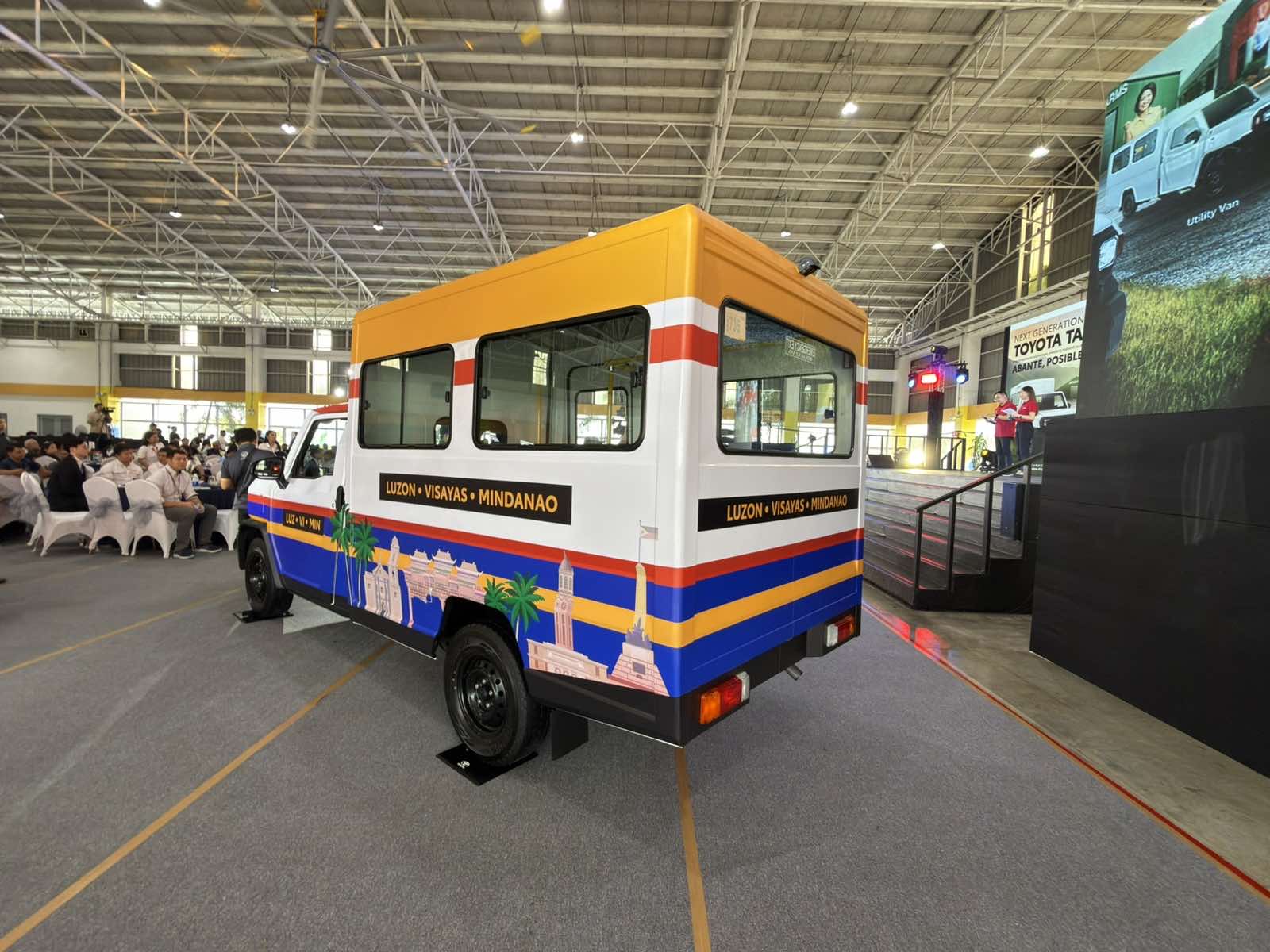
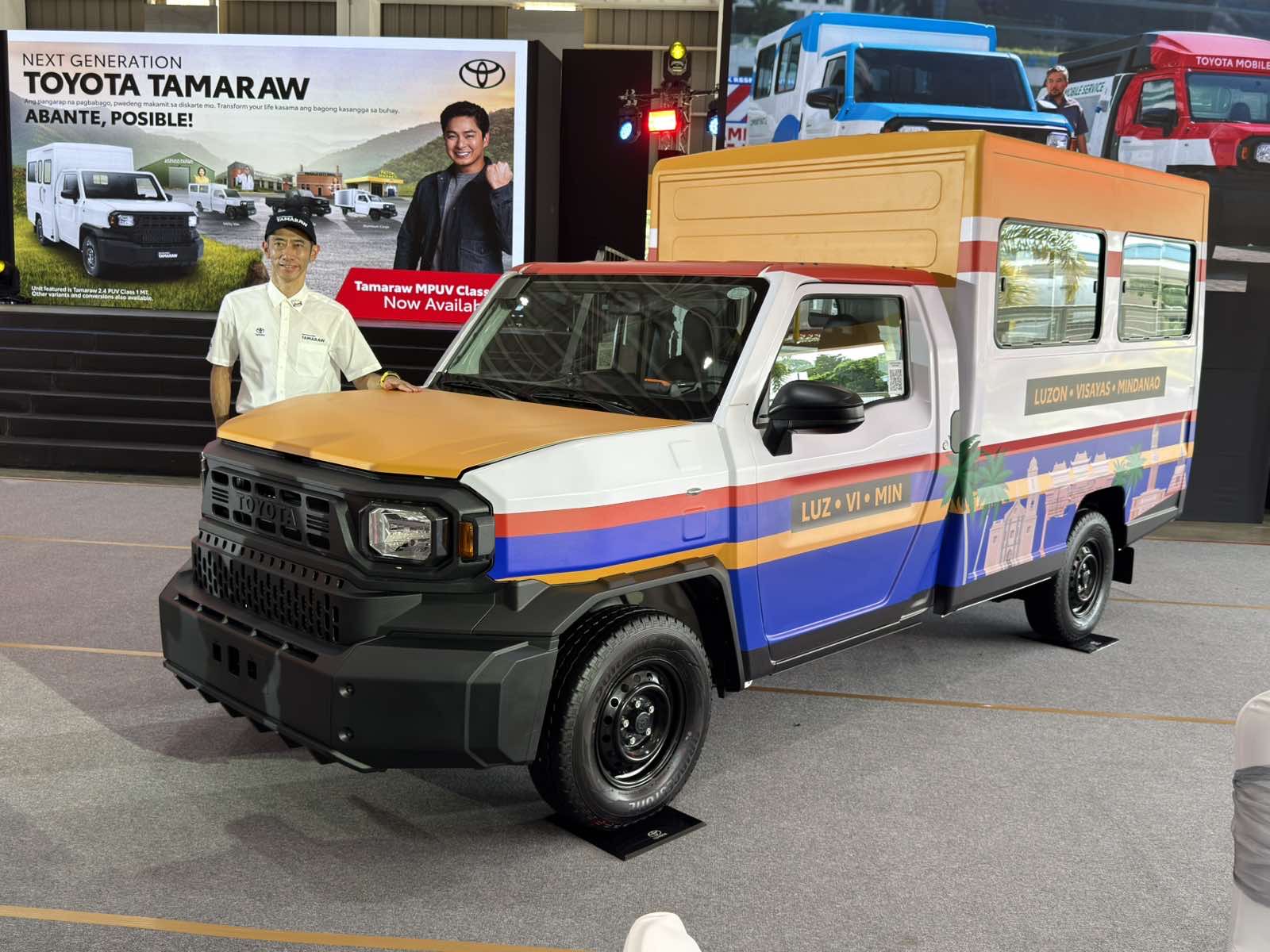
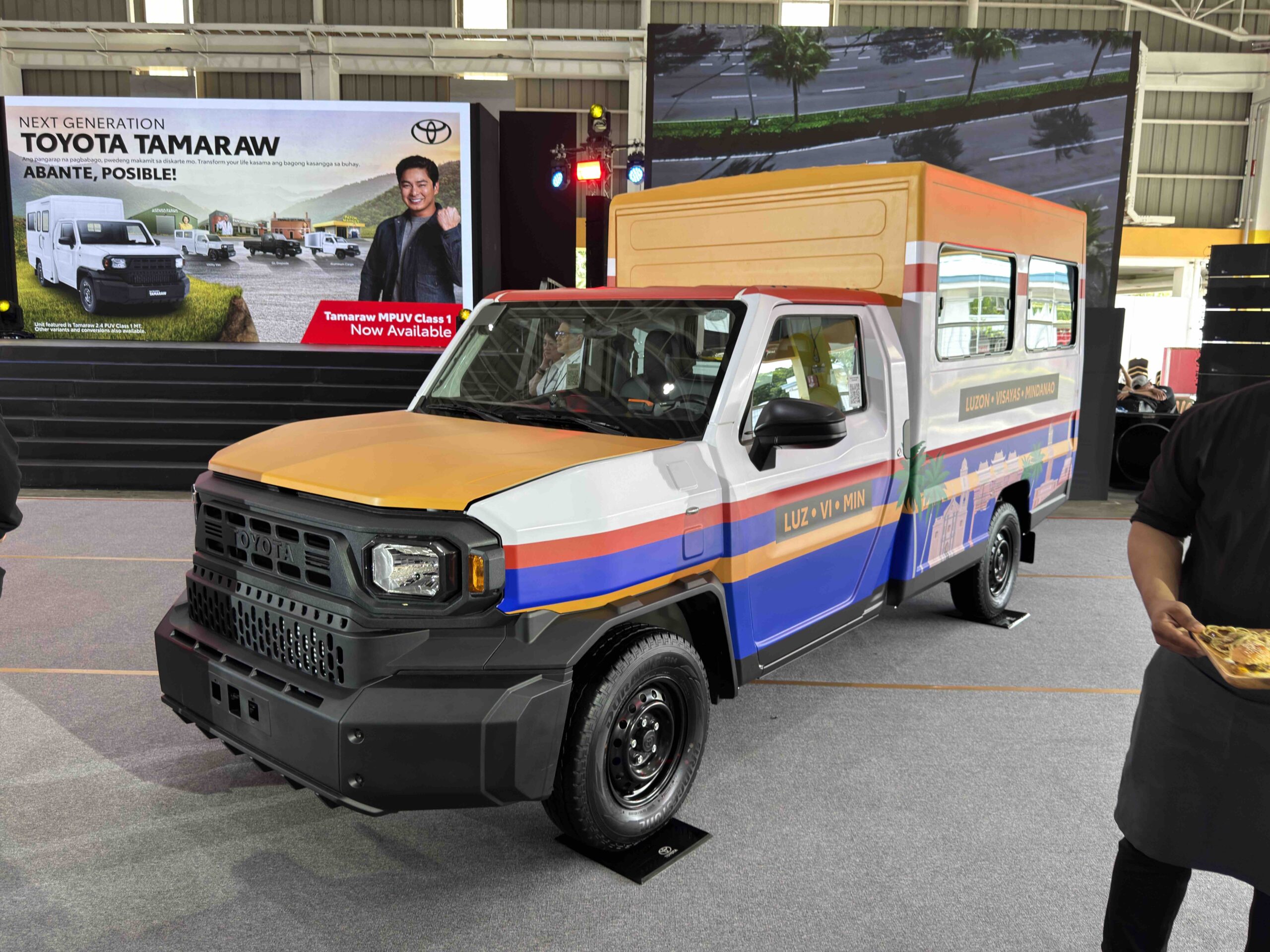
At a preview held at its Santa Rosa, Laguna manufacturing facility on October 13, TMP introduced the next-generation Toyota Tamaraw Modern Public Utility Vehicle (MPUV), a 12-passenger, air-conditioned conversion of the workhorse that returned to the Philippine market in 2024.
The new Tamaraw MPUV is Toyota’s entry into the Class 1 category of the government’s public transportation modernization program, a segment intended for smaller passenger vehicles operating on shorter routes.
While much of the discussion surrounding public transport modernization has centered on replacing traditional jeepneys with larger, more expensive vehicles, Toyota appears to be approaching the problem from another direction. Rather than trying to carry as many passengers as possible, the Tamaraw MPUV addresses the transportation requirements of smaller communities where a full-sized modern jeepney may simply be too much vehicle for the job.
A better fit for smaller routes
With seating for 12 passengers, the Tamaraw MPUV is particularly suited for towns, villages, residential communities and provincial municipalities where passenger traffic is relatively modest.
Think of the short routes connecting barangays to public markets, town centers, schools, transport terminals and commercial areas. These are places where commuters still depend heavily on jeepneys and other small public utility vehicles to get around.
For such applications, operating a large-capacity vehicle may not always make financial sense. A smaller vehicle that can make more frequent trips could be a more practical alternative, provided passenger demand and route economics support the operation.
Toyota has also addressed several of the shortcomings commonly associated with traditional public utility vehicles.
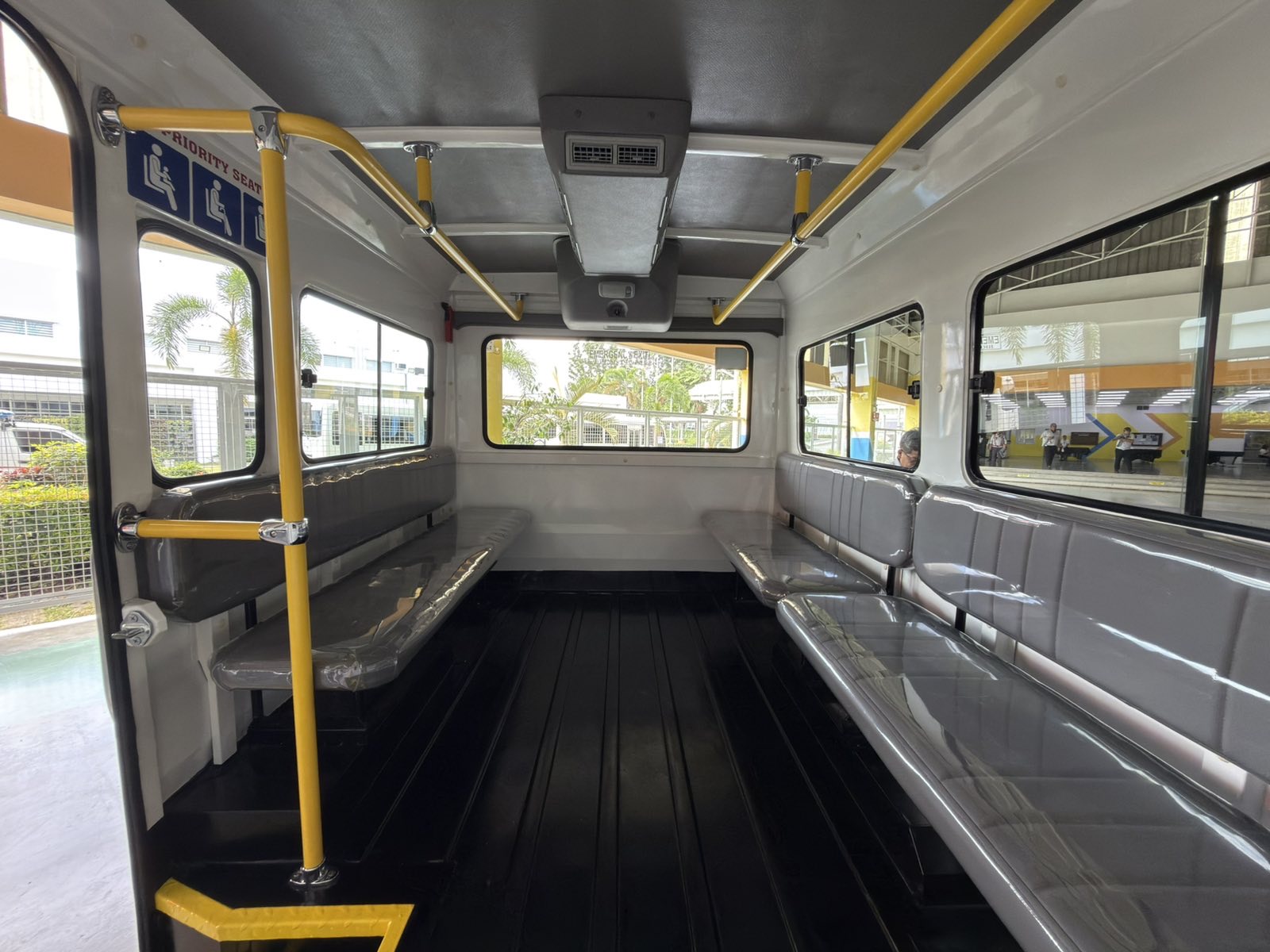
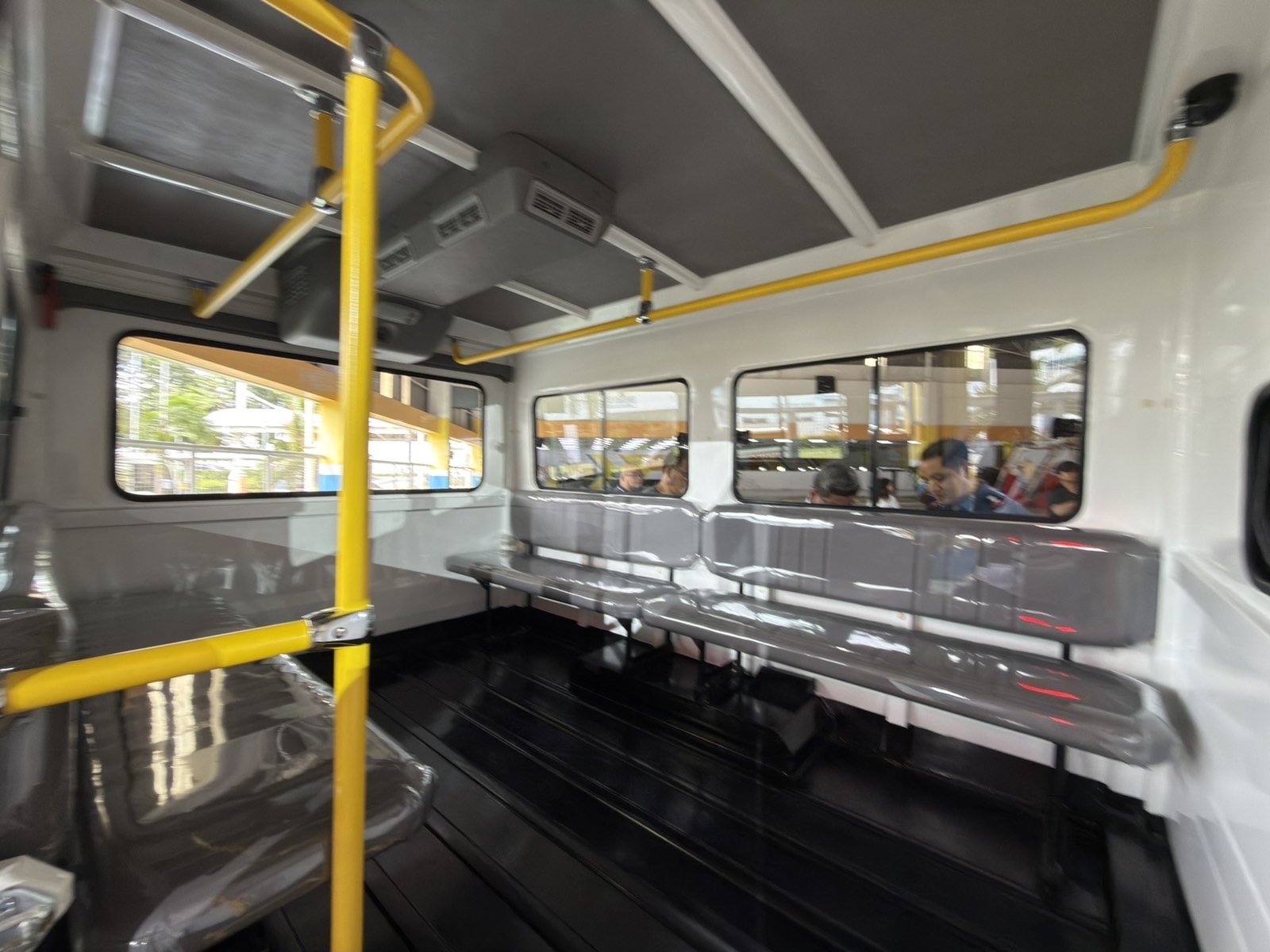
The passenger cabin is enclosed and air-conditioned, while Wi-Fi connectivity adds an amenity that commuters increasingly expect from modern transportation.
More importantly, passenger access is through a door on the right side of the vehicle. This allows commuters to board and alight from the curbside rather than stepping into the roadway, a simple but significant improvement in passenger safety.
The vehicle’s compact dimensions should also make it easier to negotiate narrow provincial roads and crowded town centers, where larger modern jeepneys may be less convenient to operate.
Making modernization affordable
Of course, the success of any modern public utility vehicle depends on more than passenger comfort and convenience. For the operators who must purchase and maintain these vehicles, affordability remains an equally important consideration.
The Tamaraw MPUV Class 1 carries a suggested retail price of P1,398,000, but qualified Transport Service Entities (TSEs) may avail themselves of a P210,000 government subsidy.
TSEs are consolidated transport cooperatives, corporations or other juridical entities registered and authorized by the Land Transportation Franchising and Regulatory Board (LTFRB) to manage and operate public transport routes. The subsidy is specifically available to eligible entities, rather than individual buyers simply wishing to operate a passenger vehicle.
Under the government’s financing arrangement, qualified buyers can acquire the Tamaraw MPUV with a down payment of just 5 percent, with the balance payable through participating government banks over a period of up to 84 months, or seven years.
Toyota Financial Services (TFS) is also offering an alternative package requiring a 10-percent down payment, with monthly amortizations of P33,276 spread over 60 months.
Broken down into daily terms, that works out to approximately P1,109 per day.
For a transport operator evaluating the cost of acquiring a new vehicle, looking at the monthly payment in daily terms makes the financial commitment easier to understand. That figure, however, represents only the financing obligation. Fuel, maintenance, insurance, registration, driver compensation and other operating expenses must still be considered.
Whether the Tamaraw can generate sufficient income to cover these costs will ultimately depend on the route, passenger volume, fare structure and efficiency of the transport operation.
Nevertheless, the availability of government assistance and extended financing arrangements addresses one of the biggest barriers to public transport modernization: the difficulty of raising enough capital to purchase a new vehicle.
A Filipino-built solution
The Tamaraw MPUV is also significant because of where it is manufactured.
The next-generation Tamaraw is produced at TMP’s Santa Rosa plant, while the MPUV passenger body conversion is handled by Almazora Motors Corporation, one of Toyota’s accredited local body builders.
Toyota has committed P5.5 billion in investments covering Tamaraw vehicle manufacturing, parts localization and the establishment of a dedicated conversion facility.
The program directly involves 1,877 TMP employees, with another 353 workers employed by suppliers supporting Tamaraw production. Its local manufacturing network includes 47 Tier 1 parts suppliers and seven body-building partners.
Production of the next-generation Tamaraw has reached 34,739 units since November 2024, based on figures recorded through September 2026.
These numbers underscore Toyota’s broader plans for the Tamaraw platform. Beyond its familiar cargo and utility applications, the vehicle has already been adapted into ambulances, mobile stores, service vehicles, patrol units and other specialized configurations.
The MPUV represents another step in making the Tamaraw a multipurpose vehicle tailored to Philippine requirements.
Returning to where it belongs
There is also a certain familiarity to seeing the Tamaraw carrying passengers again.
When the Tamaraw FX entered production in 1991, it quickly became a fixture of Philippine roads. Its relatively simple construction and versatility made it popular not only among families and businesses but also among operators who needed an affordable vehicle capable of carrying paying passengers.
In many ways, the new Tamaraw MPUV continues that tradition, although today’s requirements are considerably more demanding.
The Department of Transportation (DOTr) granted the next-generation Tamaraw its official Class 1 Modern PUV certification on May 7, 2026, confirming its qualification under the government’s public transport modernization framework.
Speaking during the preview, TMP President Masando Hashimoto described the MPUV as another important addition to the Tamaraw’s growing list of applications.
“The Tamaraw is a workhorse—and a racehorse. It supports livelihoods, serves communities, and gives people something to cheer for. Today, we add an important missing piece: a jeepney. By becoming part of everyday public transportation, the Tamaraw becomes a true national car—a vehicle for all Filipinos,” Hashimoto said.
His description reflects Toyota’s ambition to make the Tamaraw more than another commercial vehicle. By extending its applications into public transportation, the company hopes to establish the locally manufactured workhorse as a vehicle serving a much wider range of Filipino needs.
Retail sales of the Tamaraw MPUV began on October 13, with its public debut scheduled for the Philippine International Truck Show on October 22 to 24 at the SMX Convention Center in Pasay City.
Ultimately, the question is not simply whether the new Tamaraw can replace aging jeepneys. It is whether a smaller, more manageable public utility vehicle can offer transport cooperatives and operators a financially sustainable way to modernize their services.
For communities where short trips, narrow roads and modest passenger volumes are part of everyday life, the Tamaraw MPUV may be a more appropriate answer than a larger, costlier vehicle.
And for a nameplate that helped generations of Filipinos make a living, returning to the business of carrying passengers seems like a natural next chapter.