
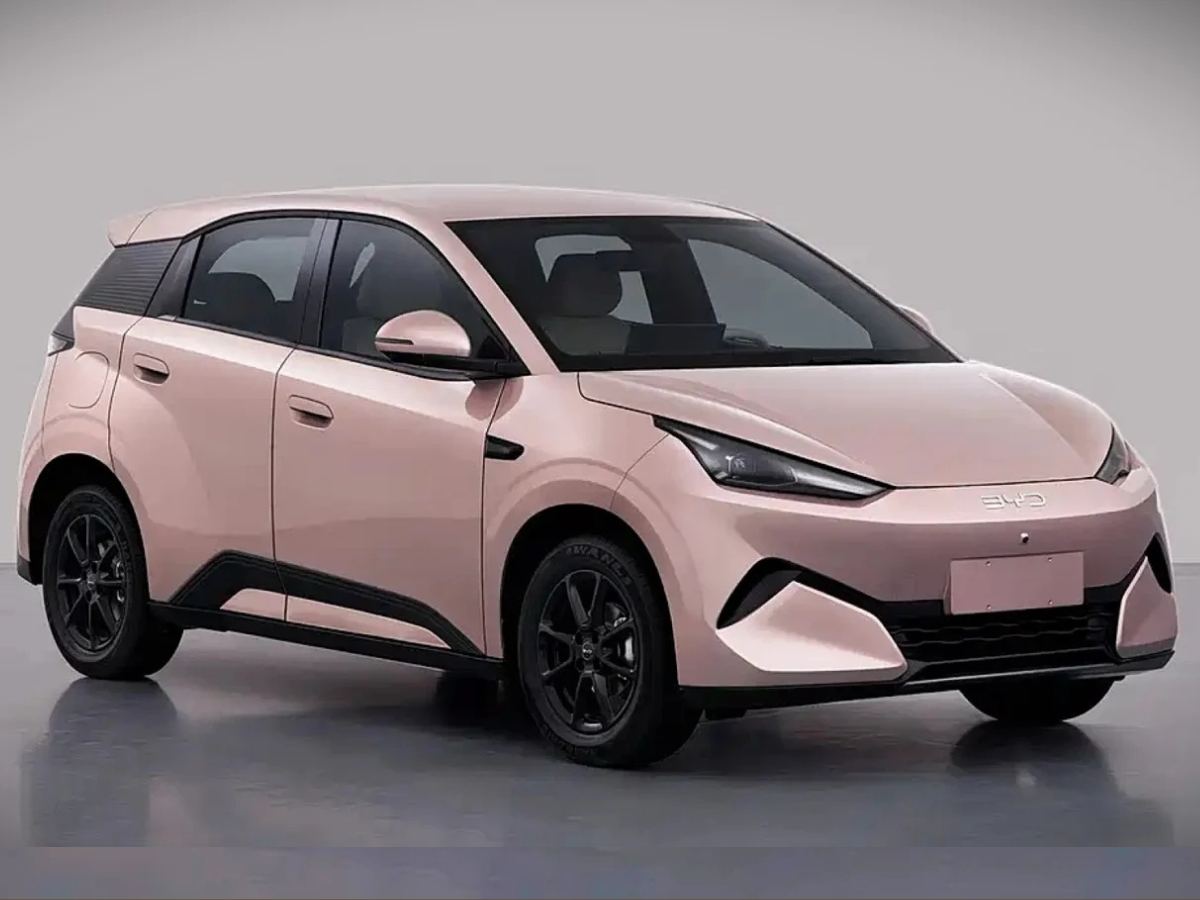
In recent years, BYD has carved a name for itself in the small EV business, with the Seagull leading the charge. Now, the automaker seems to be upping the ante as it gears up for the global introduction of the Great Seagull, a new electric hatchback that will sit between the existing Seagull and Dolphin in BYD’s Ocean Series.
While the name may suggest a larger version of the familiar Seagull, the more interesting story is where this new model could fit in the growing small EV market.
The Great Seagull is expected to measure around 4.2 meters long, making it substantially larger than the current Seagull. That extra length may not sound dramatic on paper, but in everyday driving, it can make a meaningful difference.
A larger footprint can mean more usable cabin space, a more practical rear seat and a better overall sense of being in a proper everyday car rather than a city runabout. That could make the Great Seagull appealing to buyers who like the idea of an affordable EV but find the current crop of tiny electric cars a little too compromised for regular use.
Underneath, industry watchers say specifications point to a relatively straightforward formula. The Great Seagull is expected to use a 95-kW electric motor, with battery options that could provide approximately 320 km or 420 km of CLTC range depending on the version.

Those numbers are still based on China’s testing cycle, so they should not be directly interpreted as real-world Philippine driving range. Still, the larger battery option suggests that BYD is thinking beyond short urban trips.
That positioning could become particularly interesting if the Great Seagull eventually reaches the Philippines.
BYD already has an established presence in the local EV market, with the Seagull serving as one of its more accessible electric offerings. A larger model placed between the Seagull and Dolphin could give the company another way to attract buyers who want an EV that can handle daily commuting, errands and occasional longer trips without stepping into the price and size of a larger electric crossover.
There is also a bigger trend behind this.
As EVs become more mainstream, the market cannot rely entirely on expensive SUVs and high-performance models. There is plenty of room for practical, relatively compact electric cars that prioritize affordability and efficiency.
The Great Seagull could fit that space rather neatly.
For now, however, its Philippine prospects remain uncertain. BYD has confirmed its China plans, but there is no announcement yet that the model is coming here. If it does, though, the Great Seagull could prove to be one of BYD’s more interesting small EV propositions.

Autocar’s Take
The Great Seagull makes sense because it addresses one of the biggest compromises with very small EVs: practicality. The current Seagull is attractive because of its compact size and accessible positioning, but not everyone wants a car designed primarily around urban driving. By stretching the formula, BYD could have something that remains efficient and easy to drive while becoming more useful as an everyday vehicle.
For the Philippine market, that could be particularly interesting. There is no guarantee the new model will come here, but if BYD can position it competitively, it could give buyers another compelling reason to consider making the switch to electric.