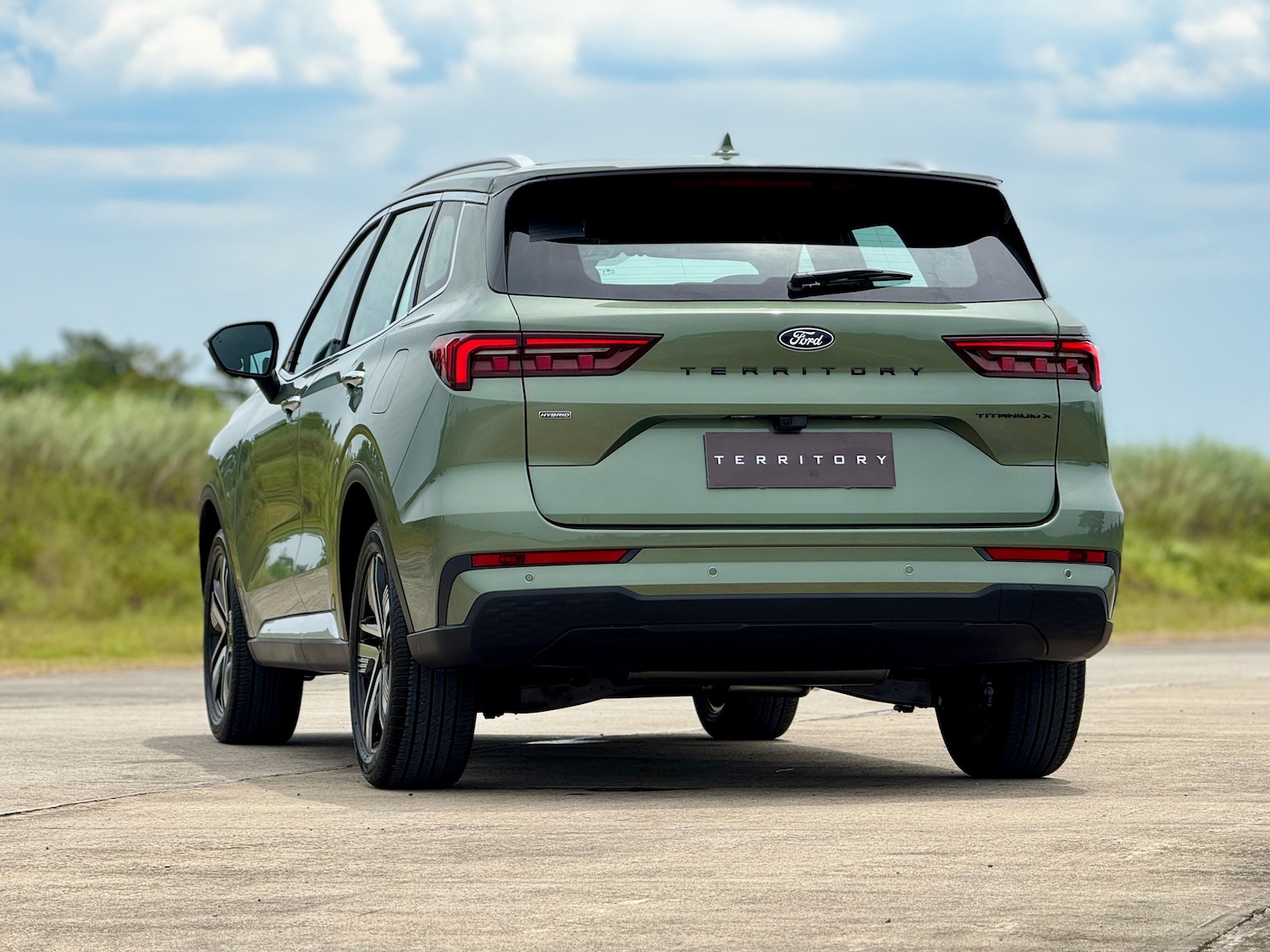

The Ford Territory Hybrid has finally arrived in the Philippines. And, if you’ve been watching the slow, cautious rollout of electrified vehicles from mainstream brands, the timing of this one feels both overdue and inevitable. But, as they say, better late than never.
After years of riding the wave of success with its internal combustion-powered Territory, Ford is stepping into hybrid territory (pun intended) with what is essentially a logical evolution of one of its strongest regional products.
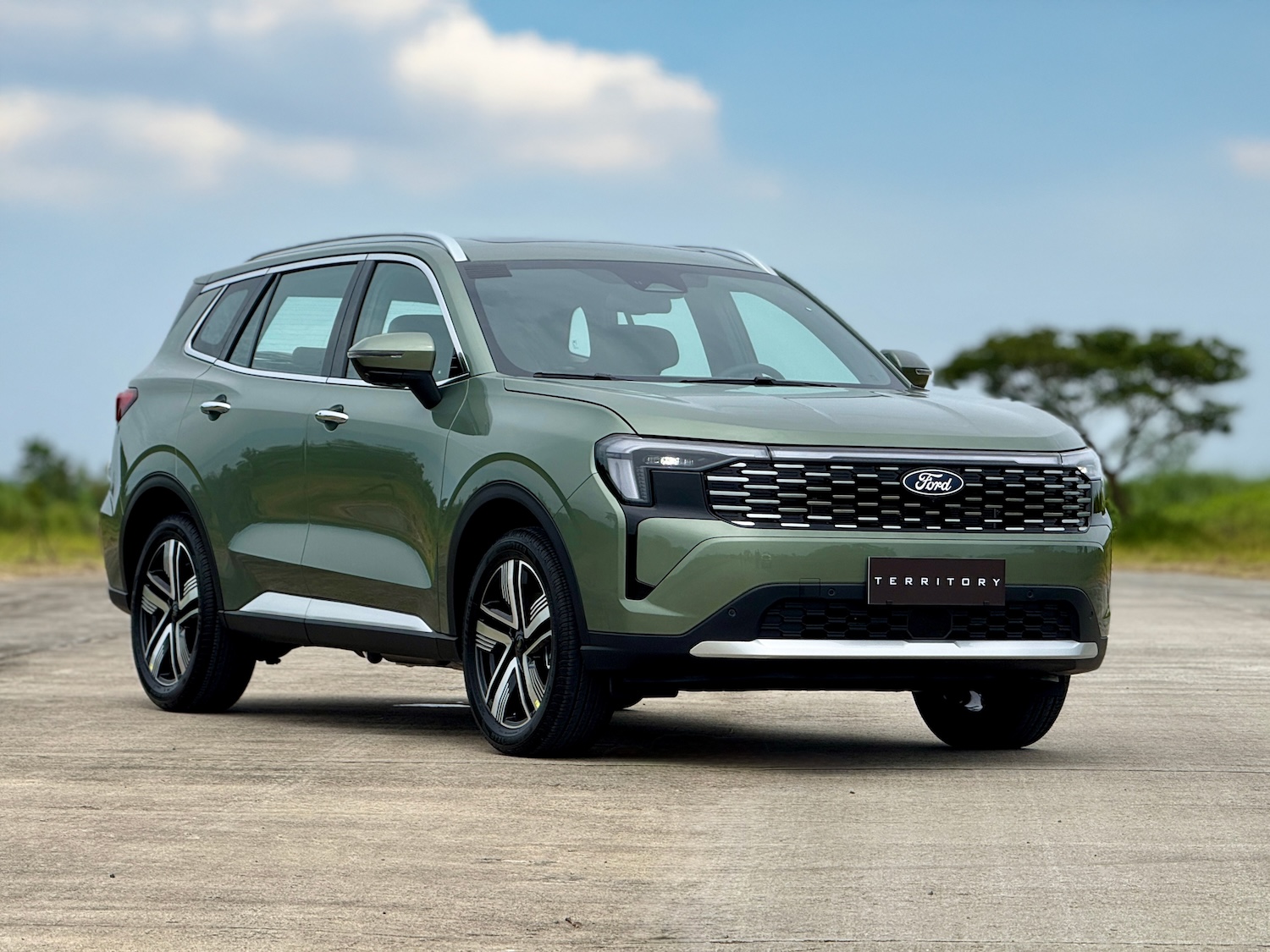
Meet the Ford Territory Hybrid. We spent a few minutes with it and, let’s just say, the improvements it got are what this popular SUV needed all along.
A Full Hybrid Without the Fuss
The Ford Territory Hybrid isn’t a dramatic reinvention of the well-loved nameplate. Ford didn’t go the plug-in route or push for full electrification. Instead, it’s introduced a practical self-charging hybrid system meant to slot in seamlessly with how Filipino customers already drive. No need for chargers or complicated routines. Instead, the Territory Hybrid uses regenerative braking and the combustion engine to keep its lithium-ion battery topped up. The result is better fuel economy, smoother stop-and-go responsiveness, and an overall quieter ride.

Power comes from a 1.5-liter inline-four hybrid engine paired with a 2-speed dedicated hybrid transmission and a 1.83kW high-voltage battery. Combined output figures are relatively robust for the class: 148 hp from the engine, 216 hp from the electric motor, with a healthy 315 Nm of peak electric torque. Ford claims 0 to 100 km/h in 8.5 seconds, which isn’t particularly fast but more than adequate for urban use.
Drive modes include Eco, Normal, and Sport, with an added layer of adjustability from selectable steering feel settings: Comfort, Normal, and Sport. These modes can be set manually or left to the system to adjust depending on conditions. The whole setup suggests a focus on adaptability, not performance – though the instantaneous torque of the electric assist adds a dose of responsiveness to city driving.
The Territory Hybrid drives way better than the non-hybrid version. There’s no lack of pull, and the reworked suspension felt tighter, which meant more composed handling on actual application. The Comfort Braking feature is one nifty trick, which allows for a fairly comfortable emergency braking – something that isn’t available in other cars.
Familiar Platform, Refined Look
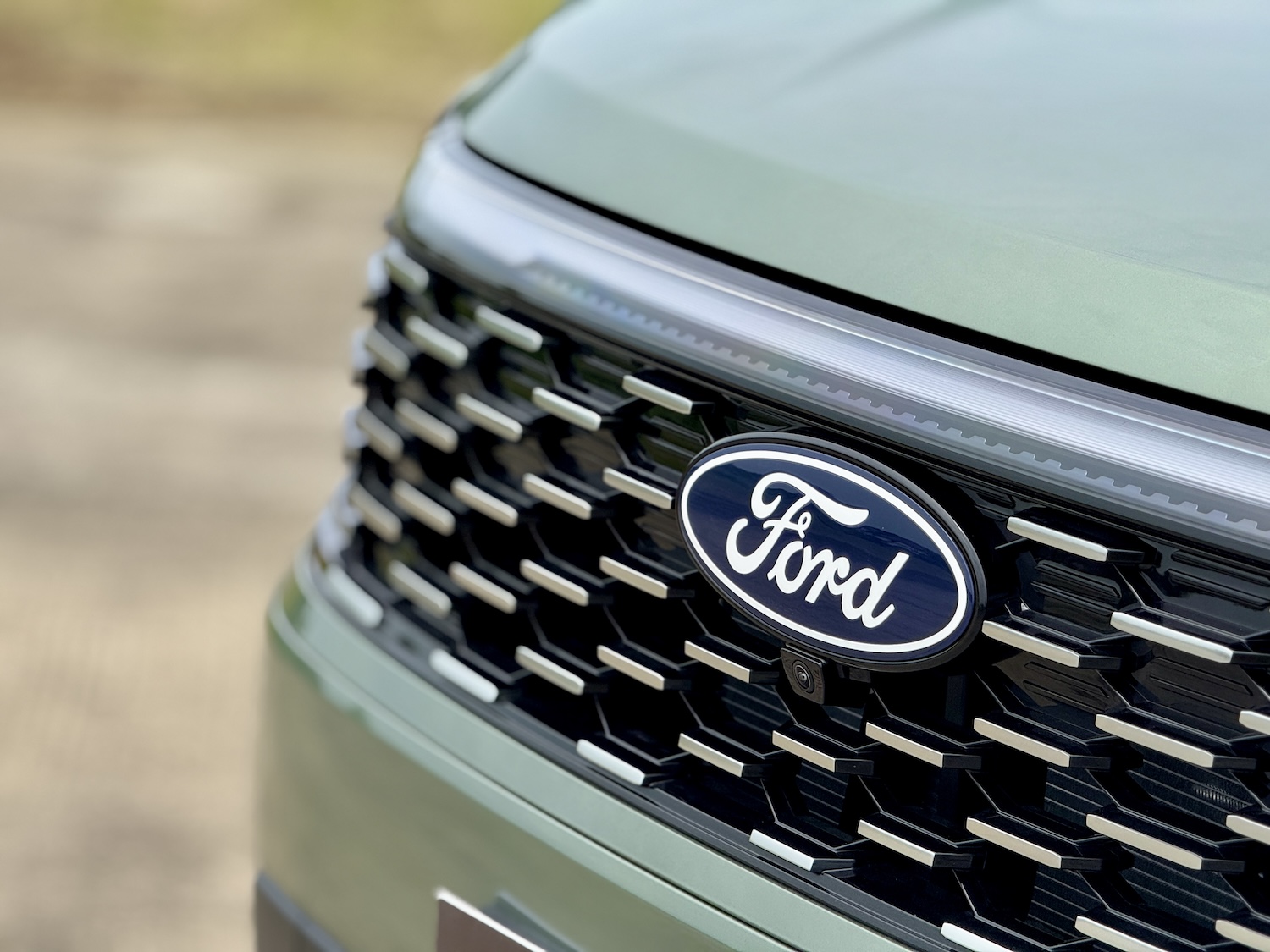
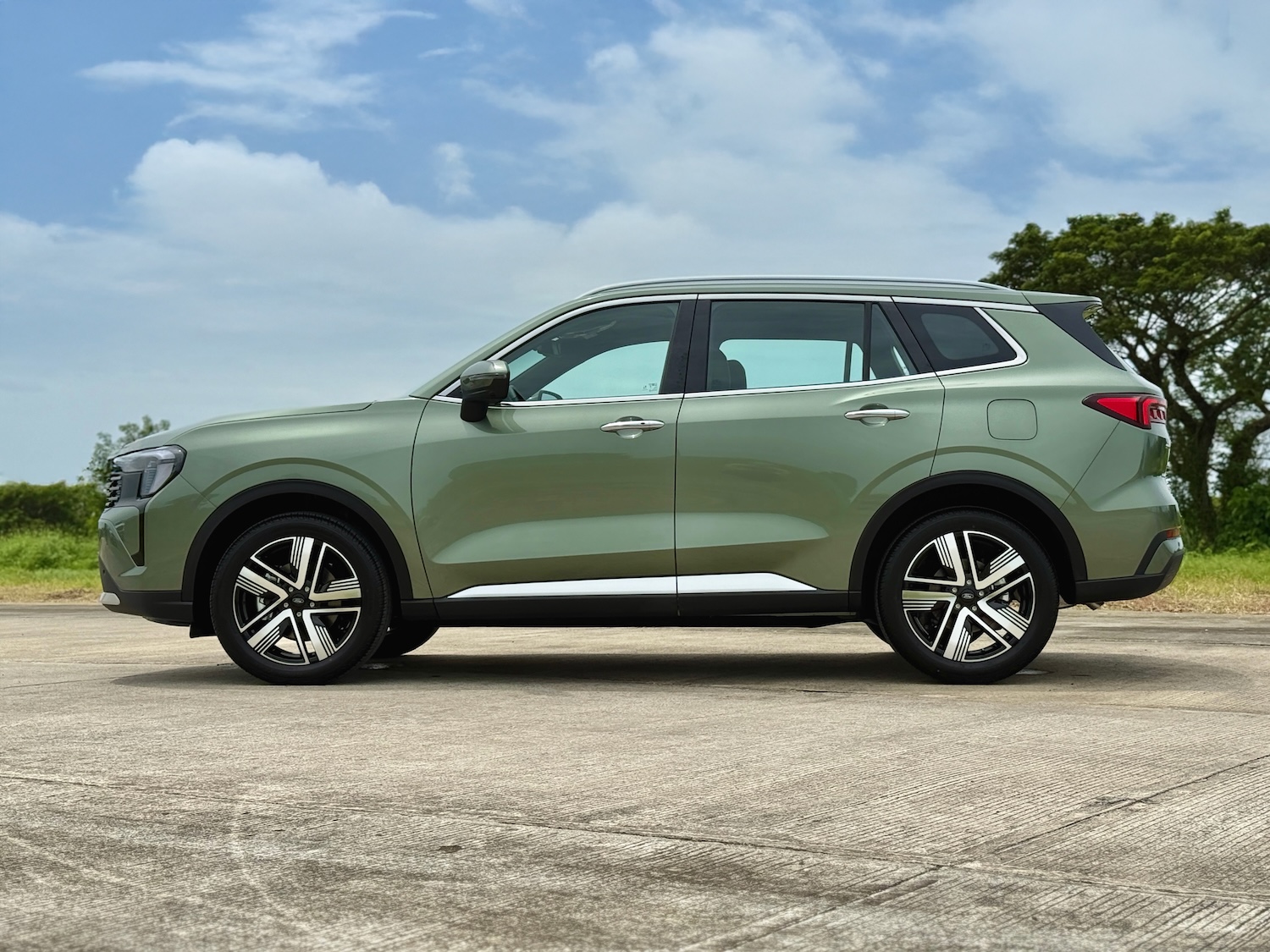
If the powertrain is the most significant change, the design updates on the Territory Hybrid are less revolutionary and more about refinement. The basic profile remains, but Ford has revised the hood and fenders, added a new grille design, and sharpened up the LED lighting elements front and rear. The Titanium X variant gets the flashier upgrades – a coast-to-coast LED position lamp, 19-inch wheels, and a panoramic moonroof.
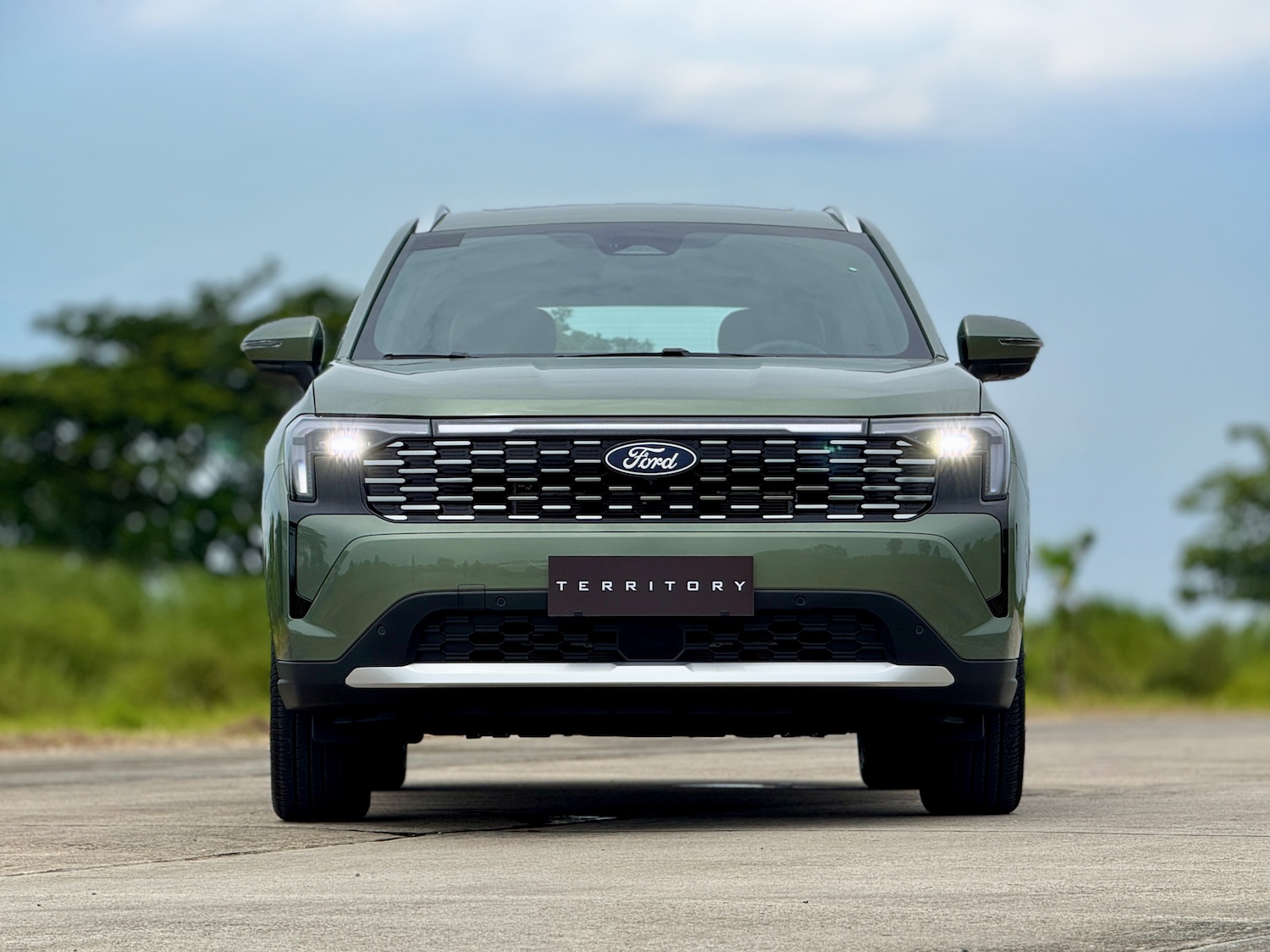
The base Trend variant comes with 18-inch alloys and a more subdued exterior spec, but the core proportions and bodywork are shared between both. Ford seems to have followed the “don’t mess with what works” principle here, which will entice new buyers into the brand, but will probably taunt those who have just bought the non-hybrid version this year.
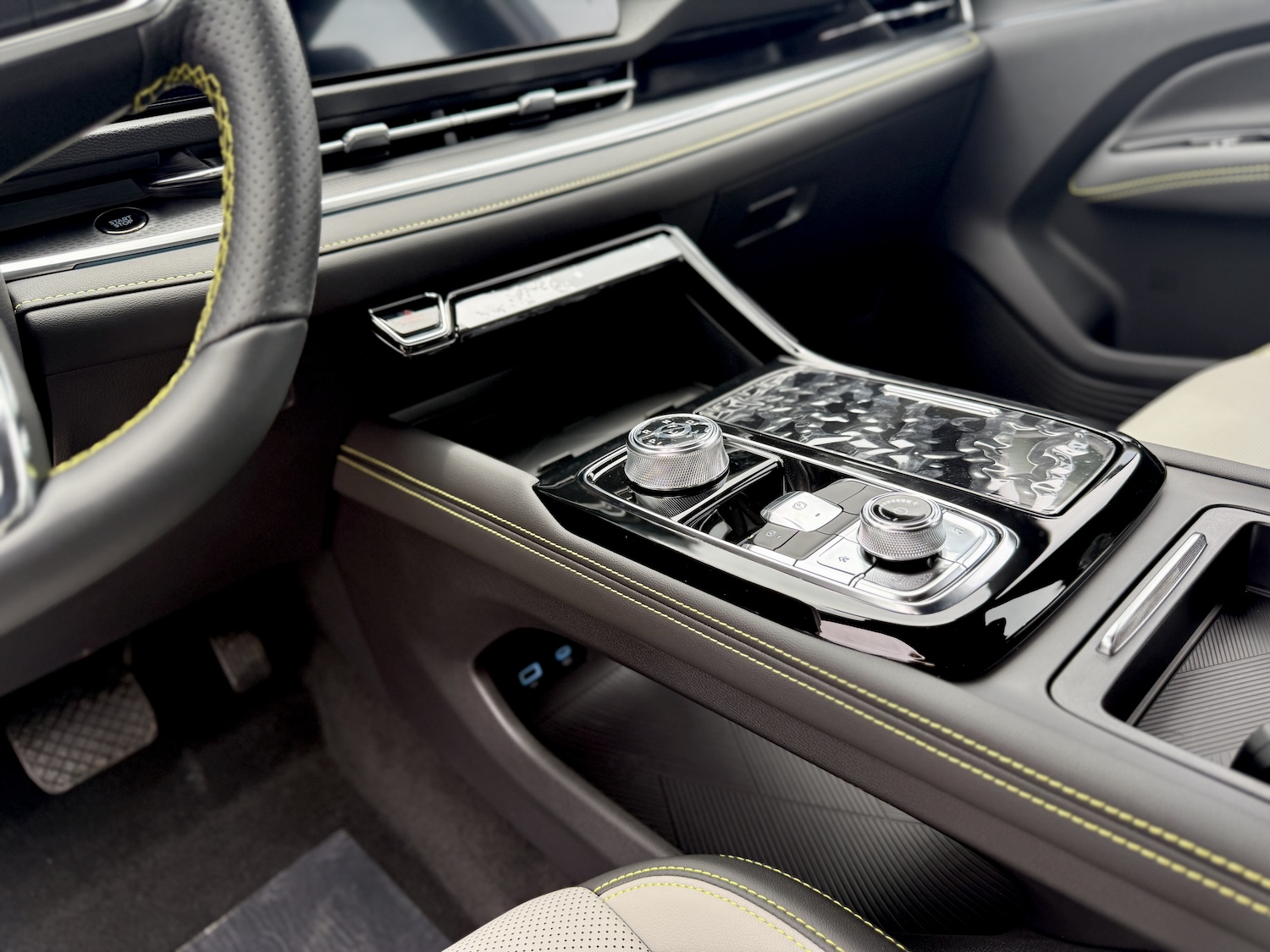
Inside, the changes in the Territory Hybrid are more noticeable. The dashboard layout feels less cluttered and more horizontally oriented, with new trim materials and stitching patterns giving it a slightly more premium edge. Titanium X buyers get dual-tone leather seats with zest-colored accents and multi-color ambient lighting. The restyled headrests also lean into a “soft American luxury” aesthetic that’s more about comfort than drama.
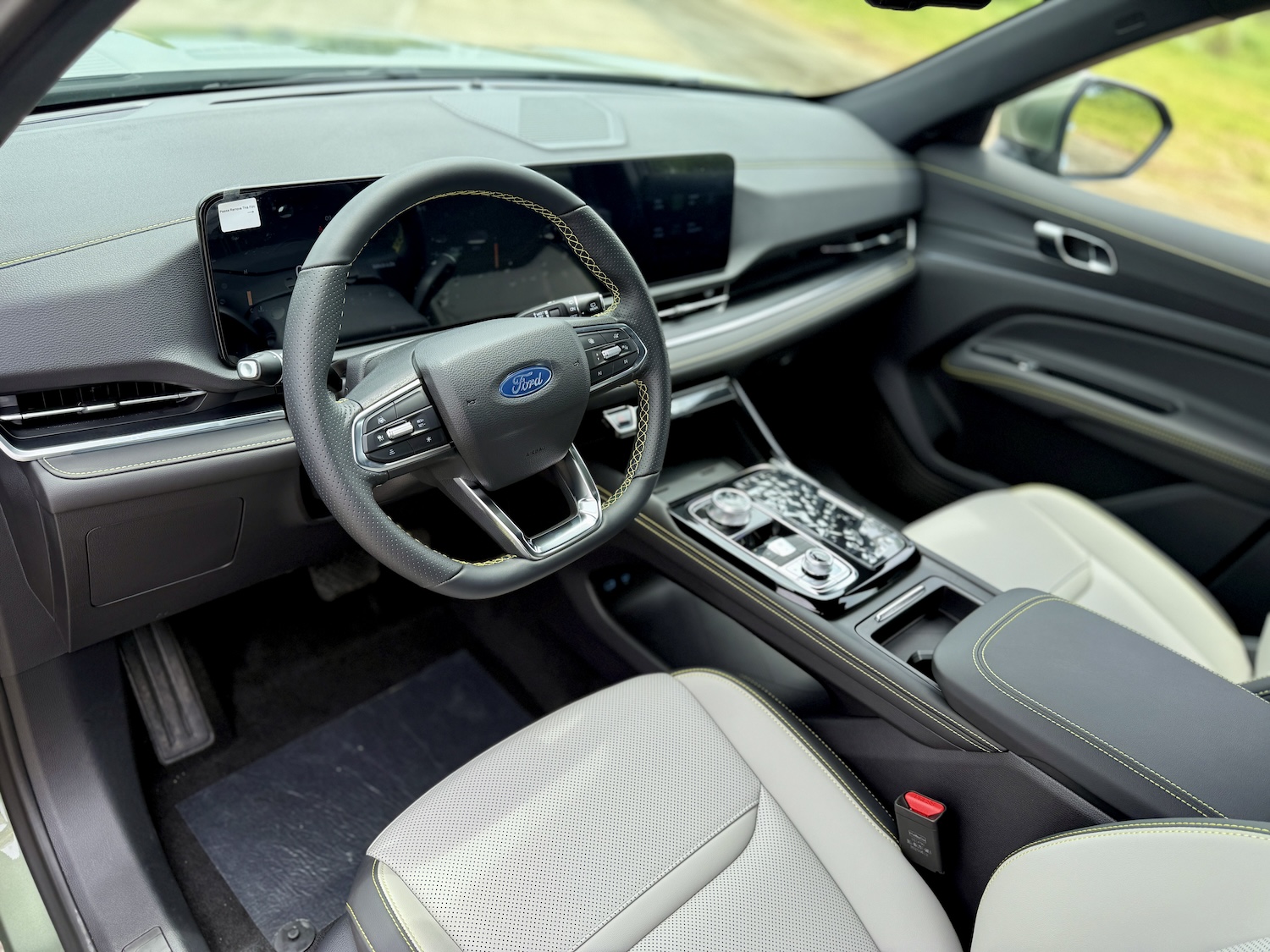
Cabin space remains generous, with a roomy second row and luggage capacity that won’t disappoint small families. Rear air vents, multiple charging ports, and dual-zone climate control come standard across both trims, while a power tailgate is exclusive to the Titanium X.
Infotainment and Smart Tech
Tech-wise, Ford’s focus seems to be on making things feel more integrated in the Territory Hybrid. The Titanium X variant gets a 12.3-inch digital cluster and a 12-inch central touchscreen. Both variants support wireless Apple CarPlay and Android Auto, though the base Trend makes do with a smaller screen setup.
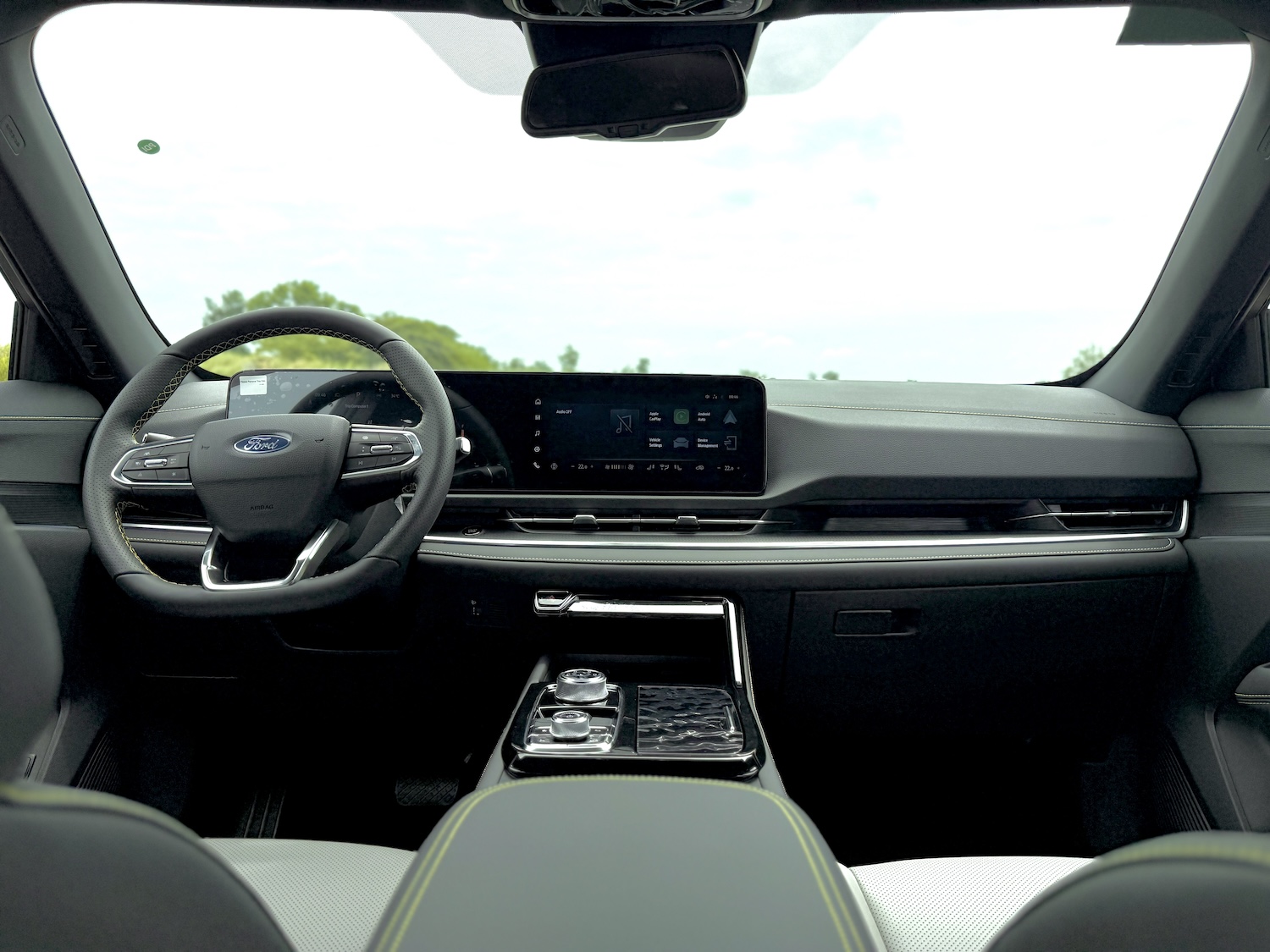
The updated Human Machine Interface allows users to access climate controls without leaving the phone projection interface – a thoughtful tweak that eliminates one of the more annoying quirks of modern infotainment systems. Also worth noting is the Arkamys SoundStage system with 3D surround sound, available in the Titanium X. It’s a non-flashy step up in in-car audio, even if audiophiles won’t mistake it for a high-end nameplate.
FordPass Connect is now onboard as well, giving users remote access features like start/stop, lock/unlock, and health monitoring via smartphone. It’s not groundbreaking tech, but it brings the Territory Hybrid in line with customer expectations for connected vehicles.
Safety and Driver Assistance
The Territory Hybrid comes well-equipped with safety features out of the gate. Both variants include the usual electronic stability systems, hill assist, rear sensors, and up to six airbags. Unfortunately, the Trend variant only comes with front airbags, which is a downer in this day and age. The camera system has been upgraded to a split-view 360-degree setup.
Stepping up to the Titanium X adds Ford’s full suite of advanced driver-assist features: adaptive cruise control with stop-and-go, lane keeping, blind spot monitoring, and forward collision mitigation. It’s the kind of tech that would have been limited to high-end vehicles just a few years ago, but it’s now expected – even in small SUVs – especially when asking for over P1.5 million.
For road comfort, the Territory Hybrid’s acoustic front glass helps cut down on noise, which pairs well with the near-silent EV operation at low speeds. It’s the sort of refinement that doesn’t show up on a spec sheet but goes a long way toward perceived quality.
Initial Verdict
Pricing starts at P1,399,000 for the Trend and P1,599,000 for the Titanium X – attractive values considering the price of the outgoing, pre-facelift Territory. Colors vary by trim, with Oasis Green and Crystal Pearl White exclusive to the Titanium X, while Star White is limited to the Trend. Shared options include Blue Panther and Panther Black.
As part of the launch, buyers get free illuminated badges and HYBRID-themed decals. Those purchasing from launch events in early August can also get other perks, such as a 3-year scheduled service plan and a P10,000 discount.
The Territory Hybrid doesn’t shake things up, but that’s not what it’s meant to do. It promises to deliver better efficiency, smoother driving, and a handful of thoughtful upgrades, all without requiring buyers to fundamentally change their habits. And in that sense, it feels overdue. Initial impressions leave us wanting more seat time. Obviously, we’re excited to get our hands on one for a full review.
This is the kind of hybrid many buyers have been waiting for – no-nonsense, easy to adapt to, and priced within reach. There’s still room for Ford to expand its electrified offerings in the region, but as a first step, the Territory Hybrid hits the right spot, especially as a hot-selling nameplate.