
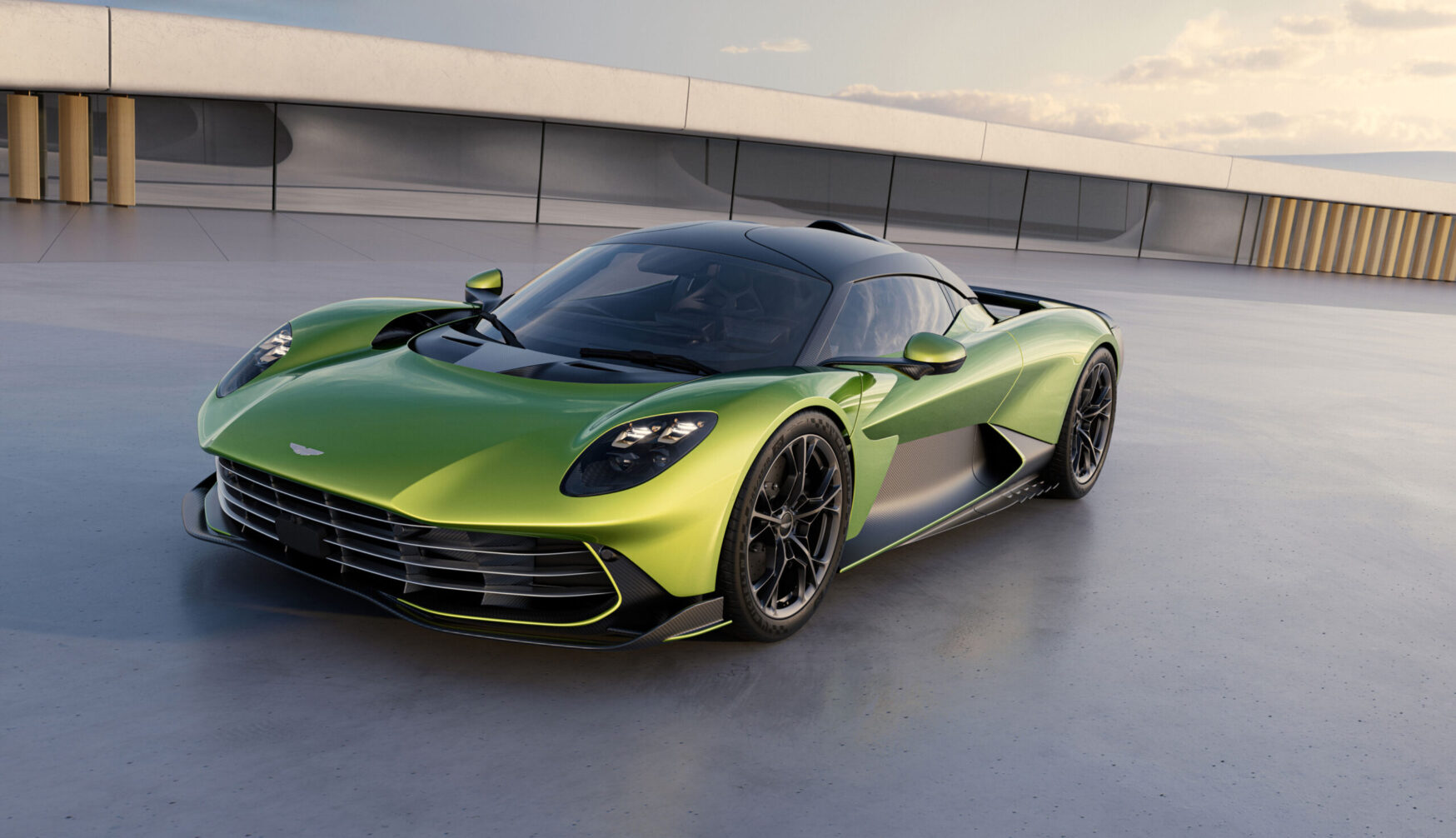
 Aston Martin’s new Valhalla is finally unleashed! It is a groundbreaking hybrid supercar that represents the pinnacle of performance, cutting-edge technology, and avant-garde design. As Aston Martin’s first mid-engined supercar, the Valhalla introduces a stunning combination of race-inspired engineering, hybrid powertrain efficiency, and a design philosophy driven by both form and function. With its advanced aerodynamics, regenerative braking system, and world-class dynamics, the Valhalla offers an unparalleled driving experience.
Regenerative Braking and Vehicle Dynamics
The Regenerative Braking System is a key feature of the Valhalla, optimizing the car’s electric drivetrain efficiency by recovering energy that would otherwise be wasted. The system utilizes two methods of energy regeneration: CAT B via the front E-motor, where braking energy is directly converted to stored power, and CAT A, where energy is harvested from the rear E-motor when the driver lifts off the throttle.
Aston Martin’s Integrated Power Brake (IPB), a brake-by-wire system, decouples the driver from the physical brakes, allowing seamless integration with the regenerative braking process, even during full-ABS braking on track. This advanced system works in harmony with the car’s Torque Vectoring (E-TV), which enables independent torque distribution to each wheel on the front axle for enhanced stability and agility.
The Torque Vectoring system, part of the Integrated Vehicle Dynamics Control (IVC), allows the Valhalla to adjust handling characteristics based on driving inputs. The system continuously calculates desired performance through model-based software, adjusting the car’s behavior in real time to optimize both agility and control. This is integrated with Electric All-Wheel-Drive Distribution (E-AWDD), which uses predictive software to manage torque distribution front-to-rear across the car based on real-time data about road conditions and wheel grip.
The Valhalla offers three driving modes:
- ESP-On: Focuses on accessibility and stability, making the car approachable for drivers of all skill levels, while ensuring the limit is not exceeded.
- ESP-Race: Enhances agility and responsiveness, allowing skilled drivers to approach the car’s limits with more freedom, while still maintaining an element of support.
- ESP-Off: For expert drivers in track environments, this mode provides full control, unleashing the Valhalla’s maximum dynamic potential.
Active Aerodynamics
The Active Aerodynamic System of the Valhalla is a standout feature, designed to deliver maximum downforce when needed, while reducing drag for high-speed stability. Inspired by F1® technologies, the Valhalla integrates both front and rear active aerodynamic surfaces. The car generates over 600kg of downforce at 240km/h (149mph), ensuring high-speed stability and optimal grip in corners.
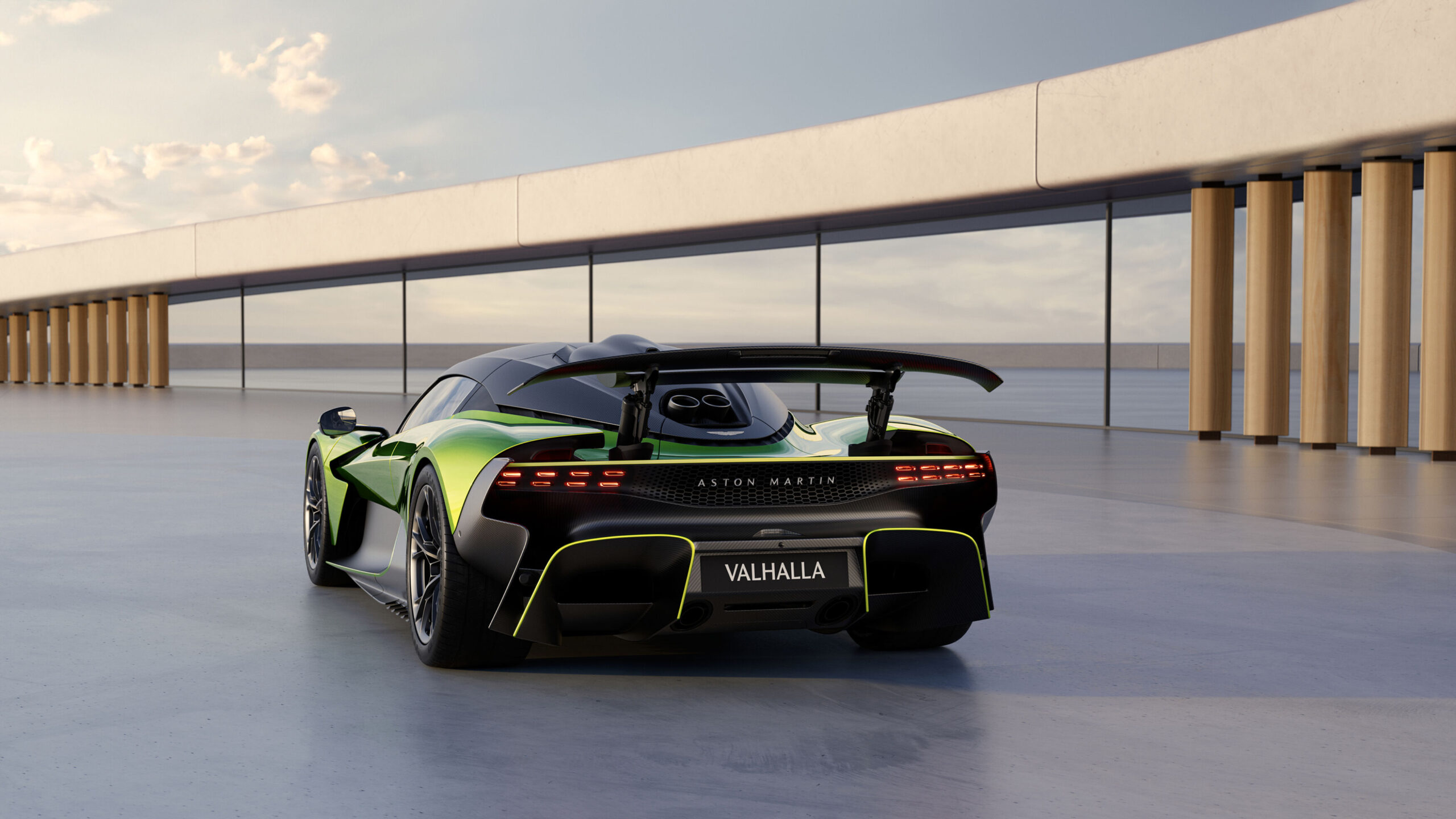
The active rear wing, a dual-element ‘T’ wing, extends by 255mm in Race mode to optimize downforce, and dynamically adjusts during braking to act as an air brake, reducing speed efficiently. The rear wing’s angle of attack adjusts in less than 0.5 seconds to increase drag when braking hard. In combination with the concealed front wing and venturi tunnels, this aerodynamic package ensures the Valhalla maintains exceptional downforce and stability throughout its performance envelope.
Additionally, the roof snorkel, inspired by F1® cars, directs air to various intake paths and cooling ducts, while venturi tunnels at the rear accelerate airflow under the car to further generate downforce. This intricate integration of aerodynamics allows the Valhalla to seamlessly balance form and function, offering a car that is both visually stunning and aerodynamically efficient.
Exterior Design
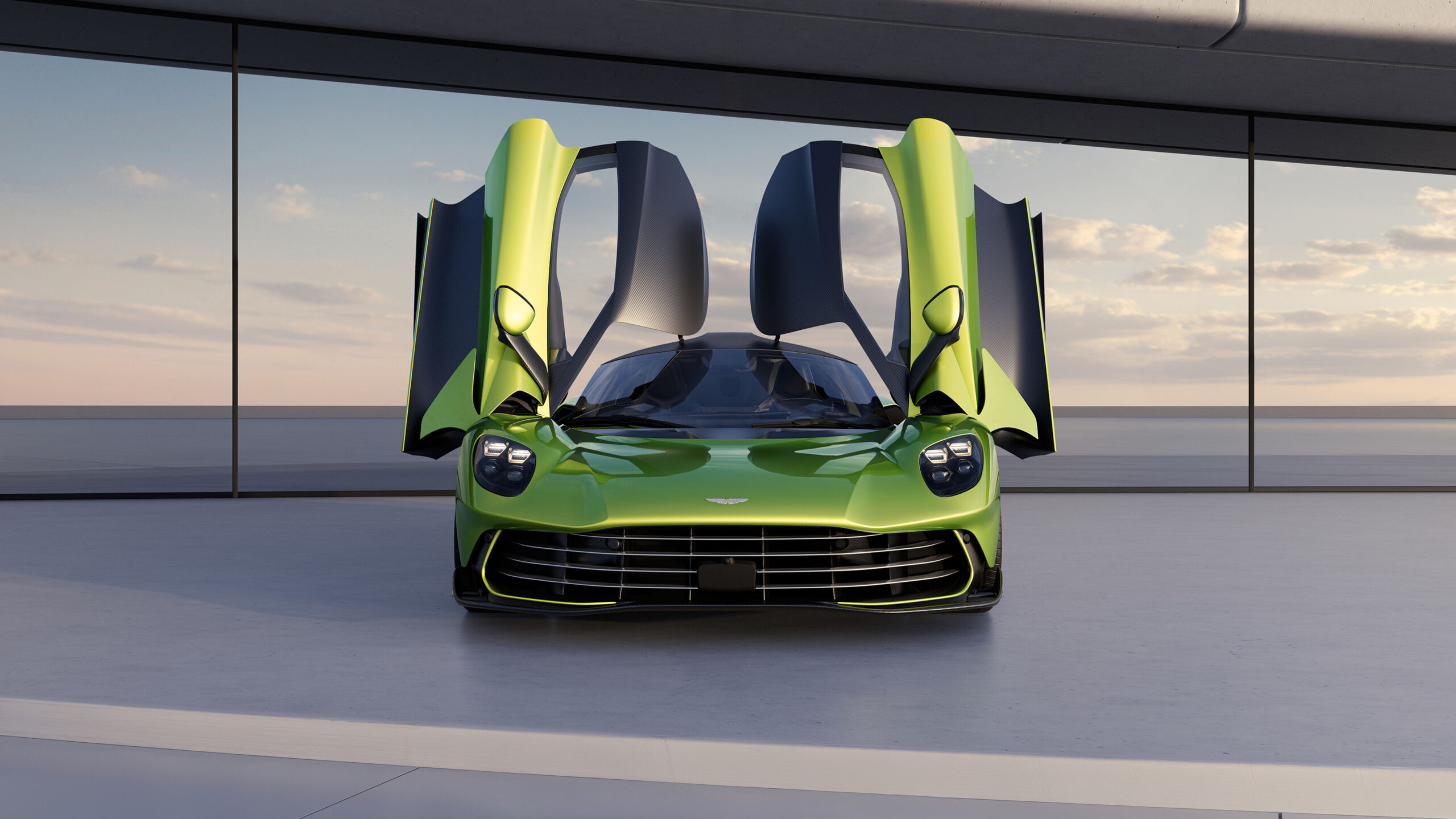
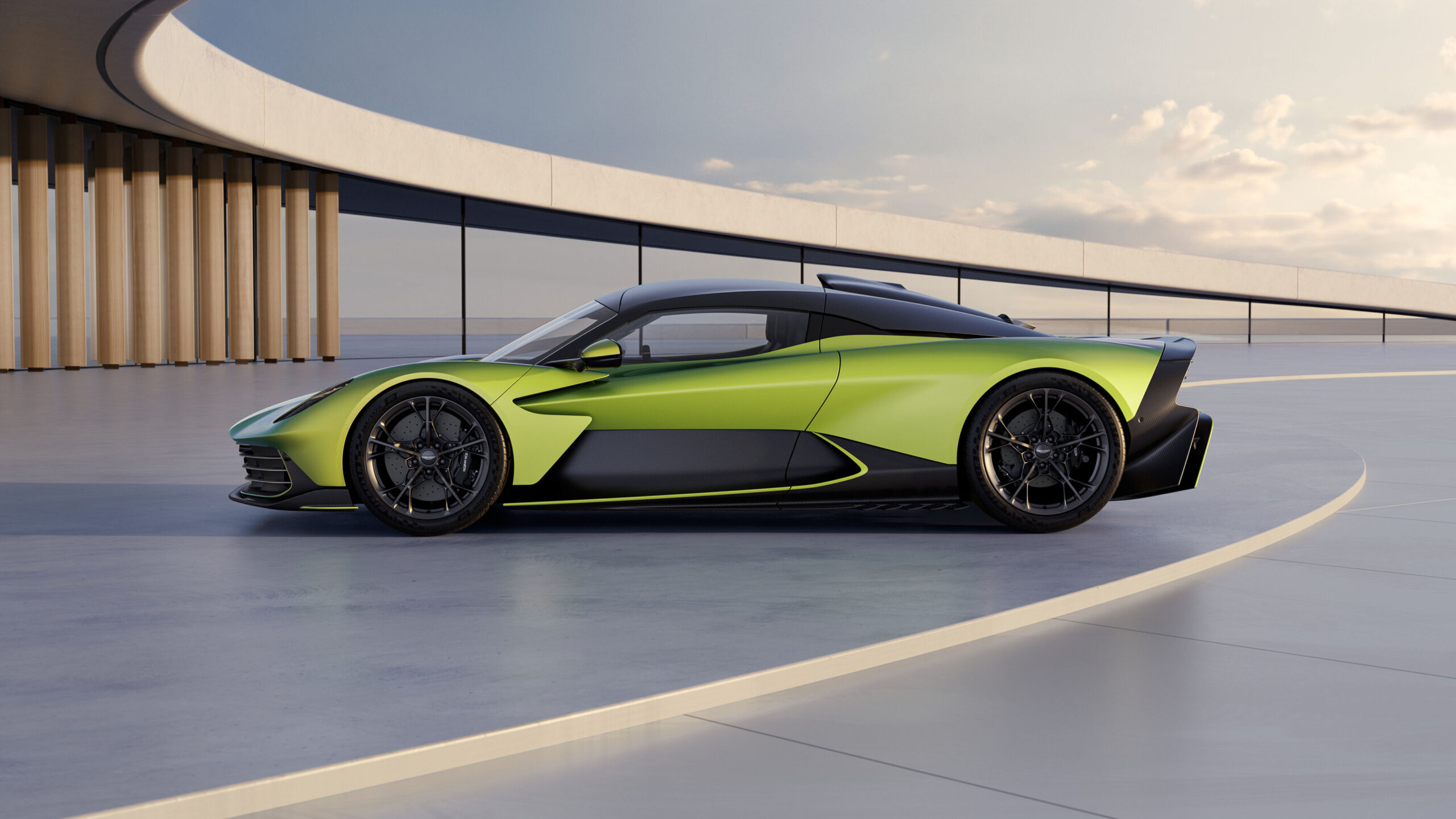
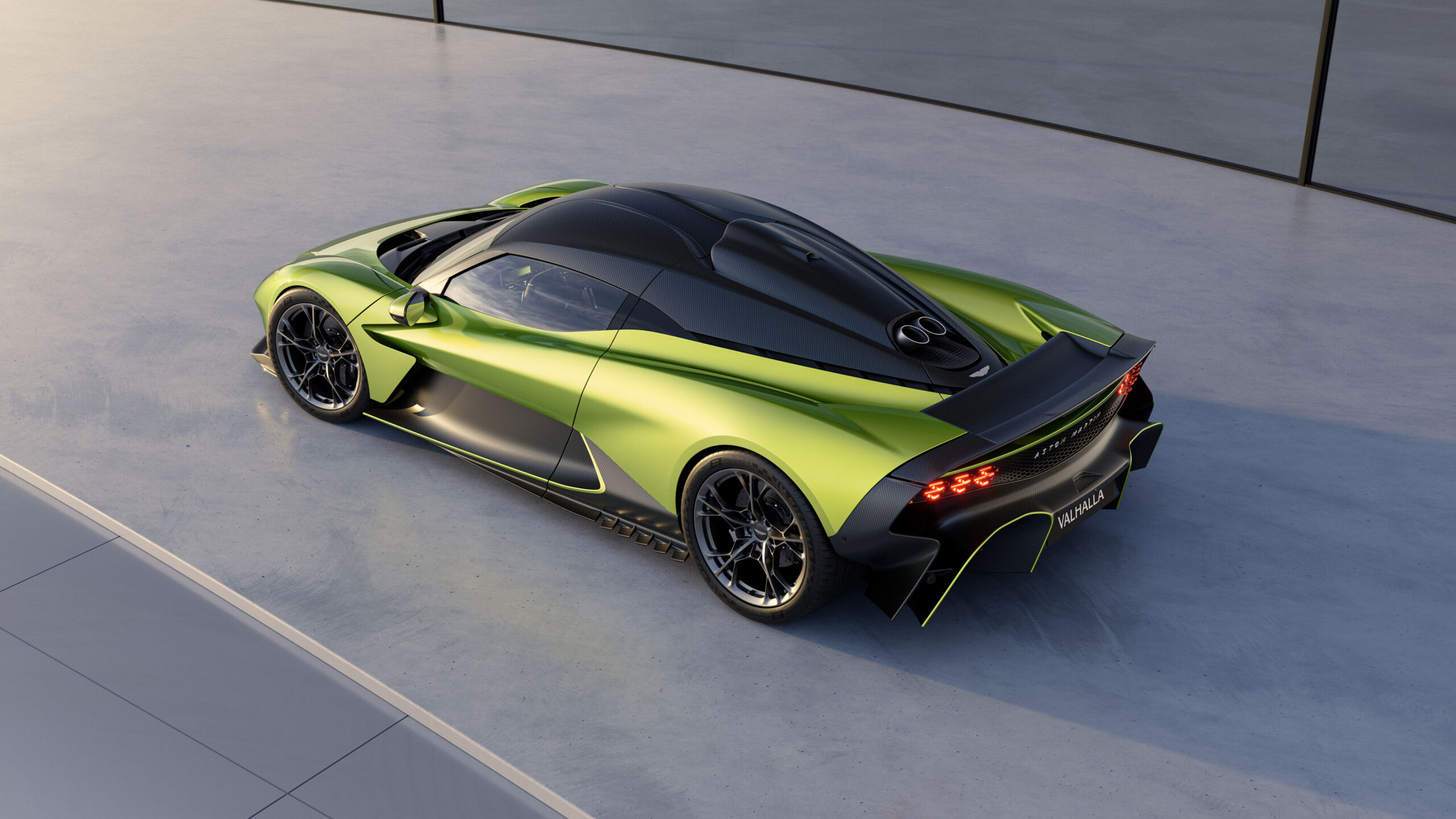
The exterior of the Valhalla embodies Aston Martin’s ethos of form follows function, with a predominantly carbon fibre body that reduces weight while maintaining exceptional strength and rigidity. The car’s design focuses on aerodynamics and performance, with dihedral doors hinged forward to offer dramatic aesthetics and enhance accessibility. The doors incorporate a door turning vane, which improves the performance of the engine and transmission oil coolers by 50%, highlighting the car’s attention to detail and functional beauty.
At the rear, the venturi tunnels accelerate airflow under the car, generating additional downforce and contributing to the car’s exceptional high-speed stability. The Valhalla’s quad exhaust system features a unique pair of top-exit tailpipes for dramatic visual and auditory impact, complemented by a second pair of low-mounted tailpipes that manage exhaust gases through active valves for a controlled exhaust note.
The front clamshell has undergone significant optimization, reducing the number of components from 20 to just two carbon fibre pieces, making the assembly 7kg lighter while integrating structural elements and aero ducts. This reduction in parts not only improves efficiency but also adds to the car’s clean, refined design.
Interior Design
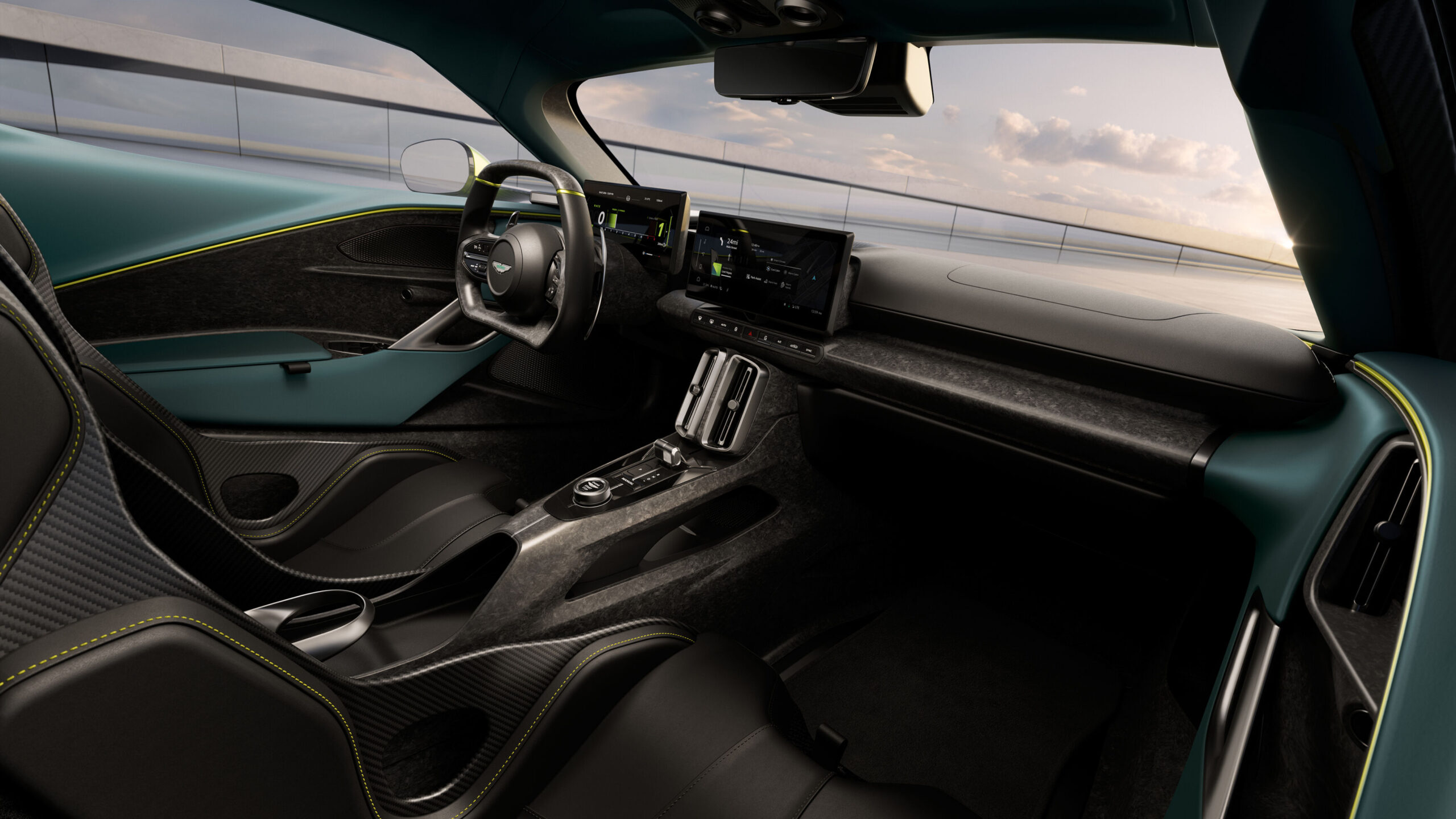
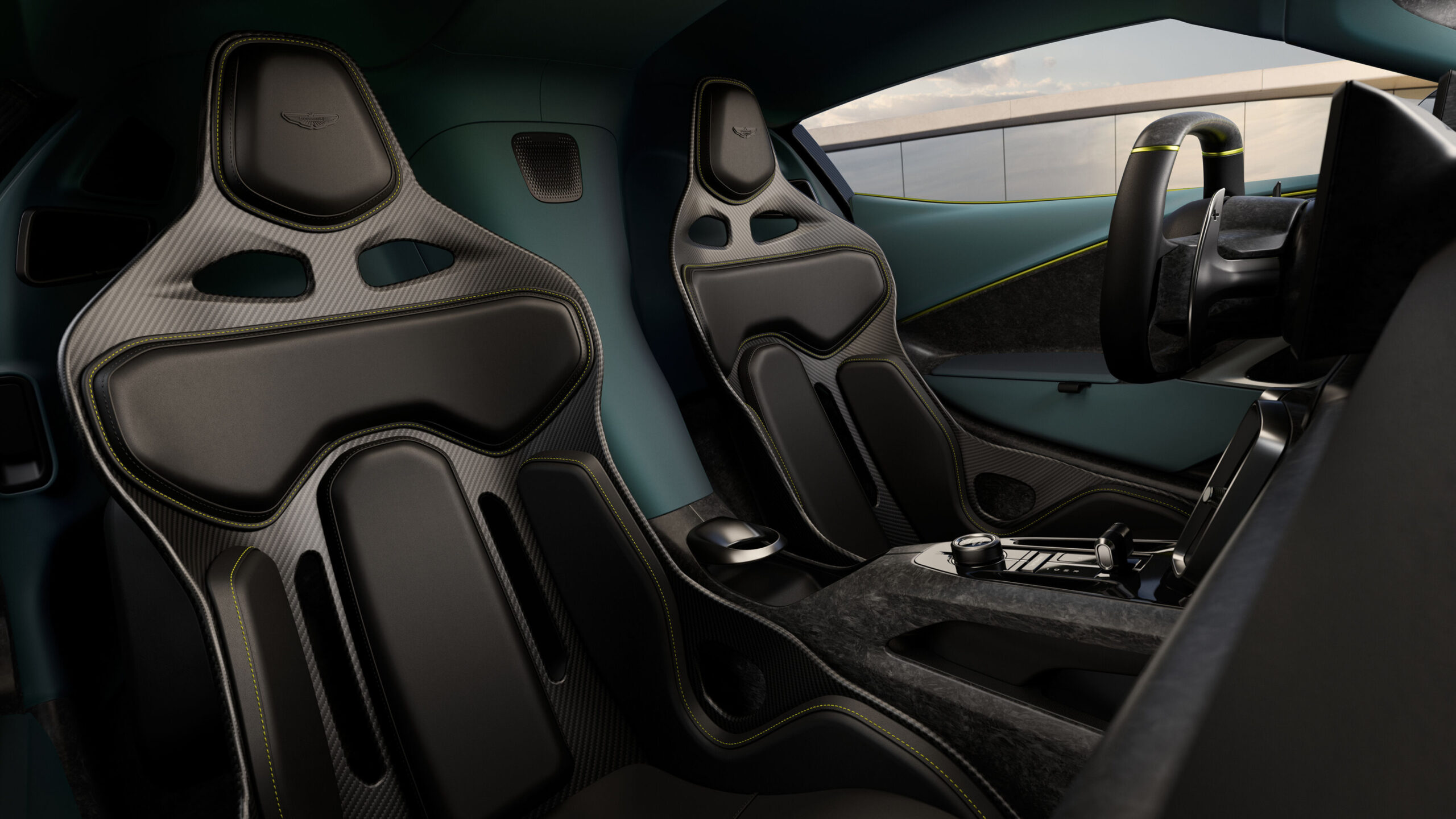
Inside, the Valhalla adopts a clean, minimalist aesthetic inspired by the Valkyrie hypercar, with the goal of enhancing the driver’s experience while maintaining luxury and comfort. The cockpit features lightweight carbon fibre seats and raised footwells, providing a low and connected driving position. The interior is designed to amplify the driver’s sense of control and engagement without sacrificing comfort.
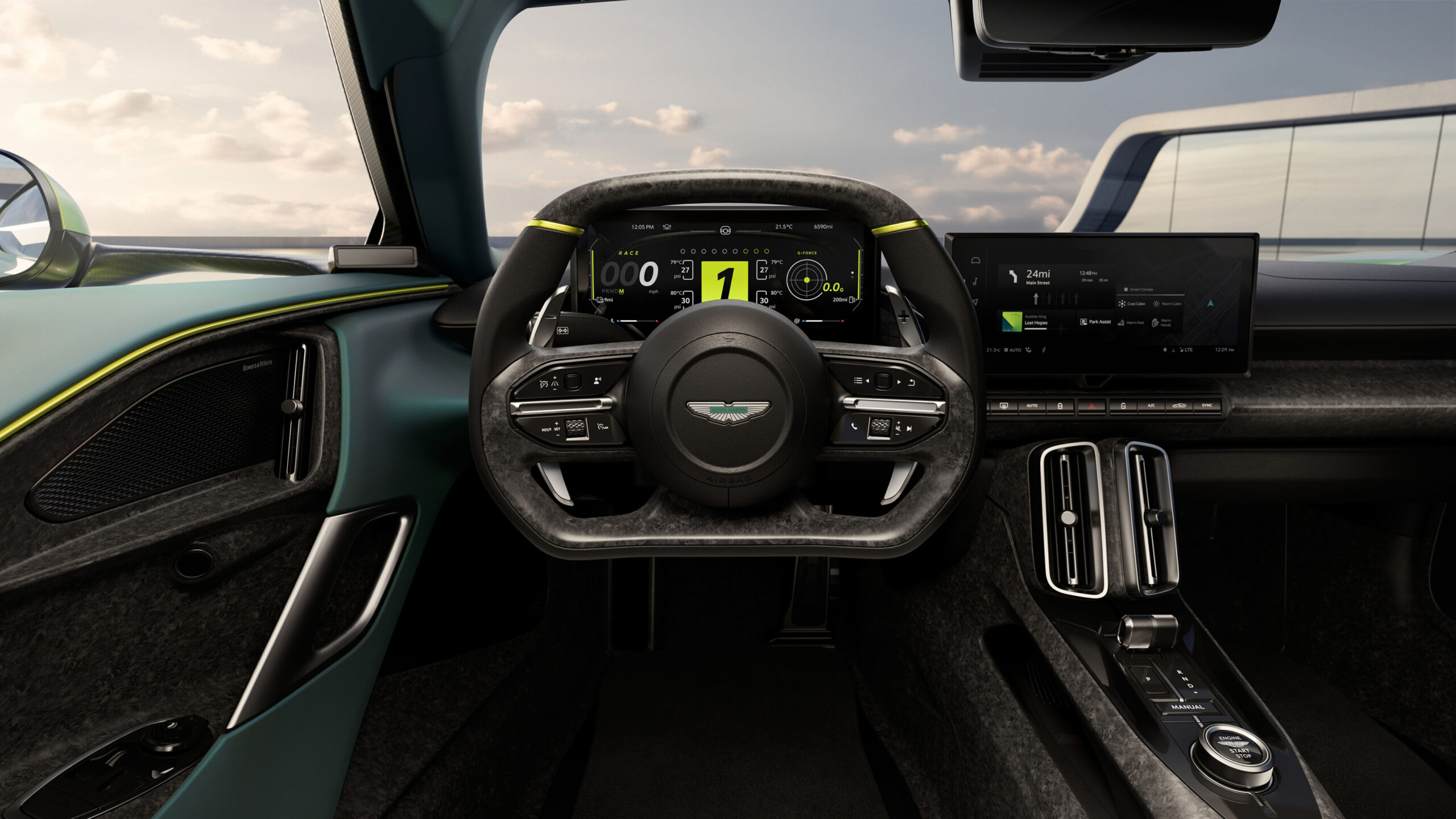
The Aston Martin HMI system is integral to the Valhalla’s interior, with a column-mounted, driver-centric display that provides essential performance data. The system includes a Race mode layout with a large tachometer and shift lights, as well as a Powerflow visualizer that displays the car’s hybrid drivetrain status in real-time, showing when energy is being regenerated under braking or when the car is deploying power for performance.
Valhalla also introduces a fully bespoke interior experience, with recycled forged carbon fibre offering unique textures and visual appeal. Through Q by Aston Martin, customers can personalize their Valhalla to their exact specifications, whether it’s through custom upholstery, bespoke finishes, or unique detailing.
Production and Delivery
Aston Martin is entering the industrialization phase for the Valhalla, with first deliveries expected in the second half of 2025. The production will be limited to 999 units, ensuring the car remains a rare and exclusive model. Customers can now begin customizing their Valhalla via the Aston Martin configurator, available at configurator.astonmartin.com, to create their ideal version of this remarkable supercar.