
Honda Philippines could regain momentum by tapping its China-built models
There was a time when seeing more than a thousand new Hondas registered in a month wasn’t unusual. The brand consistently ranked among the country’s stronger automotive players, buoyed by products that were well engineered, enjoyable to drive and carried a reputation for quality that few questioned.
Today, the story is different.
Honda remains one of the most respected names in the industry, but respect alone no longer guarantees sales. As the Philippine automotive market becomes more crowded and increasingly price-sensitive, the company has found itself losing ground to competitors offering more choices, more technology and, quite often, lower prices.
That isn’t a criticism of Honda’s products.
The City remains one of the benchmark subcompact sedans. The Civic is still among the most rewarding driver’s cars in its class. The CR-V is a capable family SUV, while the HR-V and BR-V continue to have loyal followings. Product quality has never been Honda’s problem.
The problem is that the market around Honda has changed much faster than Honda itself.
Chinese brands have rewritten the rules of competition. Buyers who once compared Japanese brands only against one another are now looking at vehicles that offer panoramic sunroofs, ventilated seats, advanced driver assistance systems, large infotainment screens, hybrid powertrains and even fully electric options—all at prices that would have seemed impossible just a few years ago.
Consumers are no longer asking only, “Is it reliable?” They’re asking, “What do I get for my money?”
That question has become much harder for traditional manufacturers to answer.
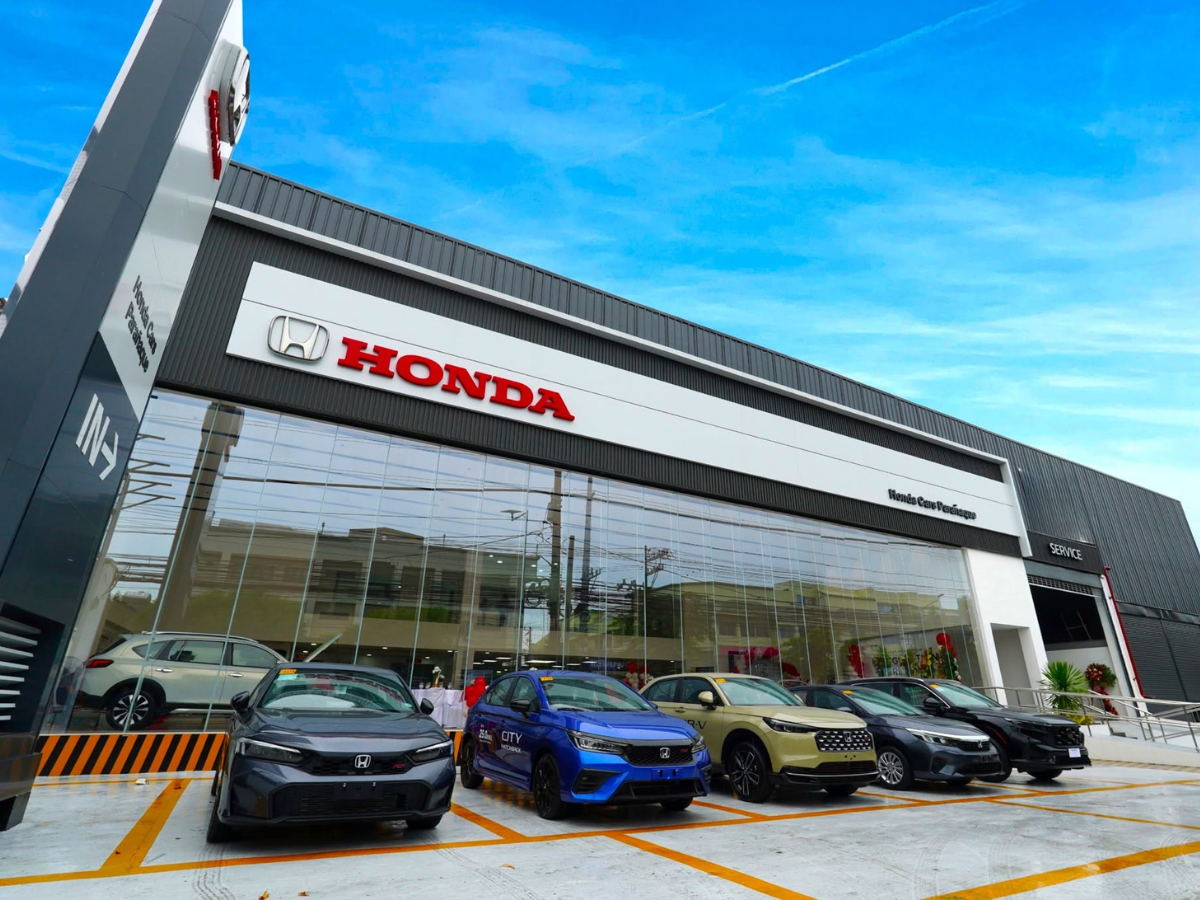
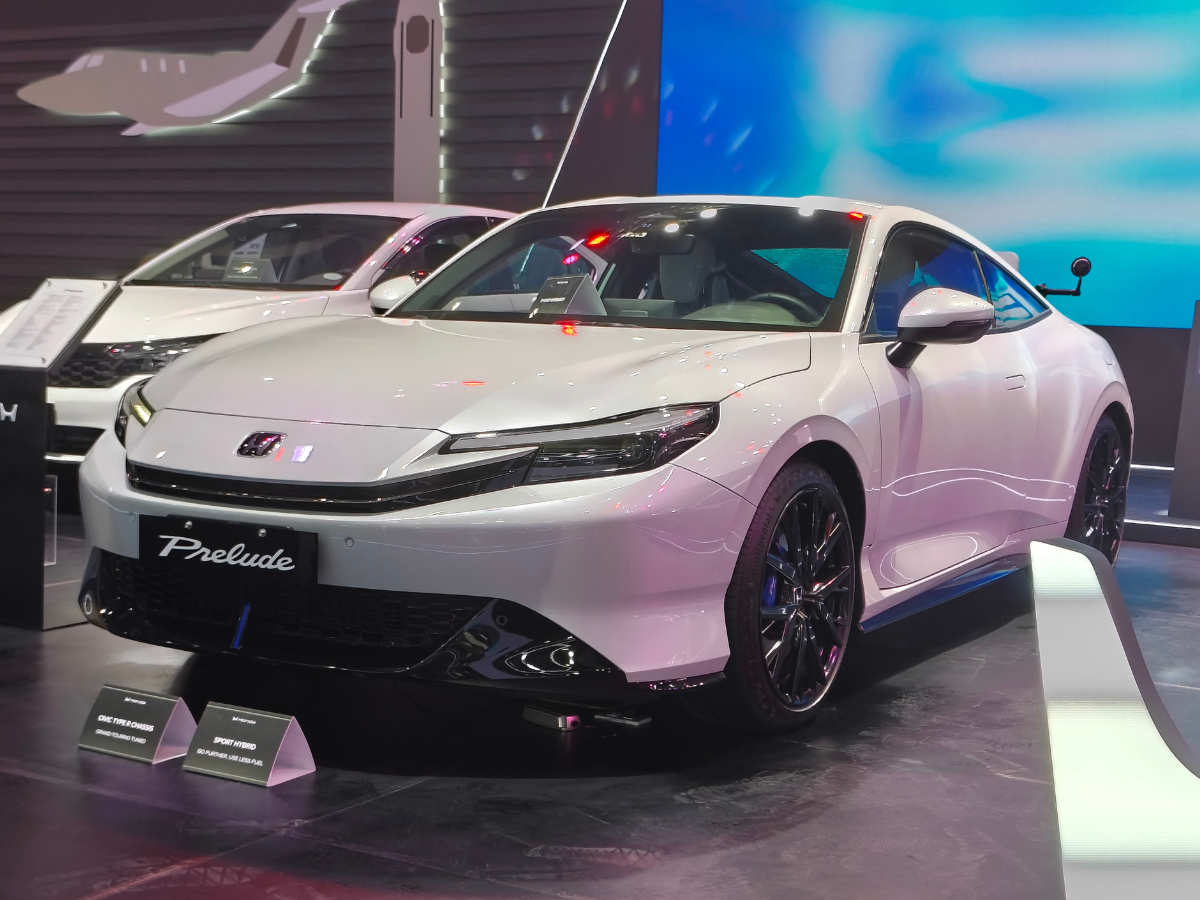
Honda’s local lineup has also become relatively small. There is no pickup truck, no affordable battery-electric vehicle and few choices below the one-million-peso mark. The company has instead concentrated on a handful of core models, many positioned toward the premium end of their respective segments.
There’s nothing inherently wrong with that strategy. Selling fewer vehicles with healthier margins can make business sense. But it also comes at a cost. When buyers begin looking elsewhere because there simply isn’t a Honda that fits their budget or lifestyle, market share inevitably suffers.
Ironically, Honda may already have part of the solution sitting in its own factories.
For decades, Japanese manufacturers have relied on Thailand, Indonesia and other ASEAN countries as production hubs for Southeast Asia. That strategy has served them well, producing everything from pickups to crossovers while taking advantage of regional free trade agreements.
But the automotive landscape has changed.
China has become far more than a manufacturing base for domestic brands. It is now one of Honda’s largest production centers, building vehicles not only for Chinese consumers but also for export markets. Many of these models are already produced in left-hand drive, making them technically suitable for countries like the Philippines.
Perhaps it’s time for Honda Cars Philippines to ask a simple question: why limit itself to ASEAN production when Honda’s Chinese factories already offer a much broader catalog?
Take the Honda Jazz (Fit), for example.
Long regarded globally as one of the smartest small cars ever built, the Jazz offers exceptional interior packaging, excellent fuel economy and a footprint perfectly suited to congested Philippine cities. It could slot comfortably between the Brio and the City while giving buyers another practical hatchback option at a time when affordable, well-engineered compact cars are becoming increasingly rare.
Then there’s the e, Honda’s battery-electric crossover developed and built in China. As Chinese brands continue to expand their EV offerings locally, Honda currently has no mainstream electric vehicle in Philippine showrooms. The e could immediately give the brand an entry into one of the industry’s fastest-growing segments without waiting for a new ASEAN production program.
There are other possibilities as well. China already builds additional hybrid variants and market-specific models that could complement Honda’s Philippine lineup if the business case makes sense. Not every model needs to be imported, but selectively choosing vehicles that fill obvious gaps could make the brand more competitive almost overnight.
Of course, importing from China is not as simple as placing an order.
Vehicles must be homologated. Spare parts inventories have to be established. Dealers need technical training. Honda would also have to determine whether expected sales volumes justify the investment.
Even so, those challenges appear considerably smaller than asking another regional factory to develop an entirely new export program for a relatively small market.

More importantly, Filipino buyers have become far less concerned about where a vehicle is assembled. Many already drive Chinese-built vehicles wearing Japanese or European badges without giving it a second thought. What matters today is value, technology, quality and after-sales support.
Honda still has all the ingredients that made it successful in the Philippines—strong engineering, an excellent reputation and loyal customers. What it lacks is breadth. In today’s market, breadth matters.
No one is suggesting that Honda abandon its ASEAN manufacturing network. Thailand and Indonesia will remain critical pillars of the company’s regional operations for years to come. But there is little reason why China cannot become another source for carefully selected models that strengthen the Philippine lineup.
The Philippine market has changed dramatically over the past five years. Consumers now have more choices than ever before, and they are rewarding manufacturers willing to offer fresh products, competitive pricing and new technologies.
Honda has the engineering. It has the factories. It has the products.
The question is whether it is willing to use all of them.
If the answer is yes, Honda may find that climbing back into the country’s top tier won’t require reinventing the brand. It may simply require looking west—to the production lines it already owns.