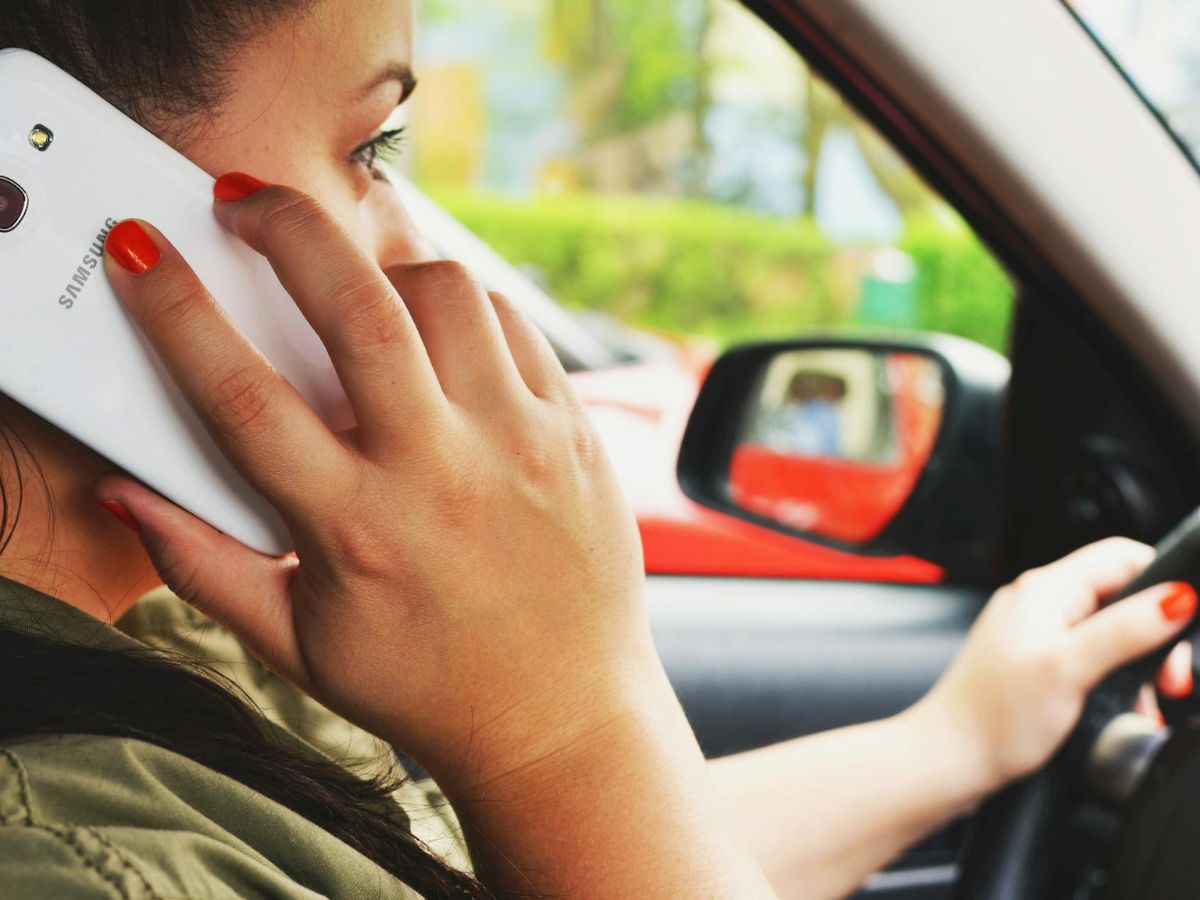


Recent reports from US safety authorities are highlighting a troubling trend in distracted driving: the rise of video consumption and content creation behind the wheel. While distracted driving itself is not new, the behavior is taking on more dangerous forms, driven largely by the widespread use of smartphones and social media.
According to the National Highway Traffic Safety Administration, distracted driving is defined by any activity that diverts the driver’s attention away from driving. These include texting, talking, eating, or adjusting in-car systems. The agency recorded 3,208 deaths in 2024 alone linked to distracted driving, underscoring how persistent and deadly the issue remains.
Beyond these traditional distractions, safety authorities are now seeing a new pattern in the United States: drivers watching short-form videos or even filming themselves while driving. The more alarming thing is that this goes beyond momentary distraction. Watching videos requires sustained attention, while recording content often involves multiple distractions, including camera setup, interaction, and performance.

Surveys and safety studies indicate that younger drivers are particularly involved in this kind of dangerous behavior, with many admitting to glancing over videos and engaging with mobile apps while on the road. This raises serious safety concerns as even a few seconds of inattention at highway speeds can significantly increase the risk of a crash.
Although this trend is being closely observed in the US, it does not veer far from what can be seen locally. In the Philippines, the widespread use of mobile devices, coupled with heavy traffic situations, creates similar opportunities for distracted behavior. Public transport drivers, private motorists, and even motorcycle riders are often seen interacting with their phones while moving. And many of them are now engaged in livestreaming their journeys, interacting with followers as they drive along.
The convergence of social media habits and driving is creating a new layer of risk that existing laws may struggle to fully address. Enforcement remains critical, but so does awareness. As technology continues to evolve, so too must the approach to road safety, ensuring that drivers remain focused on the task that matters most: driving safely.
Road safety experts emphasize that distracted driving is not limited to one country or demographic. As digital habits become more deeply embedded in daily life, the challenge will be encouraging behavioral change without relying solely on penalties and enforcement measures alone. Greater public awareness and responsible technology use will determine whether this trend worsens.
Autocar’s Take
The rise of video-driven distractions behind the wheel is an inevitable consequence of how people now consume content, but that does not make it any less alarming. What stands out is not just the behavior itself, but how normalized it appears to have become, especially among younger drivers.
In regions like the Philippines, where traffic conditions already demand constant attention on the road, this trend could amplify existing risks. Sadly, enforcement alone will not solve it. Changing habits requires consistent public messaging, better in-vehicle safeguards, and a stronger sense of personal accountability every time someone gets behind the wheel.