
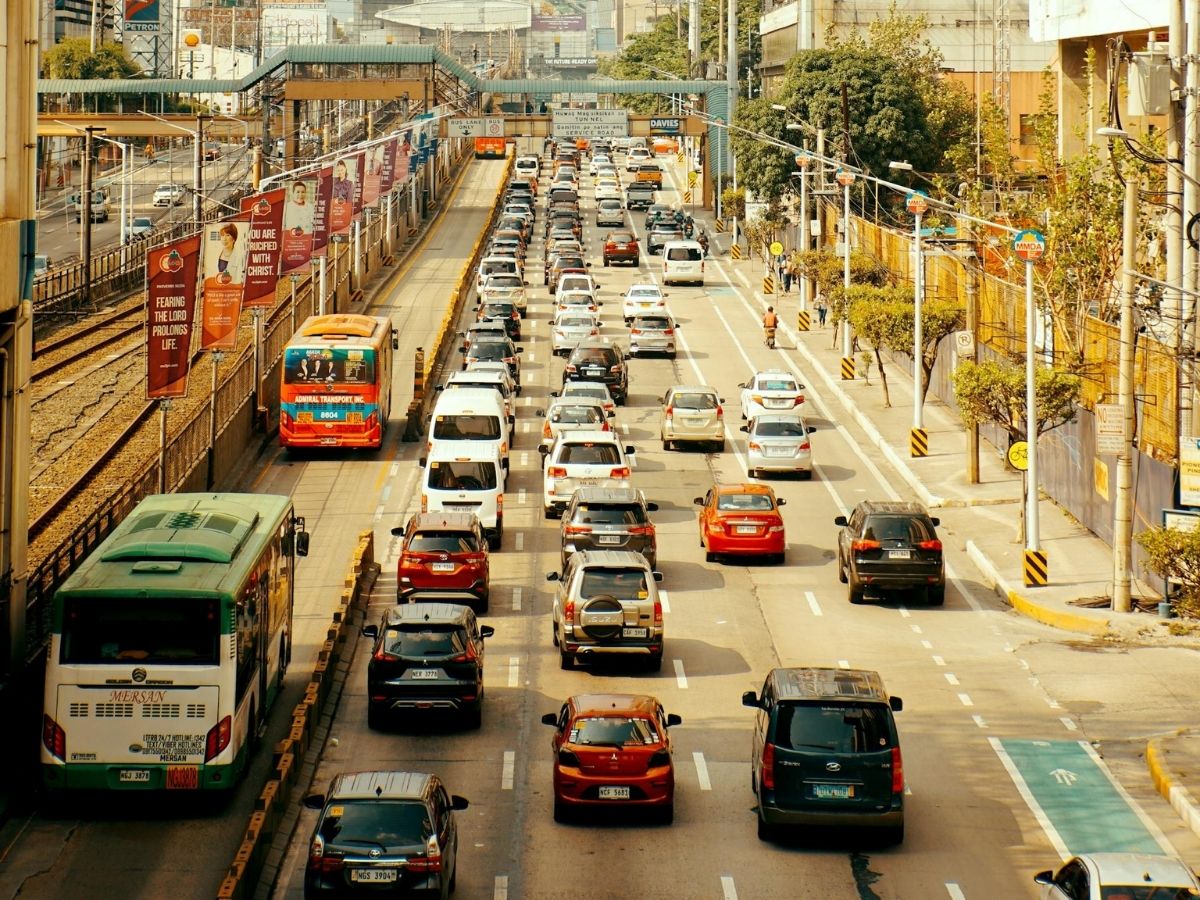
50 kilometers a day. That’s the quiet baseline of the Filipino motorist. Home to office, a few errands, back again. It doesn’t sound like much—until fuel hits P200 per liter.
At that level, the daily drive stops being routine and starts becoming expensive. Let’s put real numbers on it.
A typical gasoline SUV doing 8–10 km/L will burn around 5 to 6 liters for that 50-kilometer commute. At P200 per liter, that’s roughly P1,000 to P1,200 a day. Multiply that by 22 working days, and you’re looking at P22,000 to P26,000 a month—just for fuel. That’s already in car amortization territory.
Now compare that with an EV. At around P2–P3 per kilometer, that same 50-kilometer daily drive costs roughly P100 to P150 a day, or about P2,200 to P3,300 a month.


The gap is massive—close to P20,000 a month in savings.
On the surface, that makes the EV decision look like a slam dunk. But here’s where context matters. That P200 fuel scenario, as extreme as it sounds, is not expected to last forever. Oil markets are volatile, often driven by geopolitical tensions and speculation. Prices spike, then correct themselves. We’ve seen it before.
So the real question becomes: How long will you actually be paying P200 per liter? If the spike lasts, say, three to six months, your additional fuel spend might total somewhere between P60,000 to P150,000 versus “normal” conditions. Painful, yes—but still far from the P1.2M to P2M outlay of buying a brand-new EV.
Even if you stretch that to a year, you’re still not fully offsetting the cost of switching cars.


This is where many get it wrong. They compare daily fuel savings to justify an EV purchase—but forget that those savings only matter over time. If high fuel prices are temporary, the payback period stretches again.
So if you already own a fully paid ICE car, the smartest move may not be to panic-buy an EV, but to manage the spike.
Drive more efficiently. Plan routes. Carpool if possible. Even small adjustments can shave off meaningful pesos when fuel is this expensive.
On the other hand, if you’re already in the market for a new vehicle—and you’re doing that 50-kilometer daily grind—the equation changes. In that case, going electric isn’t just about future-proofing. It’s about protecting yourself from exactly this kind of volatility.
The takeaway is simple. At P200 per liter, EVs finally make undeniable economic sense over time. But if that price level is temporary, then buying one purely out of panic may not. Because in the end, it’s not just about how much you spend per day. It’s about how long you’ll be spending it.