

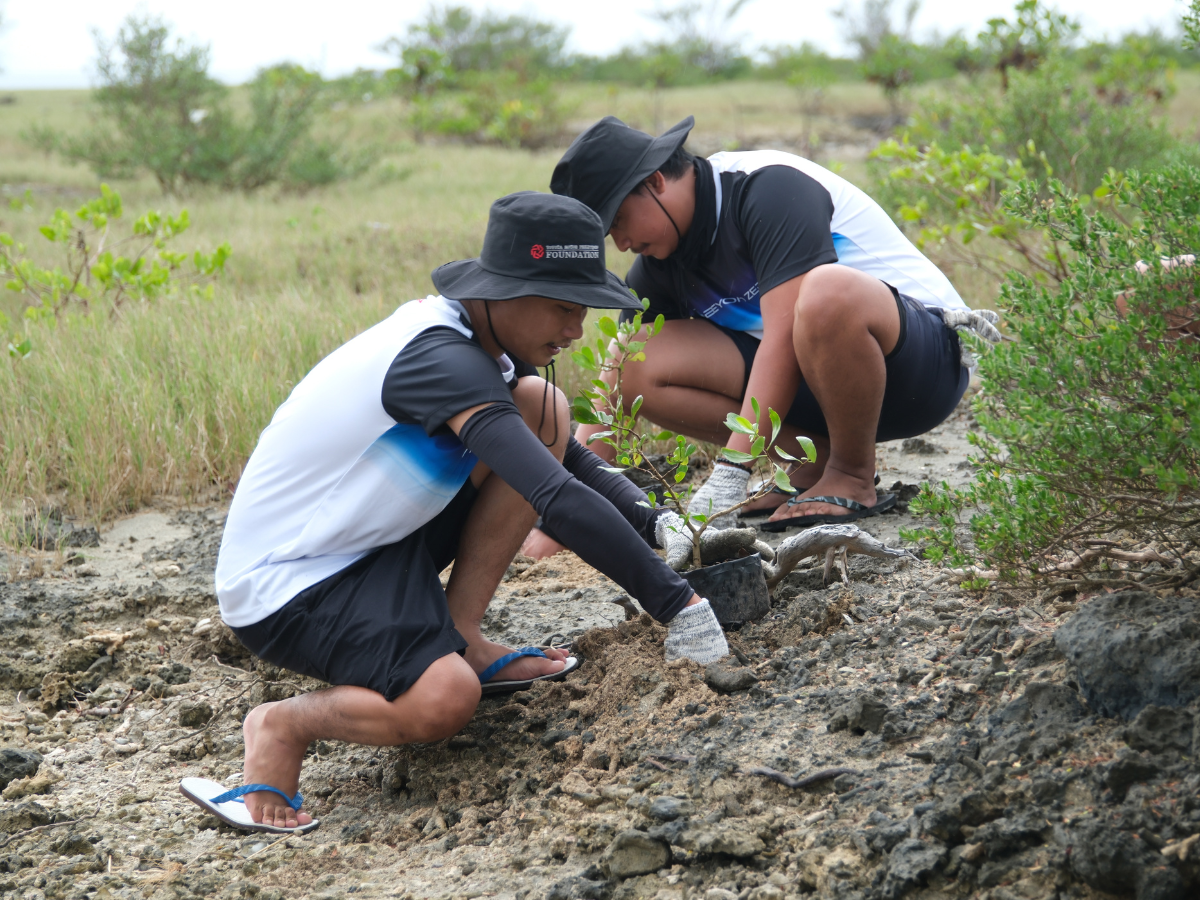
Toyota Motor Philippines (TMP) Foundation has launched a mangrove reforestation project in Ilocos Norte is part of its commitment to nurture one million trees by 2030. The said project is Toyota’s environmental initiative, which is aimed at mitigating climate change.
The TMP Foundation has adopted a National Greening Program (NGP) mangrove reforestation site in the coastal municipality of Pasuquin, Ilocos Norte. To mark the NGP site adoption, TMP Foundation gathered volunteers from its Toyota dealership network as well as from the Mariano Marcos State University – College of Industrial Technology (MMSU-CIT).
The Department of Environment and Natural Resources – Community Environment and Natural Resources Office Bangui (DENR-CENRO Bangui) also joined TMP Foundation’s initiative, together with the Municipal Environment and Natural Resources Office (MENRO), and members of the local community at Barangay Davila, to plant a total of 1,750 mangrove seedlings.

The activity culminated with the signing of a tripartite agreement among the municipal government of Pasuquin, Ilocos Norte, MMSU, and TMP Foundation. The Memorandum of Agreement (MOA) states that the coastal forest conservation project will be implemented over two years, with a target of planting 3,500 seedlings of native mangrove species, Lapis-lapis and Arinaya, within two hectares of land.
“This project seeks to empower local communities, enhance stakeholder capacities, and promote shared stewardship of these coastal forests,” said TMP Foundation President Jose Maria Aligada.
Toyota shared that the NGP site is a mangrove forest that has degraded over time due to human activities. This led to the loss of mangroves, which are vital for the ecosystem and the livelihoods of the local community.
According to the DENR – CENRO Bangui, mangrove planting contributes to disaster risk reduction, strengthens coastal protection, and supports the growth of marine life, which ultimately helps sustain coastal fisheries. Mangroves also help mitigate climate change by having a high capacity to absorb carbon dioxide, contributing to carbon neutrality.