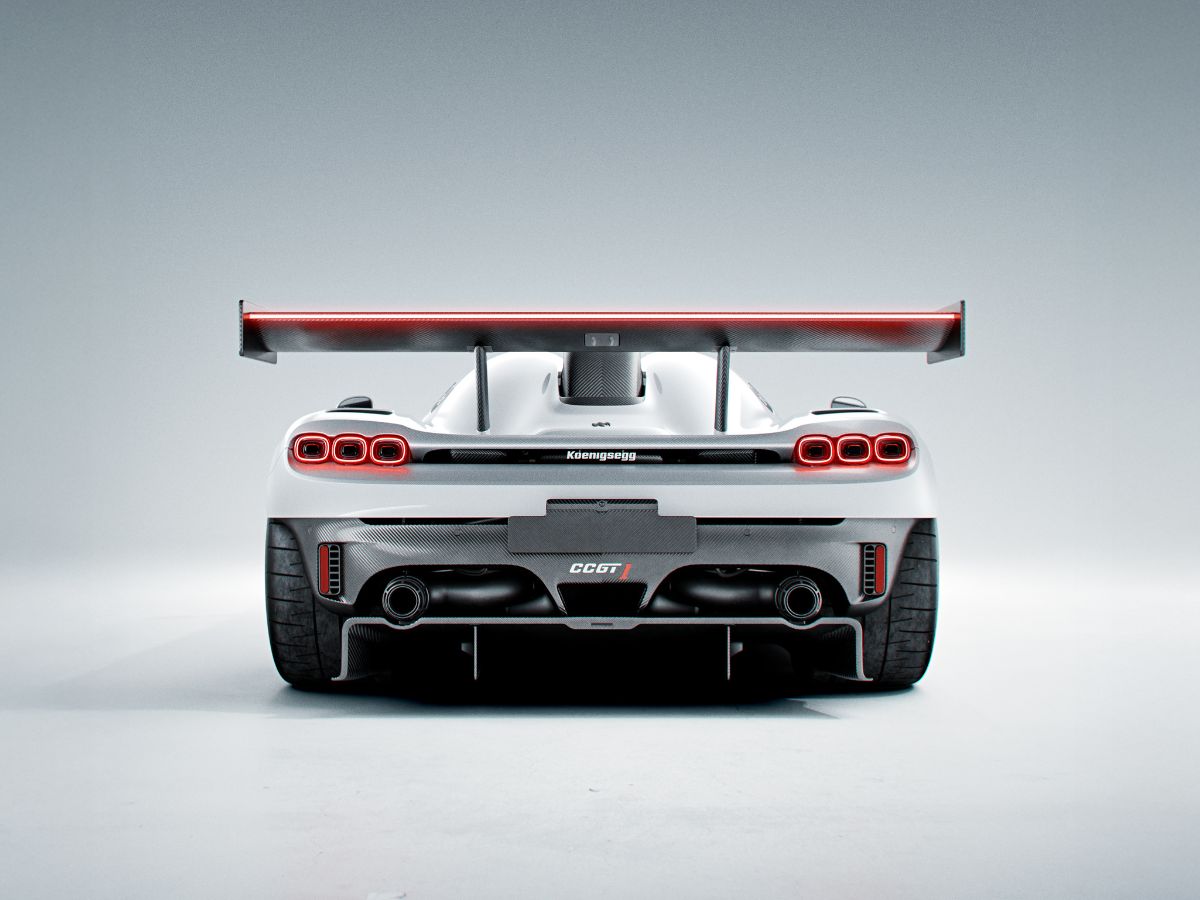


Swedish carmaker Koenigsegg (pronounced as “khoo-nig-seg”) has brought one of its most intriguing racing stories back to life. The recently unveiled Koenigsegg CCGT1 is a road-legal megacar inspired by the brand’s CCGT GT1 race project that never got the chance to compete.
Showcased in Monterey on August 13, the Koenigsegg CCGT1 is based on the CC850 but goes considerably further in its pursuit of track performance. Koenigsegg says nearly every body panel has been redesigned, with only the doors and removable roof carried over from the CC850.
The connection to the original CCGT runs deep. Developed for GT1 endurance racing in the 2000s, the original car weighed around 1,000 kg and used a naturally aspirated 5.0-liter V8 producing 600 hp. It had already begun shakedown testing when the FIA changed its GT1 regulations, effectively ending Koenigsegg’s racing ambitions before the CCGT could complete a competitive lap. Only one was built.
The CCGT1 turns that unfinished chapter into a modern road car. Its twin-turbo 5.0-liter V8 produces 1,280 hp on standard pump fuel and 1,600 hp when running E85 biofuel. Power is sent to the rear wheels through Koenigsegg’s nine-speed Light Speed Transmission, controlled through a new Koenigsegg Sequential Shift system. An optional six-speed gated manual Engage Shift System is also available.

Aerodynamics are just as serious. The CCGT1 uses an active rear wing capable of automatically switching between low-drag, air-brake and high-downforce modes. Together with its front splitter, active underbody flaps, sculpted floor and rear diffuser, the system generates up to 800 kg of downforce at 250 km/h.
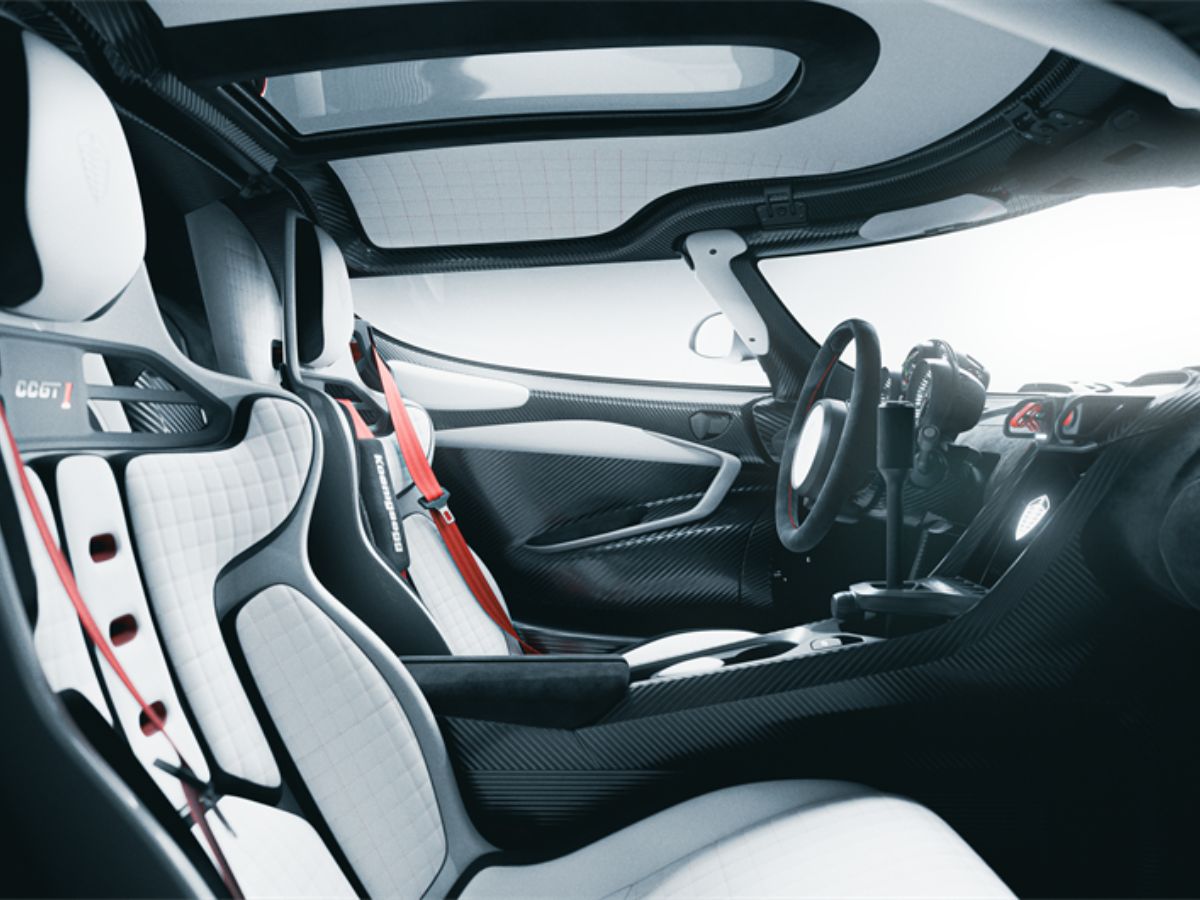
Koenigsegg is also offering its first factory-designed track package. It adds a carbon-fiber roll cage, HANS-compatible racing seats, fire suppression, race exhaust, air jacks, track-focused suspension and brakes, dedicated track tires, enhanced aerodynamics, telemetry and access to factory-supported CCGT1 track days.
Adding another piece of Koenigsegg history is Ghost Fibre, a new take on the white carbon-fiber technology first seen on the Trevita. The material combines aramid and carbon fibers, with Koenigsegg citing benefits in strength, sound deadening and weight reduction.
Only 70 CCGT1s will be built, and all had already been allocated before the car’s public debut. For Koenigsegg, it is more than another limited-run hypercar. It is a chance to finally give an old racing dream the ending it never received.
Autocar’s Take
The Koenigsegg CCGT1 is the kind of car that makes a modern hypercar feel genuinely interesting again. Instead of simply chasing another headline power figure, Koenigsegg has dug into its own racing history and turned an unfinished GT1 project into something that can actually be driven on the road. The 1,600-hp output is outrageous, but the more fascinating details are the sequential transmission, active aerodynamics and factory track package. The fact that Koenigsegg is also bringing back its distinctive white-fiber concept makes the CCGT1 feel even more special.
It is expensive, exclusive and completely excessive. And, honestly, that’s absolutely fine.