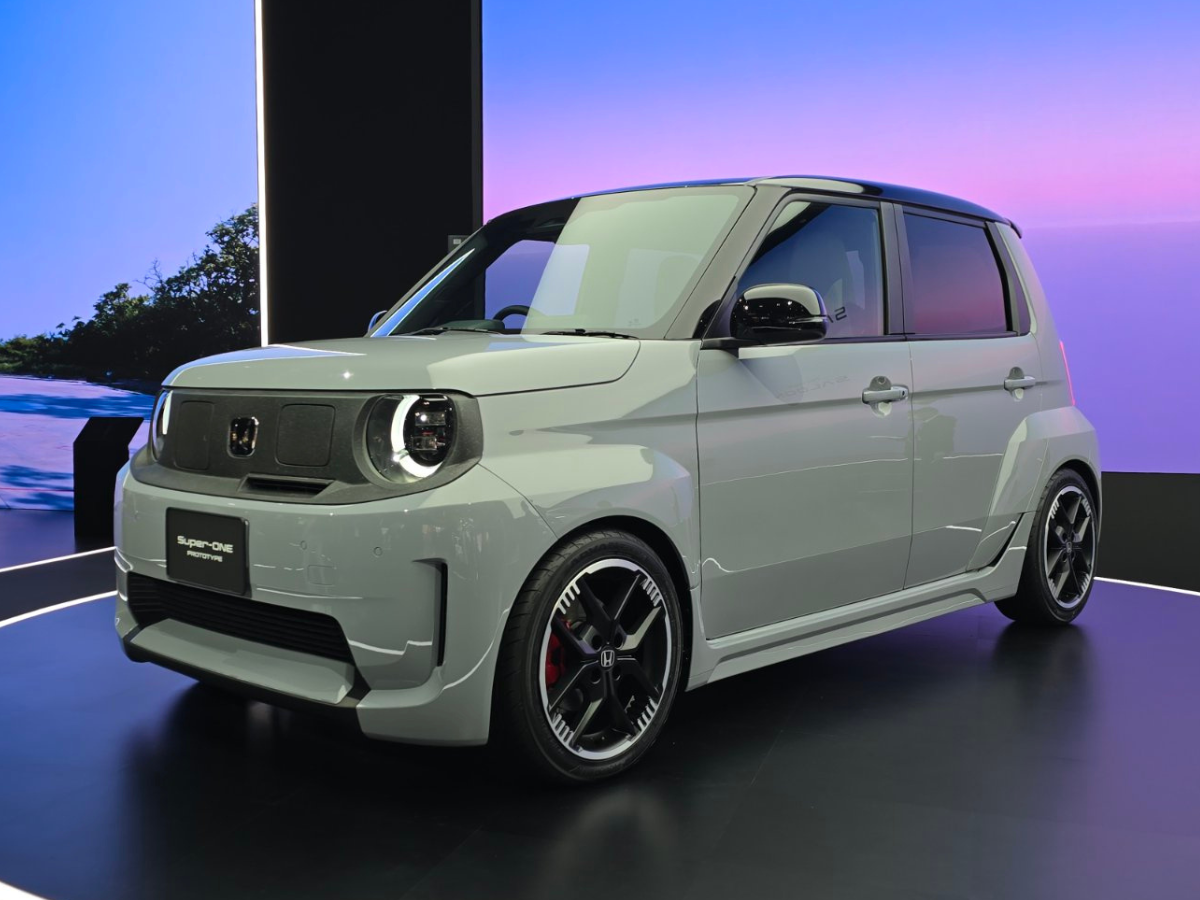


Honda recently unveiled the Super-One Prototype at the 2025 Japan Mobility Show. It’s a compact electric vehicle (EV) designed to blend everyday usability with the brand’s signature fun-to-drive feel. Now, Honda has confirmed its plans to launch the production version of the Super-One in Japan by 2026, followed by the United Kingdom (UK), and several Asian markets, possibly including the Philippines.
The Honda Super-One boasts a wide stance, marked by substantial fender flares that accommodate a set of wide tires. The aesthetic evokes a confident and athletic look. Built on a lightweight platform based on the Honda N-Series models, it promises nimble handling and efficient performance ideal for light urban roads. Its aerodynamic shape, enhanced by front and rear air ducts, improves cooling and energy efficiency.
Inside, the Honda Super-One focuses on the driver. Its simple horizontal dashboard layout and sporty seats create a cockpit-like feel. A highlight feature is boost mode, which temporarily increases power output and simulates a 7-speed transmission, complete with sound feedback that mimics gear shifts. For a small electric city car, this setup presents a fresh and unusual touch.
According to Honda, the Super-One has been teased in Japan, the UK, and several Asian regions with varying road and traffic conditions. This suggests a vehicle designed with regional adaptability in mind. For Asia and Oceania, the car is expected to carry the Super-One nameplate, underscoring its relevance to markets like the Philippines.


Locally, the electrified market is rapidly expanding, supported by government incentives, growing charging infrastructure, and rising environmental awareness. A compact EV like the Honda Super-One could appeal to city drivers looking for something practical, easy to maneuver and park, and enjoyable to drive.
Honda Cars Philippines, Inc. (HCPI)’s established dealer network also gives it an advantage in offering after-sales support, once it decides to introduce the Super-One as its entry into the battery-electric vehicle (BEV) segment.

However, here’s where it gets a bit tricky – how will HCPI determine the right price for the Super-One? If it’s priced competitively, it could attract early EV adapters and loyal Honda customers seeking a new urban mobility option. However, real challenges such as import duties and limited EV incentives could push the price up. At this early stage, it remains uncertain whether the EVIDA Law’s advantage of “long-term 100% excise tax exemptions” for BEVs could help bring the price of the Super-One to a more favorable level, should it ever be introduced locally. However, if anything, the EVIDA may be able to help address the issue in some way.
Aside from the pricing, the limited number of charging facilities outside of urban areas is also a challenge. And, HCPI would also need to ensure top-tier technical training and reliable battery servicing to earn long-term consumer confidence.
With the Super-One’s production set to start in Japan in 2026, a realistic estimate for its rollout in Southeast Asia would be late 2026 or early 2027. Whether the Philippines will be included in the first batch of rollouts will depend on local readiness and Honda’s regional strategy. However, one thing is certain: a locally produced Honda Super-One is highly possible. The question now is when?