

In today’s fast-paced traffic and unpredictable driving conditions, a split second can make all the difference between coming back home safely or ending up in an unpleasant situation. This is where the Automatic Emergency Braking (AEB) system comes in, a feature designed to help prevent accidents before they happen.
AEB uses an array of sensors, cameras, and radar to keep a constant eye out on the road. When it detects a potential collision and senses that the driver isn’t reacting fast enough, it automatically applies the brakes. AEB isn’t designed to take over driving duties, but rather assists the driver when human reaction simply isn’t enough to avoid a crash.

How AEB works
Think of AEB as an extra pair of eyes and a quicker foot on the brake pedal. The system constantly scans the road ahead for vehicles, pedestrians, and other obstacles. If something suddenly appears in the path, it first issues a visual or audible warning via the instrument cluster or infotainment system. If the driver doesn’t respond in time, the AEB system automatically engages the brakes – sometimes just enough to slow the vehicle down or hard enough to a complete stop.
Different vehicles have varying levels of AEB capability. Some systems are tuned for low-speed city driving, ideal for bumper-to-bumper traffic, while others can operate even at highway speeds. The most advanced ones can even detect cyclists and pedestrians.
Of course, like all kinds of technologies, even the AEB isn’t foolproof. Dirty sensors can affect how AEB works, so it’s a good habit to keep the vehicle clean and well-maintained, especially in areas where cameras and sensors are placed. But the biggest challenge the AEB faces is dealing with uncontrollable situations, particularly driving in heavy rain or thick fog, as the cameras and sensors are limited in how they scan the road. Despite this, having the AEB is a big step towards safer roads.

Why AEB Matters, especially for Filipino drivers
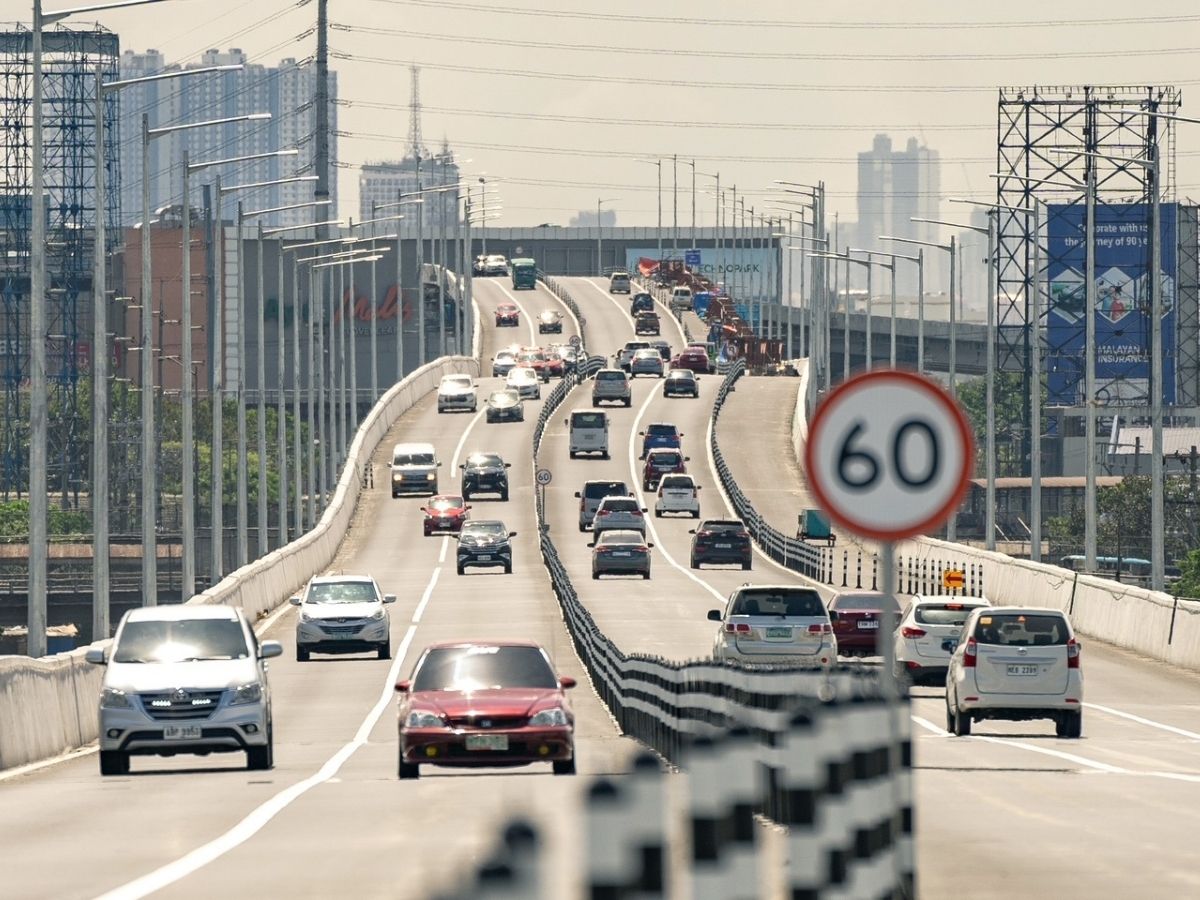
Anyone who drives in the Philippines knows that our roads can be very unpredictable. Challenges such as sudden stops, pedestrians or animals crossing unexpectedly, kids running across the road, and motorcycles weaving in and out of traffic are all parts of daily life as a Filipino driver. AEB helps reduce collisions in exactly these situations.
Beyond the daily grind, AEB has also become the benchmark for safety, backed by scientific research, development, and engineering. The ASEAN NCAP, a regional crash-testing authority, now includes AEB performance in its safety ratings, meaning AEB can make or break a vehicle’s ranking in occupant and pedestrian protection. This pushes car brands to make AEB standard in more models today. For Filipino drivers, this means more choices that combine affordability, technology, and safety. As a result, car brands have developed their own versions of AEB and have incorporated it into their respective Advanced Driver-Assist Systems (ADAS) suites. Here are a few examples, though a lot more is now available across various automakers.

Toyota Yaris Cross – The Yaris Cross comes with Toyota Safety Sense ADAS, which includes a pre-collision system that can detect potential crashes and automatically apply the brakes if needed. It’s compact, city-friendly, and built with modern safety in mind.
Isuzu mu-X – Valued for its toughness, the latest mu-X’s ADAS includes collision warning and brake override system, that function exactly like an AEB, adding a layer of safety to the SUV’s host of advanced tech.
BYD Atto 3 – This all-electric Chinese small crossover brings future-ready technology to the road. Its AEB system works seamlessly with its other driver assist features, giving EV owners peace of mind.
Honda CR-V – Now equipped with Honda Sensing ADAS, the latest CR-V offers collision mitigation braking, helping prevent front-end collision – a useful feature in city driving where unpredictability is high.
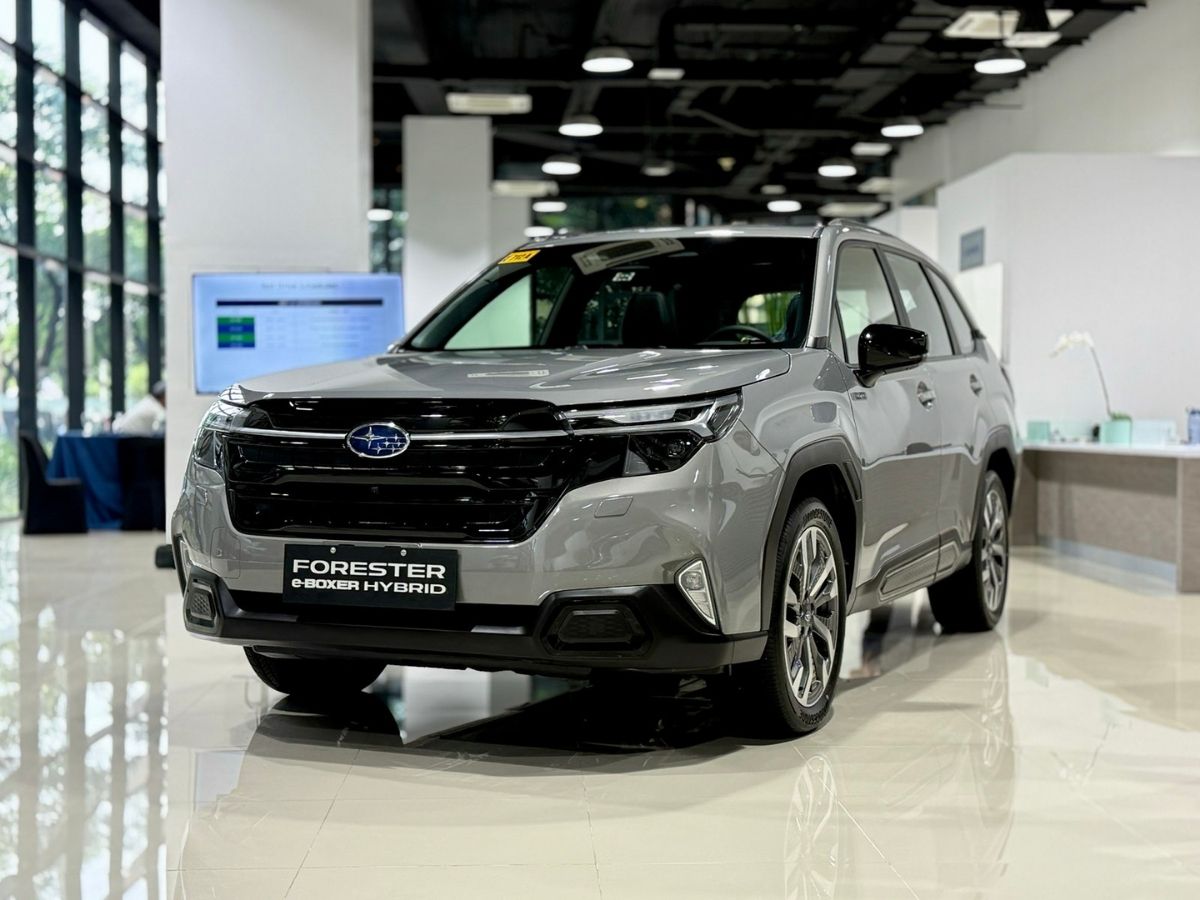
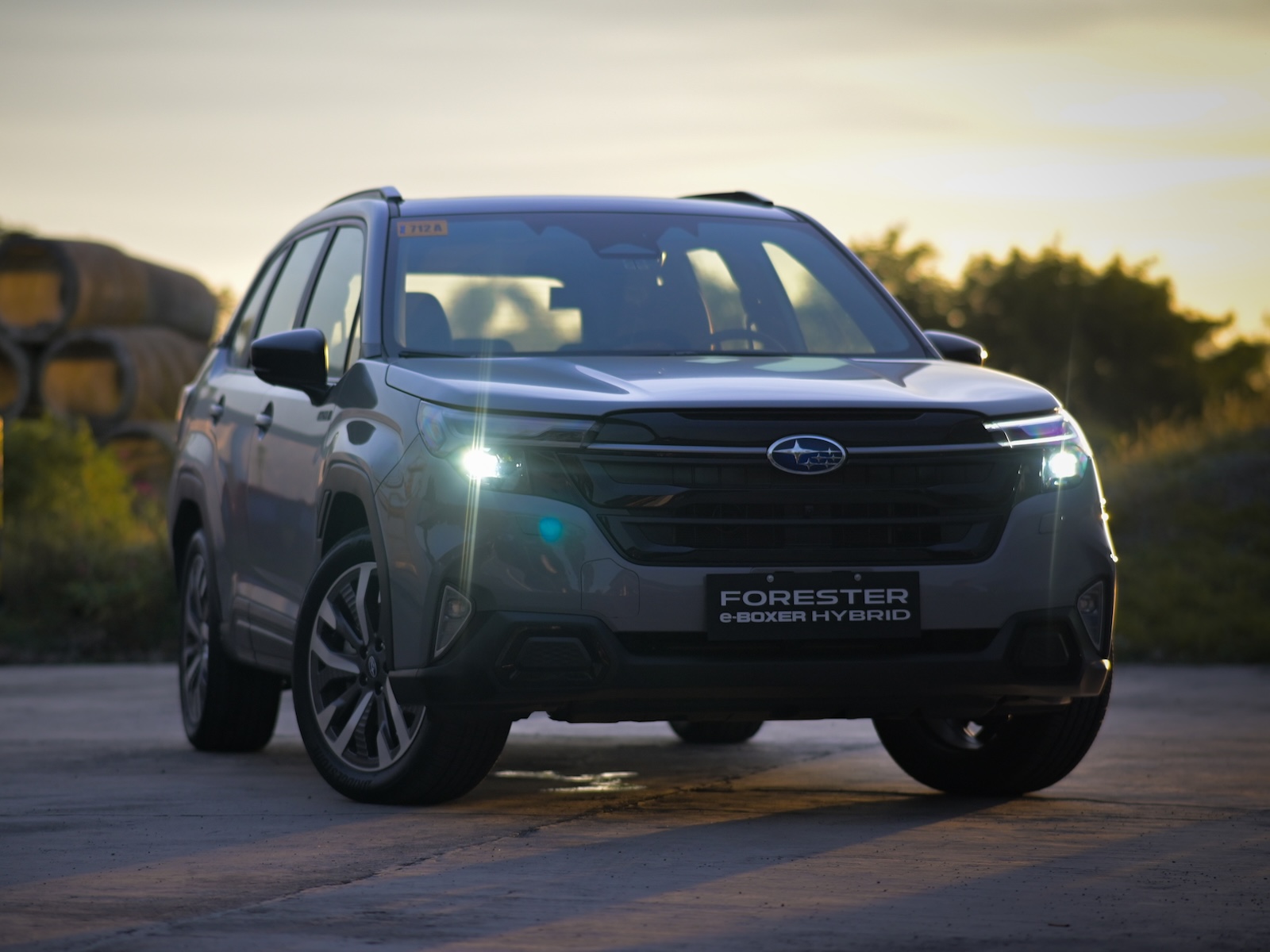
Subaru Forester e-Boxer Hybrid – The recently launched Subaru Forester e-Boxer hybrid comes with the Subaru EyeSight ADAS. It has an automatic pre-collision braking system, which detects potential collisions and engages the brakes when necessary to avoid it.